
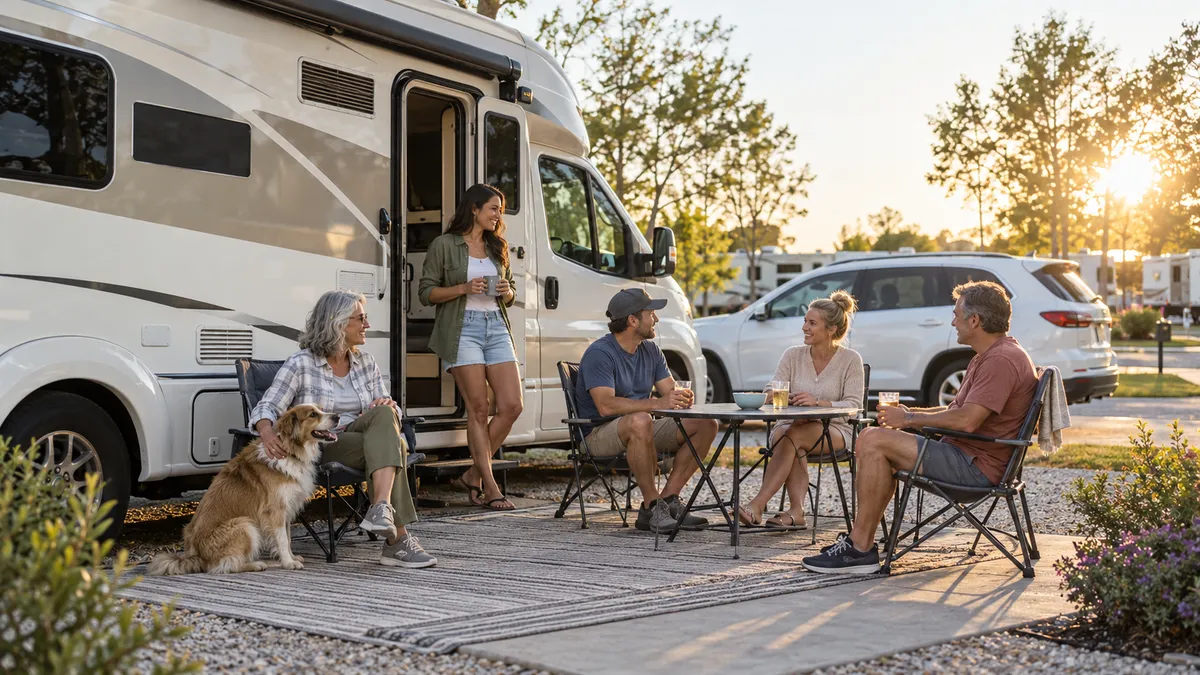
RVing for beginners starts with a few simple decisions: which RV fits your plans, what it will cost, and how to drive and set it up safely. Starting out feels overwhelming, but it gets simple once you know the order things happen in. Whether you’re renting your first motorhome or shopping for a travel trailer, this guide takes you from choosing a rig to your first night at camp, with the numbers and checks that matter most.
Rent Before You Buy
Renting is the cheapest way to learn which RV you like. A compact camper van feels very different from a 35-foot trailer, and a dealer lot can’t show you that.
A weekend rental also shows you what you need, like how much storage you use and whether you enjoy driving something big. Then you buy with facts instead of guesses.
Questions to Ask Before You Book a Rental
Rental companies all do things a little differently, so a few questions up front save you from surprise fees at the end of the trip. Ask these before you pay.
- Is there a mileage limit, and what does each extra mile cost?
- How many generator hours are included, and what happens after that?
- What does the rental cover, and what is your deductible?
- Are hoses, power cords, bedding, and a kitchen kit part of the deal?
- Do you have to empty the tanks and clean the RV, or is there a fee?
- Will someone show you the generator, water heater, awning, and slides?
RV Types Explained
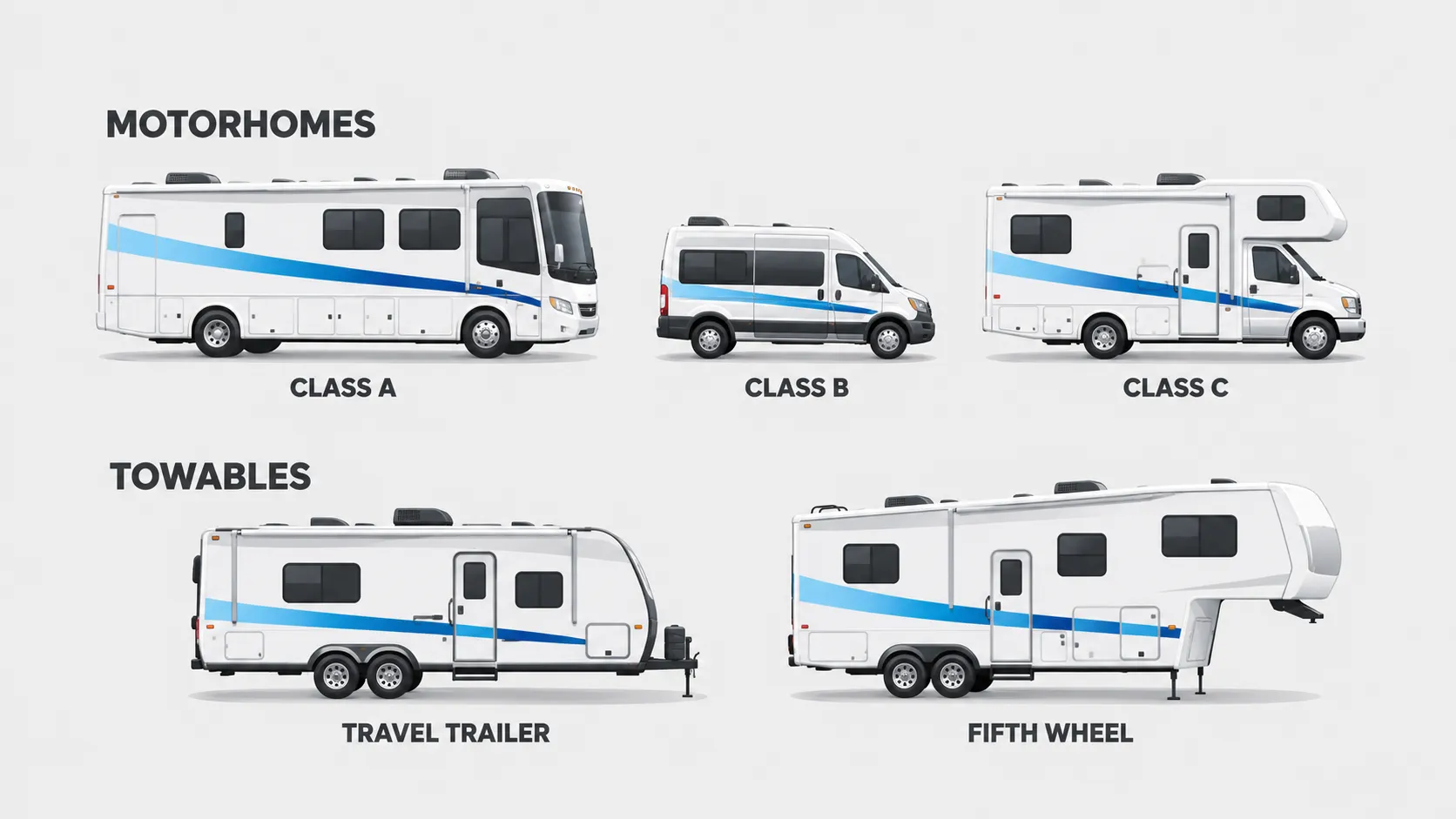
RVs fall into two groups. Motorhomes have an engine, so you drive them. Towables have no engine, so you pull them with a truck or SUV.
Motorhomes: Class A, B, and C
A Class A looks like a bus and has the most living space, but it’s the hardest to drive and park. A Class B is a camper van, the smallest and easiest to drive. A Class C has a sleeping area over the cab and sits in between, so families and first-time renters like it.
Travel Trailers and Fifth Wheels
A travel trailer hooks onto the back of your tow vehicle and comes in every size, so check that your truck or SUV can tow the one you want. A fifth wheel, the largest towable, attaches to a pin box in the truck bed, so you need a truck built for the weight. Both let you unhitch and drive your tow vehicle on its own.
How to Choose Your First RV
Smaller is easier. A shorter RV is simpler to drive, park, and fit into campsites, and some campgrounds limit RV length. Start with the smallest rig that lets your family sleep comfortably, because you can always upgrade later.
Think about how you’ll travel, too. Short weekend trips suit almost any rig, while long trips make comfort, storage, and fuel costs matter more. Own a truck or SUV? Check what it can safely tow before you look at trailers. If not, a motorhome avoids that question.
What RVing Costs
The price of the RV or the rental is only the first bill. The rest falls into running costs and ownership costs, and both add up faster than most beginners expect.
Running Costs
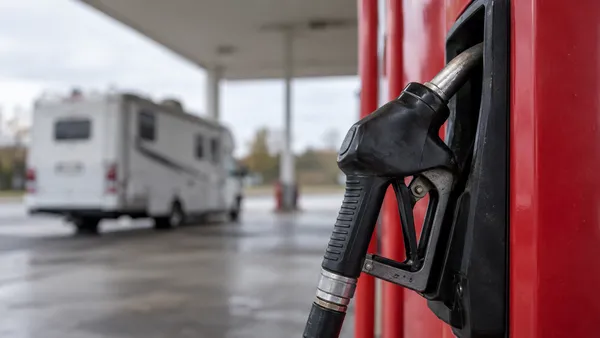
Fuel adds up fast on long trips, and campsite fees depend on the campground type, the season, and the hookups. Maintenance and repairs come next, since tires, seals, batteries, and appliances all need attention, so keep a small budget for them.
Ownership Costs
Call your insurer before you buy, because your auto policy may not cover an RV the way you expect. Storage costs extra if you can’t park it at home. Our ownership costs guide adds up the yearly numbers. Financing? The RV Loan Calculator shows your payment.
A Quick Fuel Cost Example
Say you drive 500 miles in a Class C that gets 9 MPG, and gas costs $3.75 per gallon (a sample price, not today’s). Divide miles by MPG to get gallons: 500 ÷ 9 is about 55.6. Multiply by the price: 55.6 × $3.75 is about $208.
Your own number will move with speed, wind, hills, and the weight you carry, so treat your MPG as a starting point. Plug in your own numbers with our Fuel Cost Calculator.
Know Your Weight Limits
Every RV and tow vehicle has weight limits, and staying under them keeps your trip safe. You’ll find them on stickers and in the owner’s manuals, and our Towing Capacity, Payload, and Tongue Weight calculators help you check the math.
GVWR, Payload, and Towing Capacity
GVWR, the gross vehicle weight rating, is the most your RV or tow vehicle is designed to weigh when fully loaded. Payload is how much gear, water, and passengers you can add before you reach that limit. Towing capacity is the most a vehicle can pull.
Use Loaded Weights
Compare your loaded trailer weight with those limits, not the empty weight from the brochure. Water adds up fast, at roughly 8.3 pounds per gallon, so a full 40-gallon tank adds over 330 pounds. Tongue weight, the downward pressure on your hitch, counts too.
Know Your RV’s Height
Low bridges are a serious danger for RVs, and heights vary from van to fifth wheel. The Federal Highway Administration says there is no federal vehicle height limit, and state limits run from 13.6 to 14.6 feet, but some older bridges and tunnels are lower than that.
Measure your RV from the ground to its highest point, including the roof A/C, vents, and antennas, and stick that number on your dashboard. Our Height Clearance Calculator and guide to RV height clearance show you how, step by step.
Do You Need a Special License?
In most states, a regular driver’s license covers the RVs most beginners rent or buy. Very heavy rigs are the exception. Texas, for example, may require a non-commercial Class A or B license when an RV has a GVWR of 26,001 pounds or more. If you’re shopping for something big, check your state’s DMV website first.
Driving Habits That Keep You Safe
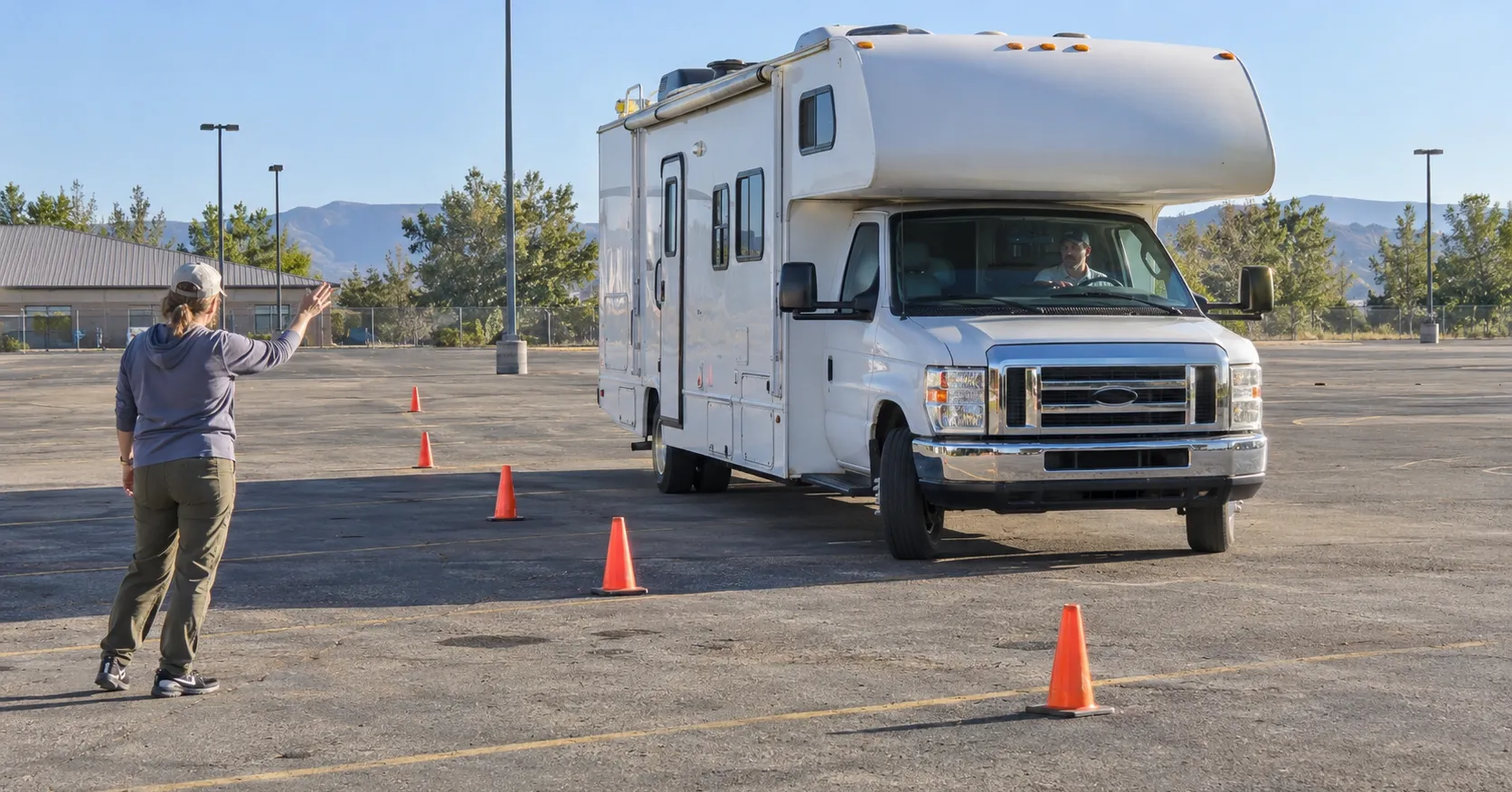
Practice before you travel. An empty parking lot is the perfect place to learn how your RV turns, brakes, and backs up, and our driving guide shows the drills step by step.
Brake Early and Swing Wide
RVs are heavy and take longer to stop, so leave extra distance in front of you. The Stopping Distance Calculator shows how speed changes it. Swing wide on turns, because the back wheels cut the corner tighter than the front.
Keep Driving Days Short
Use a navigation app that lets you enter your RV’s height, weight, and length, and still watch the posted signs. Keep driving days short, too. Our first-trip rules include the 2-2-2 rule: no more than 200 miles a day, a stop every two hours, and arrival by 2 PM.
RV Parks and Public Campgrounds
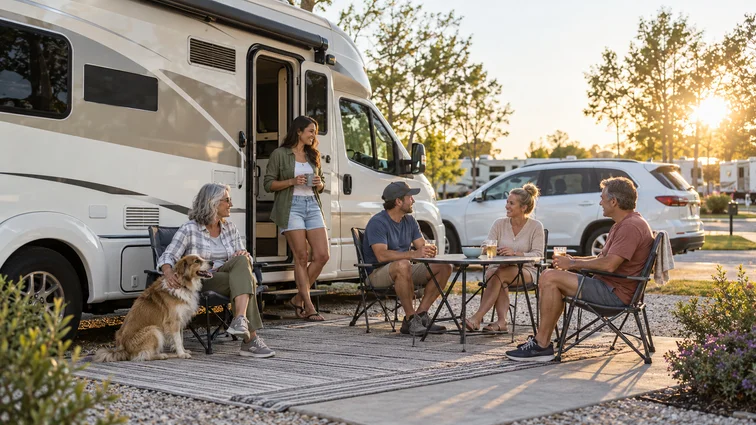
Private RV parks and resorts usually offer hookups, bathrooms, and amenities, which makes them the easiest place to start. They also often cost more than public campgrounds.
State parks, national forests, and national parks often have beautiful locations and lower prices. Hookups vary, and some campgrounds limit RV length, so check the site details before you book. Reserve early, because popular parks fill up.
Dispersed Camping (Boondocking)
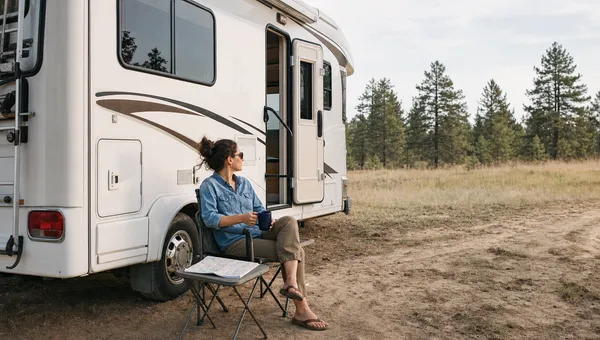
Dispersed camping means camping on public land outside a campground, with no hookups. You need your own plan for water, power, and waste. Our boondocking guide and solar calculator help you work out the basics before you go.
On land managed by the Bureau of Land Management, camping is generally limited to 14 days within any 28-day period, and then you move, often at least 25 to 30 miles away. Rules vary by field office, so save this for after a few hookup trips.
How to Book a Campsite
Popular campgrounds can fill in minutes, so book early. Recreation.gov says most campsites can be booked six months before your arrival date, and some locations offer shorter windows too. Set a reminder for the day your dates open.
Before you book, check the maximum RV length, the hookups, and whether the site is pull-through or back-in. Pull-through sites let you drive in and out without backing up.
Subscribe to
Our Newsletter
By joining, you agree to receive emails.
See our Privacy Policy.
Hookups in Plain English
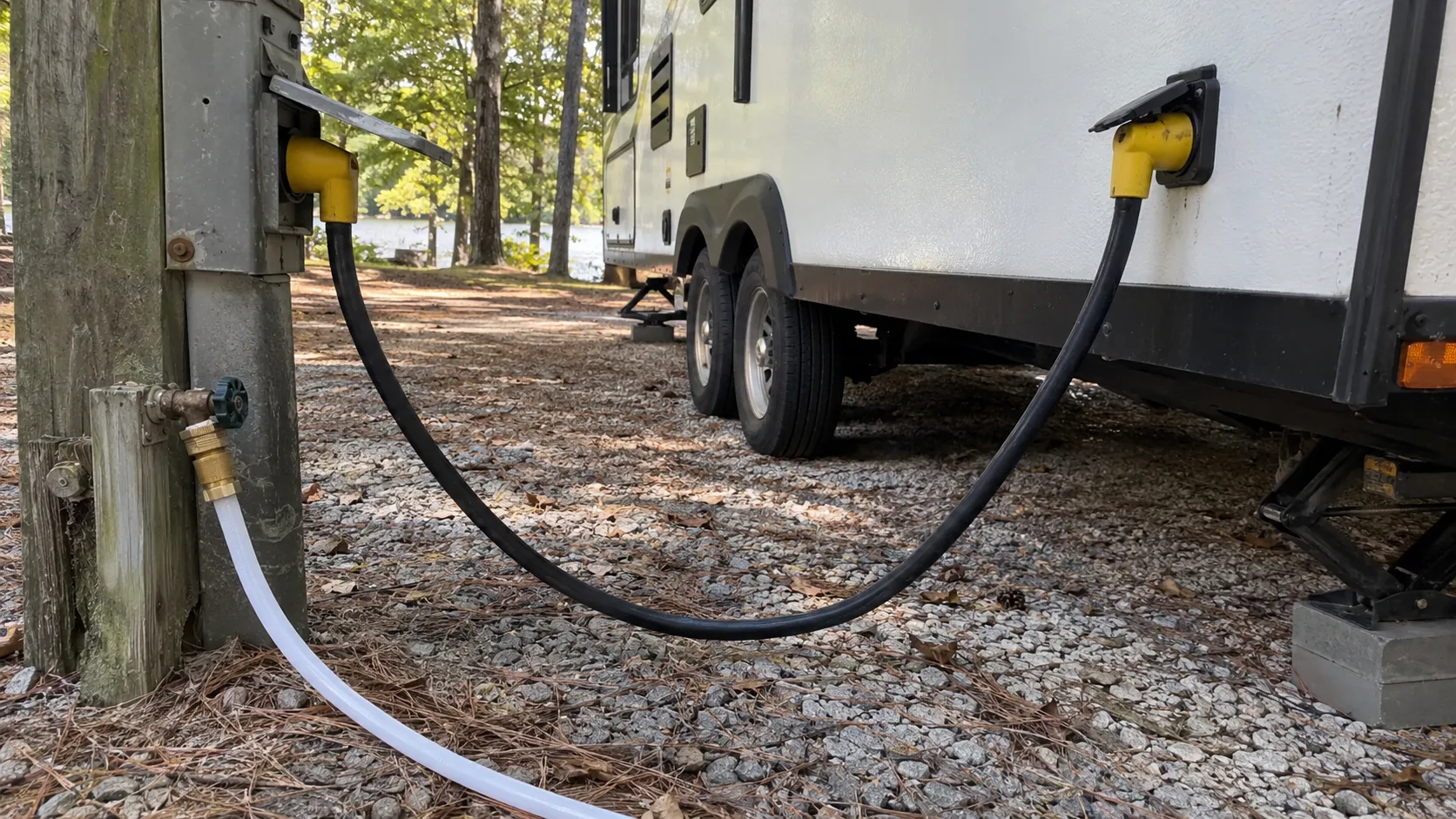
Hookups are the connections you make when you park at a campsite. Our setup guide shows the full order, and the basics are below.
Electricity
RVs use 30-amp or 50-amp service, and the plug tells you which one you have, with three prongs for 30 amp and four for 50 amp. Camping World lists up to 3,600 watts for 30 amp and up to 12,000 for 50 amp. A roof air conditioner draws about 15 amps, so avoid running it together with the microwave and water heater on a 30-amp hookup.
Water and Sewer
Campground water pressure can damage your plumbing, so attach a regulator to the faucet before the hose. Winnebago recommends one that limits pressure to 50 psi. Empty the black tank first, then the gray tank, and see our tank guide for the full routine.
Level Your RV
Level your RV side to side and front to back before you extend the slides. It protects the slides and keeps the fridge working properly.
What to Pack for Your First RV Trip
Pack less than you think. RV storage is small, and extra gear eats into your payload. If you’re renting, check the amenities list first so you don’t pack things the rental already includes, like bedding, towels, or a kitchen kit.
Kitchen, Bed, and Bath
In the kitchen, bring basic cookware, plates, utensils, dish soap, and a cooler or food storage containers. For sleeping and bathing, pack sheets, blankets, towels, and toiletries, plus RV-safe toilet paper that breaks down easily.
Setup Gear and Safety
Setup gear is what beginners forget most often: leveling blocks, a water pressure regulator, a drinking-water hose, a power adapter, and a sewer hose. Round it out with a first-aid kit, flashlights, and basic tools for small fixes on the road.
Basic RV Maintenance
You don’t need to be a mechanic. A few simple habits catch most problems early, and this schedule shows how often to check each one.
| When | What to check |
|---|---|
| Before every trip | Tires, lights, battery, walk-around |
| Every month | A/C filters, generator test |
| Once a year | Roof seams, detectors, water system |
| Tires over 5 years | Yearly specialist inspection |
Check Your Tires
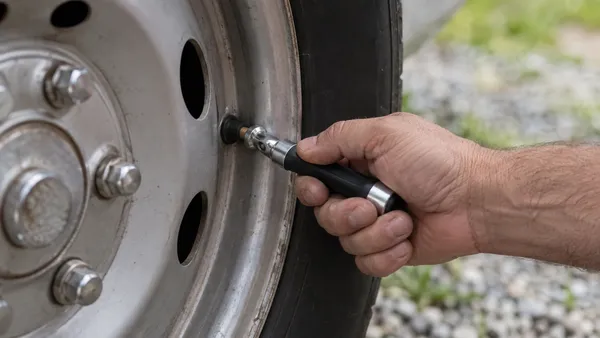
Check tire pressure when the tires are cold, and look them over before every trip. Michelin recommends a specialist inspection at least once a year for RV tires that are five years old or more, and replacement after 10 years of service. Our tire pressure guide and Tire Pressure Calculator help you find the right number.
Follow Your Manual
These intervals are common industry guidance. Your owner’s manual has the exact schedule for your RV, so follow it first, and ask a technician about the roof, brakes, or propane. If your RV sits where it freezes, our winterizing guide shows how to protect it.
Plan a Short Shakedown Trip
Your first trip should be short and close to home. A one- or two-night stay within a couple of hours of your driveway lets you find problems while help is nearby.
Choose a campsite with hookups, arrive early in daylight, and give yourself time to set up without rushing. Do a full walk-around before you leave, checking for open storage bays, lowered steps, and unplugged cords. See our planning guide for daily distances.
Common Beginner Mistakes
Buying before renting. A few rentals teach you more than any showroom, and they show you which size and layout you’ll use every day.
Ignoring weights. Overloading is easy to do and hard to spot, so compare your loaded weight with the limits on the stickers.
Skipping the height check. Everything on the roof counts, so measure to the highest point and keep that number where you can see it.
Overpacking. Extra gear eats your payload and your fuel economy, so pack for the trip you’re taking, not every trip you might take.
Arriving after dark. Setting up an unfamiliar site in the dark is much harder, so plan to arrive while there’s still daylight, with time to spare.
Booking too late. Popular campgrounds fill months ahead, so reserve as soon as your dates are set, and keep a backup site in mind.
Your Next Step
You don’t need to know everything before your first trip. You need a rig that fits your plans, a few key numbers, and a short first outing to learn the rest. Start small, rent first, and when you’re ready for the details, our first-night guide is the next place to go.