
RV tire pressure is one of the cheapest safety checks you can do, and getting it right takes two things: the correct number for your load and a gauge you can trust. This guide shows you where to find that number, how to check it cold, how often to repeat the check, and when old tires need to go, even if the pressure is perfect.
Why Tire Pressure Matters
Your RV tires carry a lot of weight, and a tire that runs low flexes more, builds up heat, and wears out early. Michelin considers a tire flat once it has operated at less than 80% of its recommended pressure, so a tire that looks fine can already be in trouble. Checking takes a few minutes and a simple gauge, which makes it easy to build into your routine.
Where to Find the Right PSI
Start with the certification label inside your RV, usually near the entry door, and with your owner’s manual. They list the cold pressure for each axle. RV Travel explains that manufacturers set it by dividing the axle’s weight rating by the number of tires on that axle.
Don’t treat the number molded into the tire as your target. That is the tire’s maximum pressure at its maximum load, and your RV probably carries less.
Use the Load and Inflation Tables
The most accurate method uses the tire maker’s load and inflation tables. Michelin says to weigh each axle end separately, then use the heaviest end to set the cold pressure for every tire on that axle. Keep the pressure the same across each axle.
Get Your RV Weighed
Load the RV the way you will travel and drive onto a public scale. Many truck stops have one, so ask for a weight at each wheel position if the scale allows it. Then look up each weight in the table for your tire, using the heavier end of each axle.
Our Tire Pressure Calculator turns your scale weights into the load on each axle end, the number you look up in your tire maker’s chart. If you can’t get weighed yet, use the label pressure and weigh your RV before your first long trip.
Check Tires Cold
Check your tires in the morning before you drive, because even a short trip warms them. Michelin’s table pressures are cold pressures at the outside air temperature. Skip outdoor checks below freezing if you can, since ice can form in the valve stem.
Never Adjust a Hot Tire
A warm tire can read as much as 10 to 15 PSI higher than its cold pressure, according to Michelin, and that is normal. Never let air out of a hot tire to reach your cold number, because it will be underinflated once it cools.
How to Check and Add Air
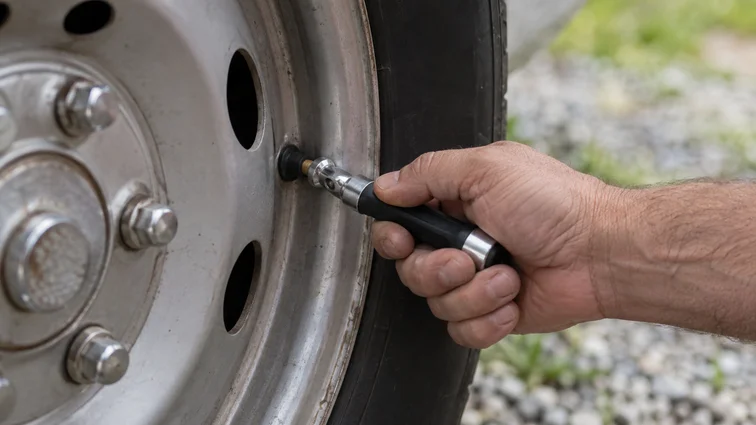
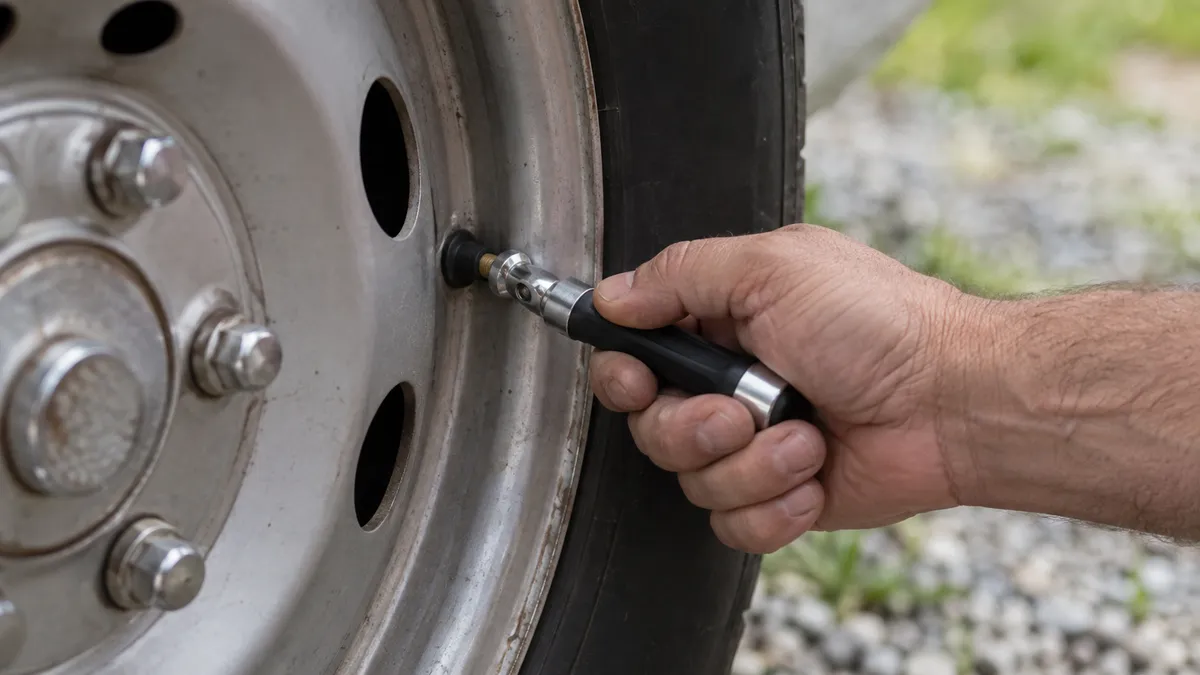
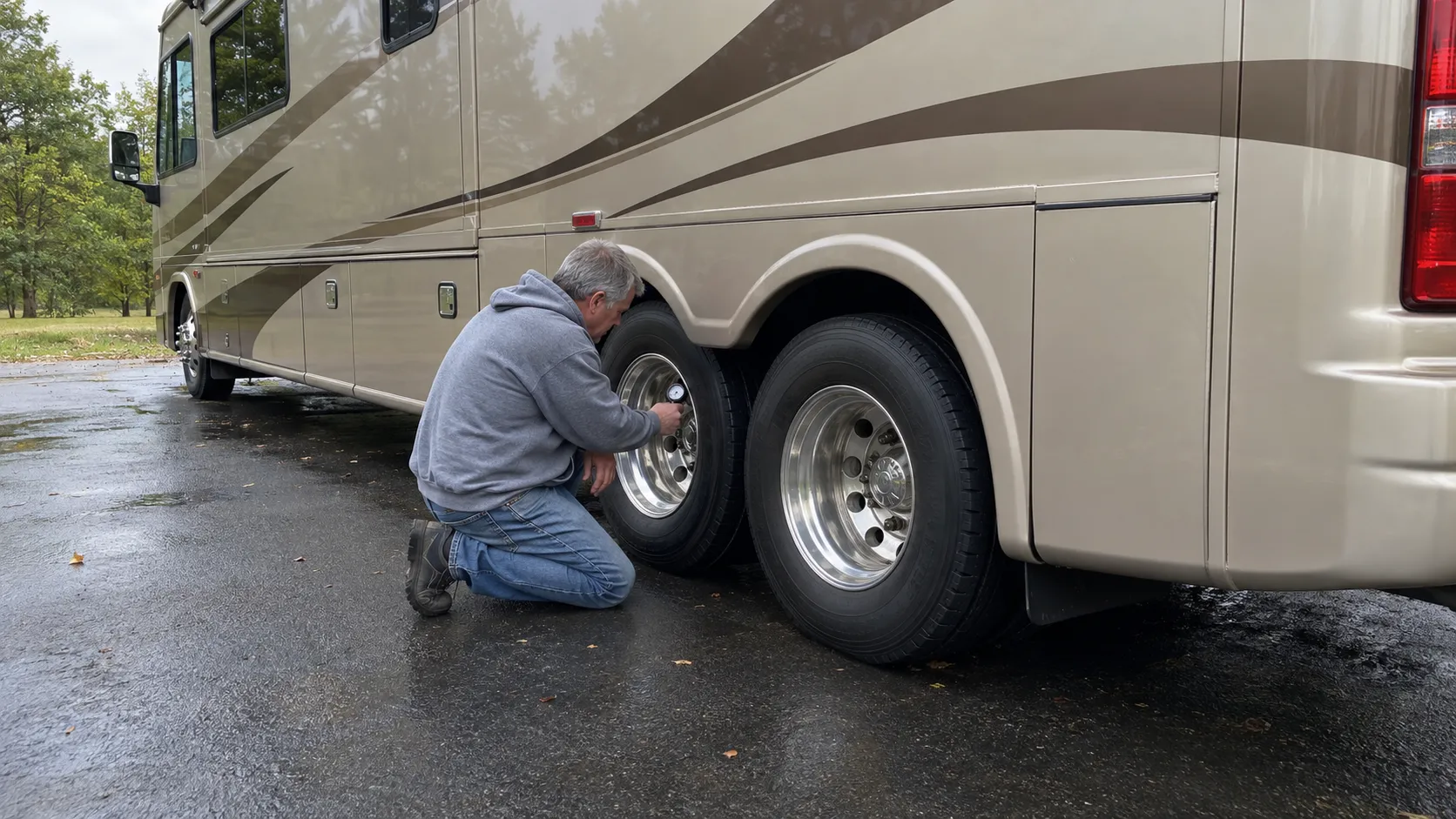
Remove the valve cap. Press the gauge straight onto the valve stem and read the number, and hold it there until the reading settles.
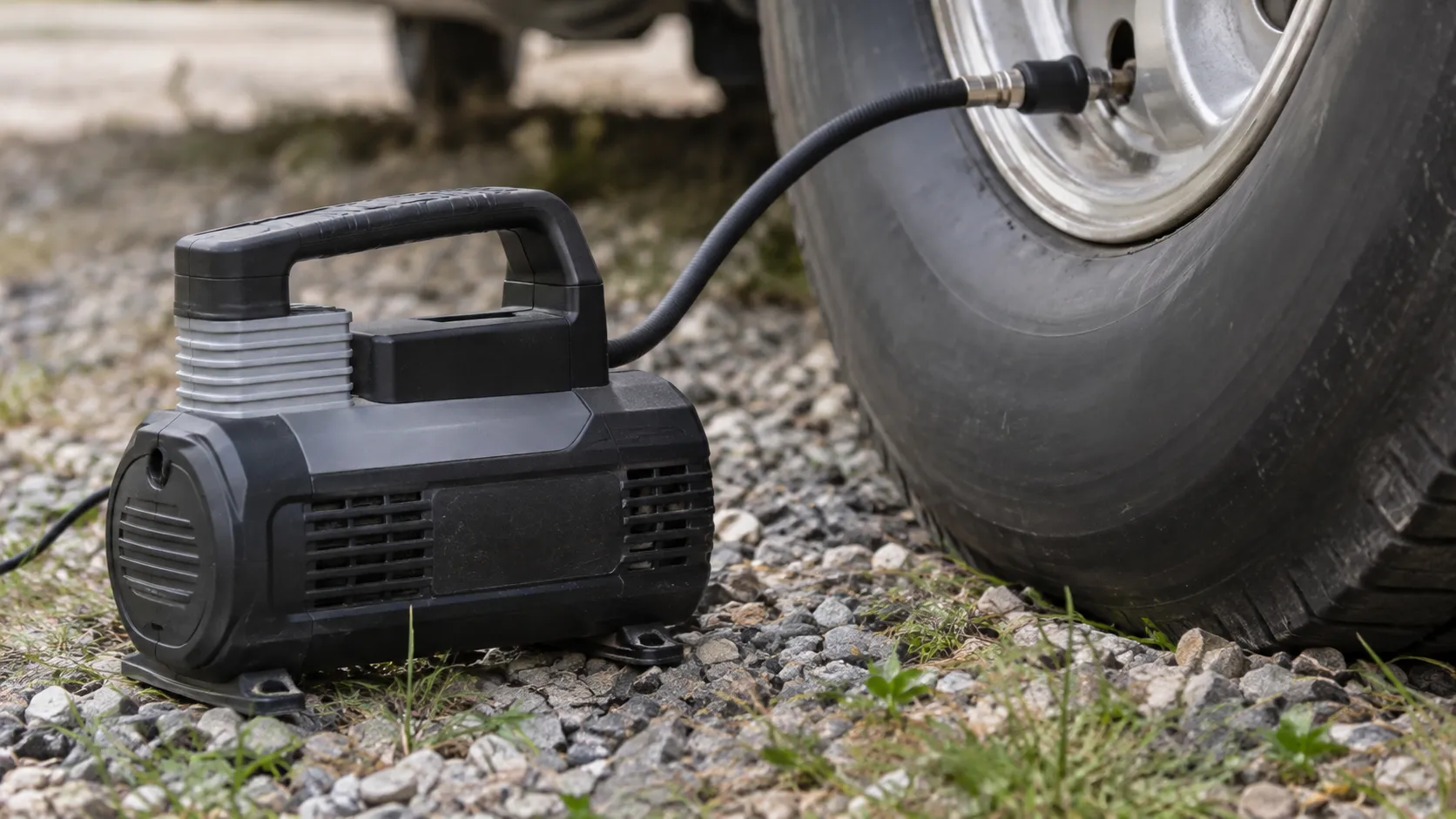
Add air in short bursts. Recheck after each burst, so you don’t overshoot your target, and stop as soon as the gauge hits your cold number.
Check every tire. On duals, check both the inner and outer tires, and use a valve extender to reach the inner one, which sits behind the outer tire.
Replace the cap. Michelin suggests double seal valve caps, which help keep air from leaking out of the valve stem and keep dirt out of it.
Why Your Pressure Changes
Heat is the main reason. Driving warms your tires and raises the pressure, and cold air does the opposite. Recheck your tires after a cold snap, or when you travel from a warm region to a cool one, and always compare against your cold number.
How Often to Check
Michelin’s RV tire guide sets a clear schedule, and it is one of the habits in our first-trip rules. Heading into storage? Our winterizing guide covers the rest of the checklist.
| When | How often |
|---|---|
| Routine | At least weekly |
| Before a long trip | Every time |
| On a long trip | Every morning before you drive |
| Storage | Before and after |
Subscribe to
Our Newsletter
By joining, you agree to receive emails.
See our Privacy Policy.
Don’t Rely on TPMS Alone
A tire pressure monitoring system (TPMS) is a worthwhile extra for long trips and heavy loads, but it doesn’t replace a gauge. RV Living notes that it can’t prevent damage from debris or age, so keep checking pressures by hand.
Write Down Your Numbers
Once you know your cold pressures, write them on a card and keep it near the driver’s seat. If a tire shop adjusts your tires, tell them your number, so it doesn’t get reset to a default.
Check Tire Age Too
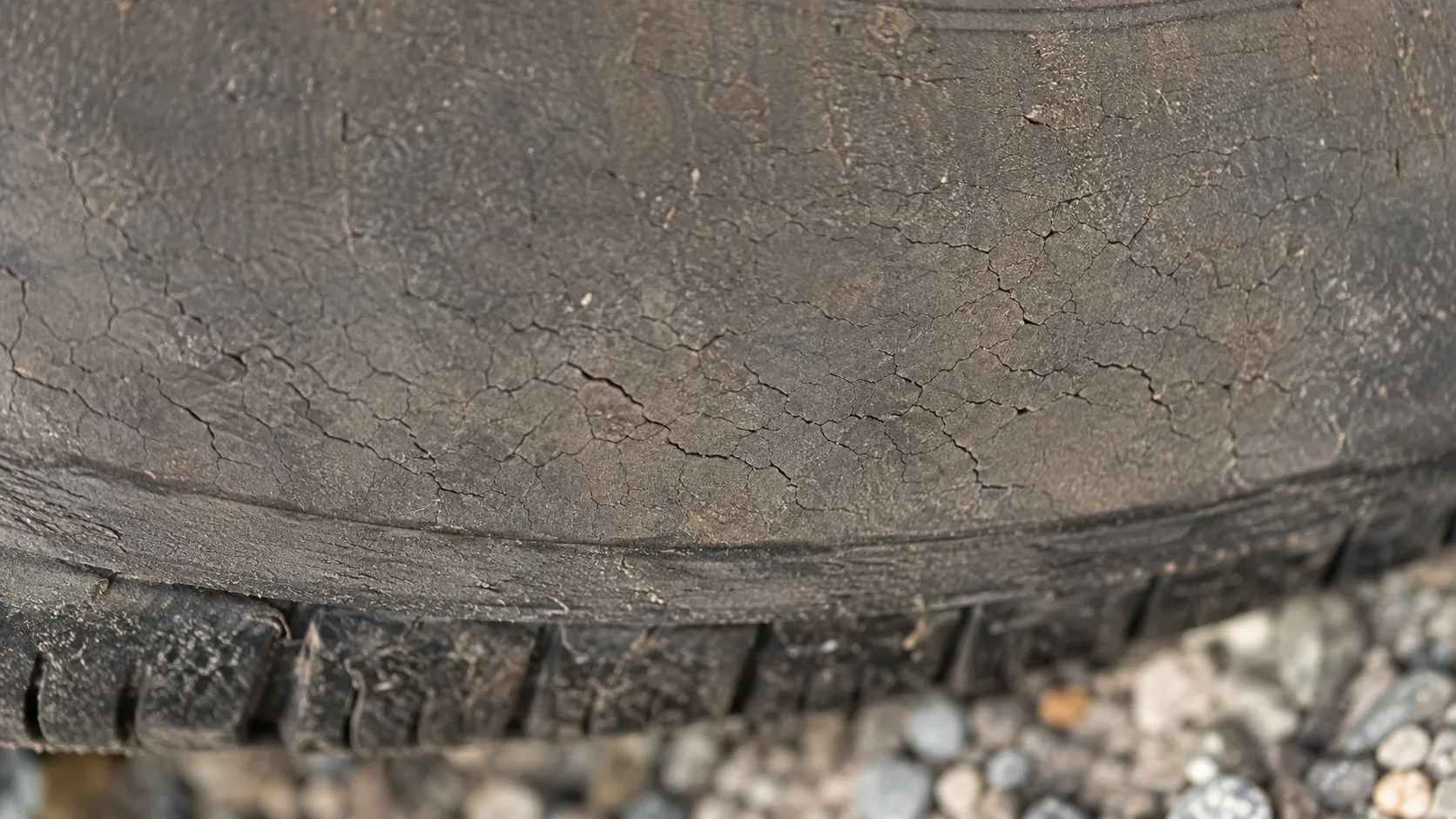
Good pressure doesn’t help an old tire. Look for the DOT code on the sidewall, because its last four digits show when the tire was made: the first two are the week, the last two the year. A code ending in 0508, for example, means the fifth week of 2008.
When to Replace Old Tires
Michelin says to have a specialist inspect tires once they have been in use for five years, and yearly after that. It also says to replace any RV tire, including the spare, that is 10 years past its manufacture date, even if it looks fine. If you see cracks or bulges, ask a tire professional, and our ownership costs guide shows what tires add to the yearly budget.
Common Tire Pressure Mistakes
Most tire problems come from a handful of habits. Avoid these five, and you will be ahead of most owners, whatever size rig you drive.
- Using the sidewall number as your target.
- Checking or adjusting a hot tire.
- Skipping the weigh-in and guessing your load.
- Mixing pressures on one axle.
- Judging a tire by eye instead of with a gauge.
Your Next Step
Tire pressure is a five-minute habit that protects your whole trip. Find your number once, check it cold, and write it down where you will see it. Your owner’s manual and tire maker have the final say, so follow them first, then check your tires before you roll.