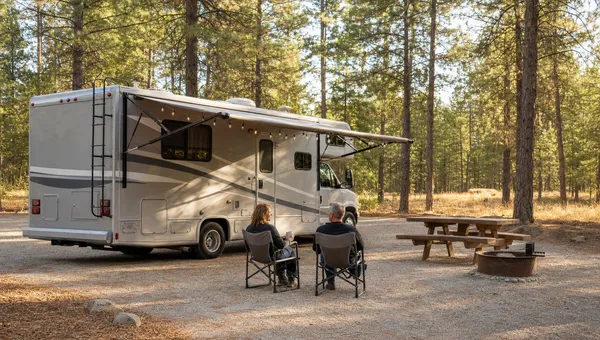

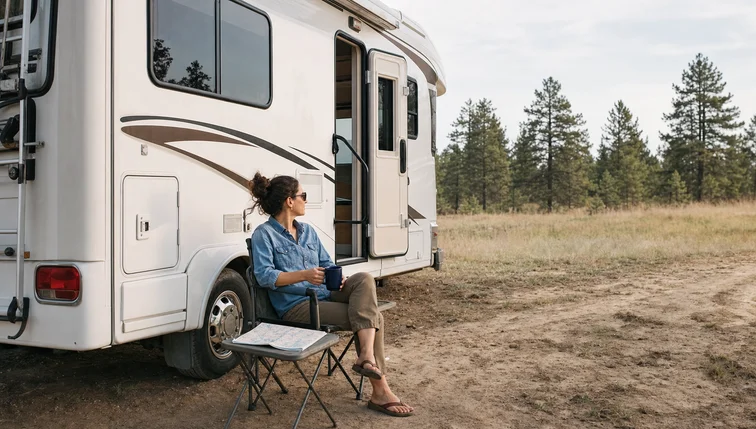
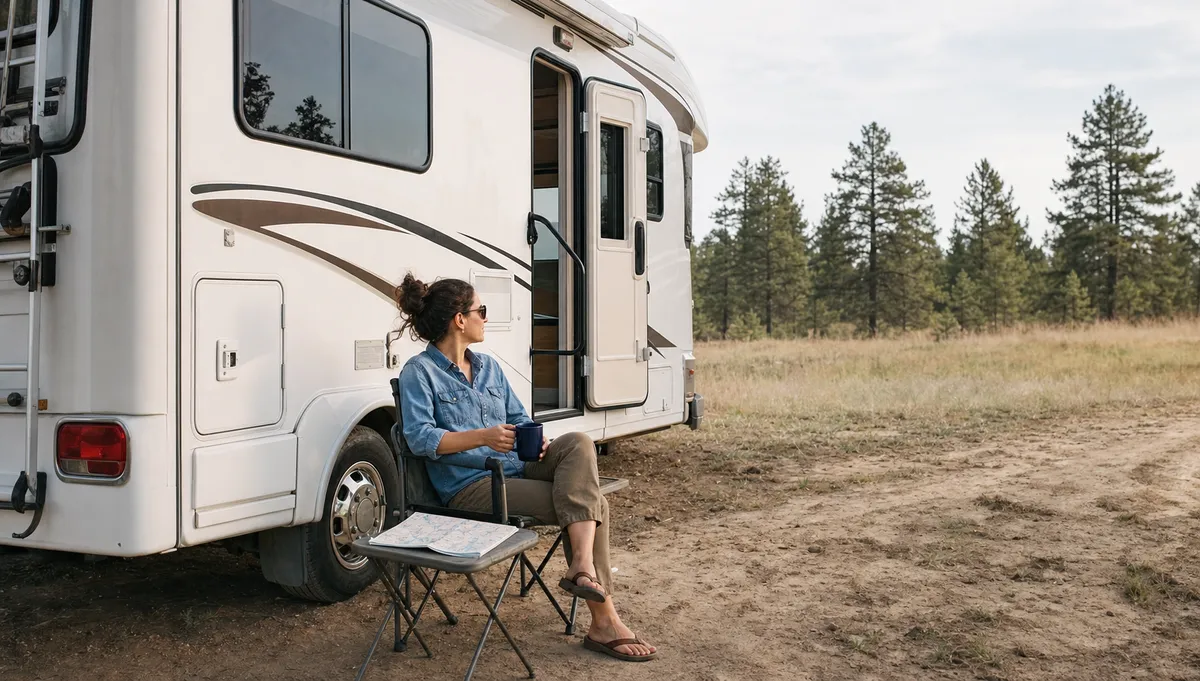
Boondocking means camping in your RV without hookups for power, water, or sewer. It sounds like a big step, but a night or two off the grid is easy once you know your numbers. This guide covers where you can camp for free, how to plan your water and power, and what to check before you leave the pavement.
What Boondocking Means
You bring everything you need and take everything out. Your battery runs the lights, your fresh water tank supplies the sink, and your tanks hold the waste until you reach a dump station. That means you plan your water, power, and waste before you go.
Some people call it dry camping, and on public land it is called dispersed camping. A night in a store lot is something different, and our overnight parking guide covers that.
Where You Can Camp for Free
Most free spots are on land managed by the Bureau of Land Management (BLM) or the National Forest Service. Rules differ by agency and even by local office, so confirm the details with the office that manages the land before you go.
BLM Land
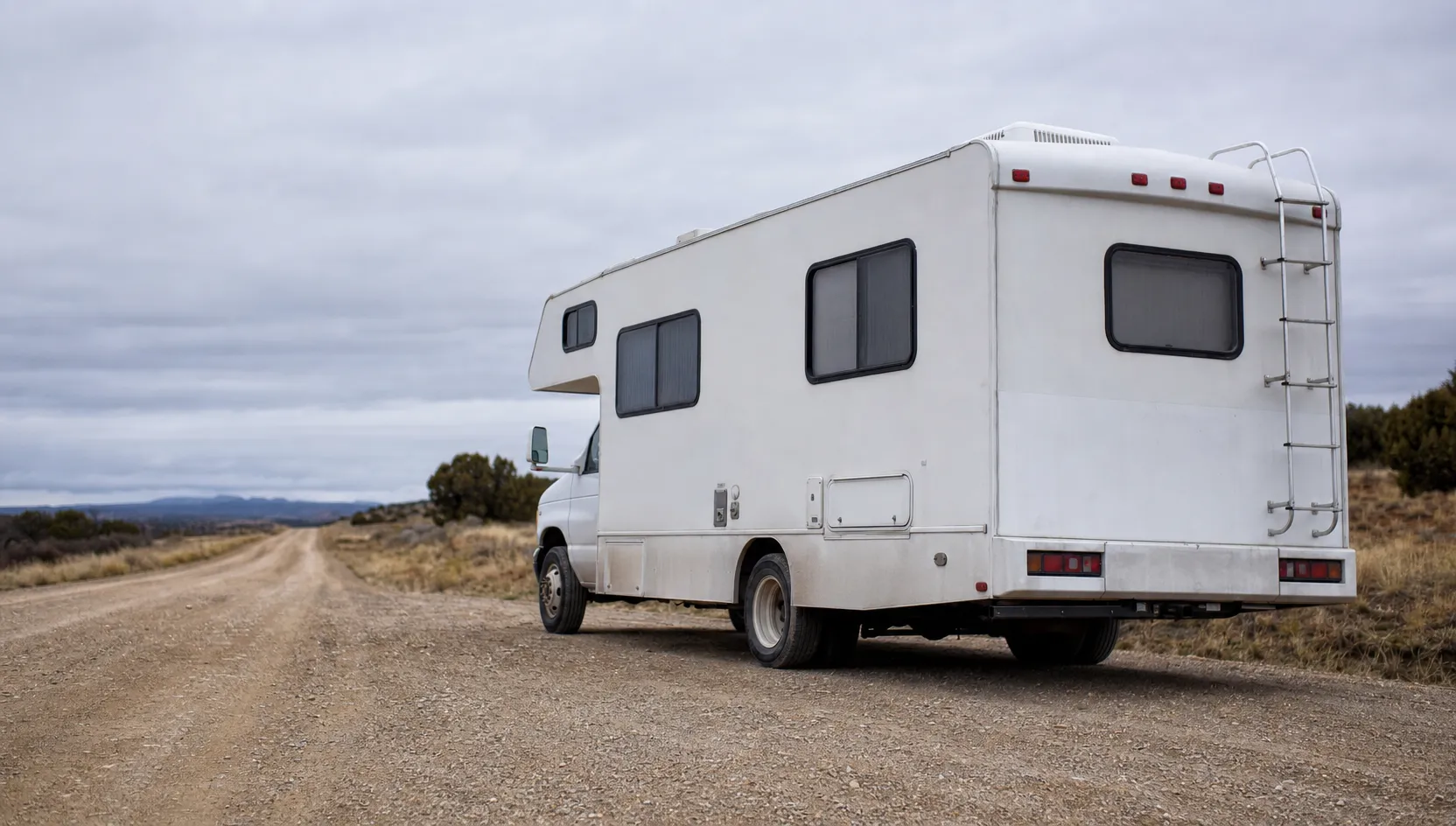
The BLM generally limits stays to 14 days within a 28-day period, and then you move, often at least 25 to 30 miles away. It recommends camping within 150 feet of designated routes, at least 200 feet from water, and a mile from campgrounds.
National Forests
The Forest Service calls it dispersed camping, and stays are usually limited to about 14 days, though some forests set shorter limits. Use the free Motor Vehicle Use Map to see which roads are open to vehicles, and ask the local district office which areas are open.
Check the Road Before You Go
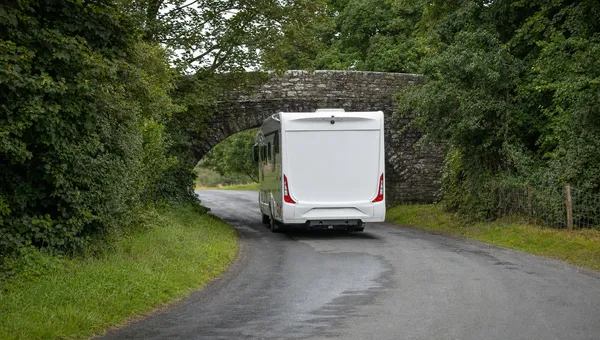
Big rigs need extra homework. Read recent reviews on an app like Campendium to learn if the last mile is rough or too narrow to turn around, and save two or three backup sites in case your first choice is taken. Rules and fire restrictions change, so call the local ranger district or BLM office before you leave.
Pack It In, Pack It Out
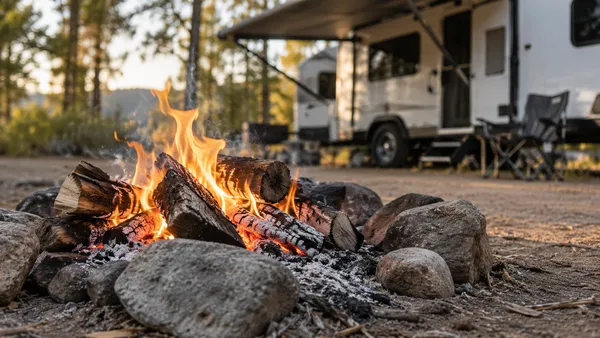
Take all your trash with you and leave the spot cleaner than you found it. Camp on ground that is already disturbed, use an existing fire ring if fires are allowed, and check for fire restrictions before you light anything.
How Much Water You Need
Water decides how long you can stay. Boondockers Bible uses a baseline of about 2 gallons per person per day, and EngineerFix puts minimalist camping at 3 to 5. This table uses 4 gallons per person per day, which leaves room for a short shower.
| Fresh tank | One person | Two people |
|---|---|---|
| 30 gallons | 7 days | 3 days |
| 40 gallons | 10 days | 5 days |
| 50 gallons | 12 days | 6 days |
| 80 gallons | 20 days | 10 days |
Do the math before you go: tank size divided by people times gallons per day. A Navy shower helps stretch it. Wet down, turn the water off to soap up, then rinse. Paper plates and a spare jug of drinking water help too.
Tanks Fill Up Fast
Your gray tank (sinks and shower) and black tank (toilet) are the other limit. Most of the water you use ends up in the gray tank, and it often fills before your fresh water runs out.
Plan to dump at a station on your way out. Our empty RV tanks guide shows how, and never dump on the ground, even gray water.
Subscribe to
Our Newsletter
By joining, you agree to receive emails.
See our Privacy Policy.
Power: Battery, Solar, or Generator
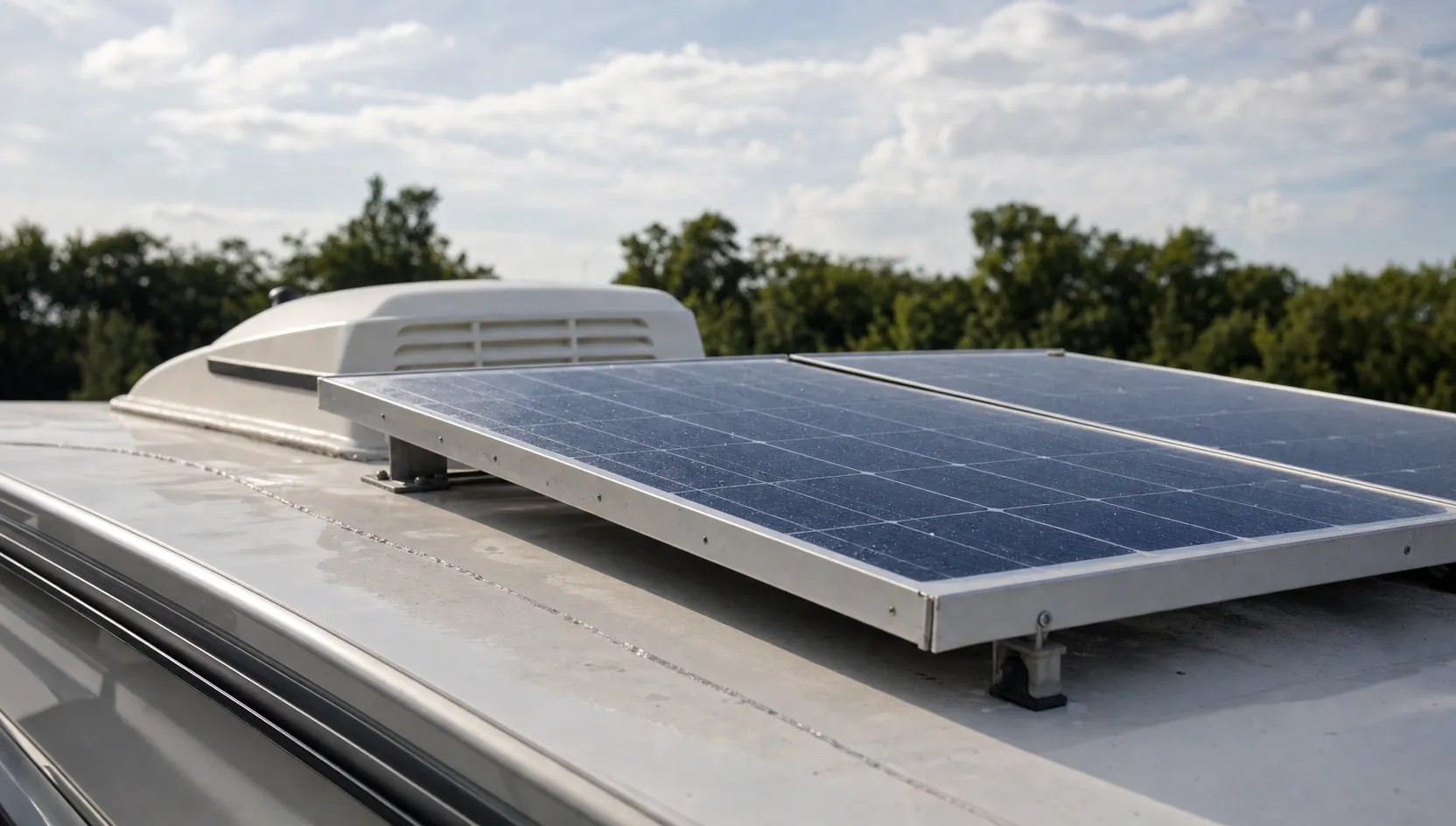
Without a plug, your house battery runs the lights and the water pump. Solar panels or a generator recharge it, so you need to know how much power you use each day.
Battery and Solar
CamperFAQs says a lead-acid battery lasts longest if you use only about 50% of its charge. A 200 Ah battery holds about 2,400 watt-hours, so 1,200 are usable, enough for a 100-watt load for 12 hours. Our battery runtime calculator does the math for your battery.
If you use about 1,500 watt-hours a day and get four hours of good sun, you need around 540 watts of panels once you allow for shade, heat, and wiring losses. That is about six 100-watt panels, and our solar calculator works it out for your own numbers.
Generator Backup
A generator is your backup when the sun doesn’t cooperate. One 13,500 BTU air conditioner plus 600 watts of other loads calls for about a 4,500-watt generator, which our generator size calculator confirms. Check for quiet hours before you start it.
Common Boondocking Mistakes
Arriving after dark. You can’t see ruts, ledges, or soft sand, so get there with daylight to spare and time to walk the site on foot.
Running the battery too low. A lead-acid battery lasts longer if you use only about half of its charge, so watch your monitor.
Running the generator at night. It carries far in the quiet, so keep it for the afternoon and follow the posted quiet hours for your area.
Skipping leveling blocks. Dirt pullouts are rarely flat, and a slanted fridge won’t work well, so pack leveling blocks and a bubble level for every trip.
Pulling onto soft ground. Stick to firm, already-used spots, and walk the spot before you drive in. Sand and mud can trap a heavy RV.
Check Before You Leave Pavement
Run through these in the last town, because there is no easy fix once you are out there. Each question takes only a moment to answer.
- Is your fresh water tank full?
- Are your gray and black tanks empty?
- Is your house battery fully charged?
- Is your propane tank full for the stove and fridge?
- Have you read recent reviews about the road in?
- Is your route saved offline on your phone?
Start With One Easy Night
Your first try doesn’t need a remote canyon. Pick a spot less than an hour from a town with a dump station and fresh water, so you can leave easily if something goes wrong.
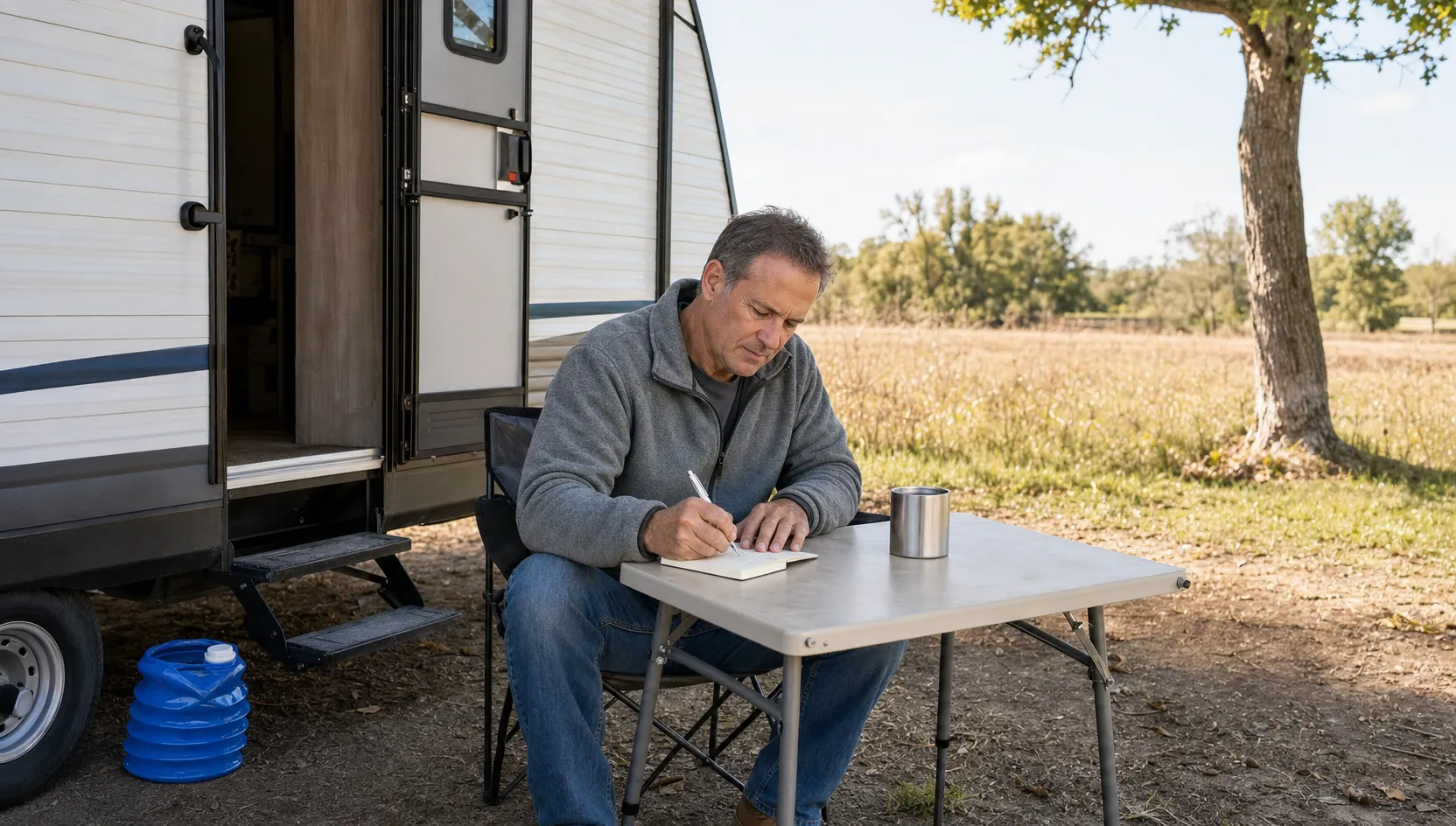
Stay one night with full tanks and a charged battery, then write down how much water and battery you used. That number tells you how long you can stay next time.
Stay Safe Out There
Tell a friend or family member where you are going and when you plan to be back, because cell service often disappears. Download offline maps before you lose signal, and keep a full gas tank, since the nearest station may be far away. Trust your gut about a spot. If the road feels sketchy or the area feels wrong, turn around and find another one.
Your Next Step
You don’t have to go far or stay long. Learn your water and power numbers on one easy night, and boondocking turns from a worry into a favorite way to camp. For a smooth first night anywhere, our campsite setup guide walks through leveling and hookups.