
RV gas mileage usually falls between 6 and 22 miles per gallon, depending on the type of RV you drive. A Class A motorhome sits at the bottom of that range and a camper van near the top. This guide shows what to expect from each type, what raises or lowers the number, and how to measure your own MPG and estimate your fuel cost.
Why RVs Use So Much Fuel
An RV is heavy, tall, and shaped like a box, so the engine works hard to push it through the air. That’s why even a healthy motorhome gets far fewer miles per gallon than a car. The tips below apply to gas and diesel rigs alike.
Typical MPG by RV Type
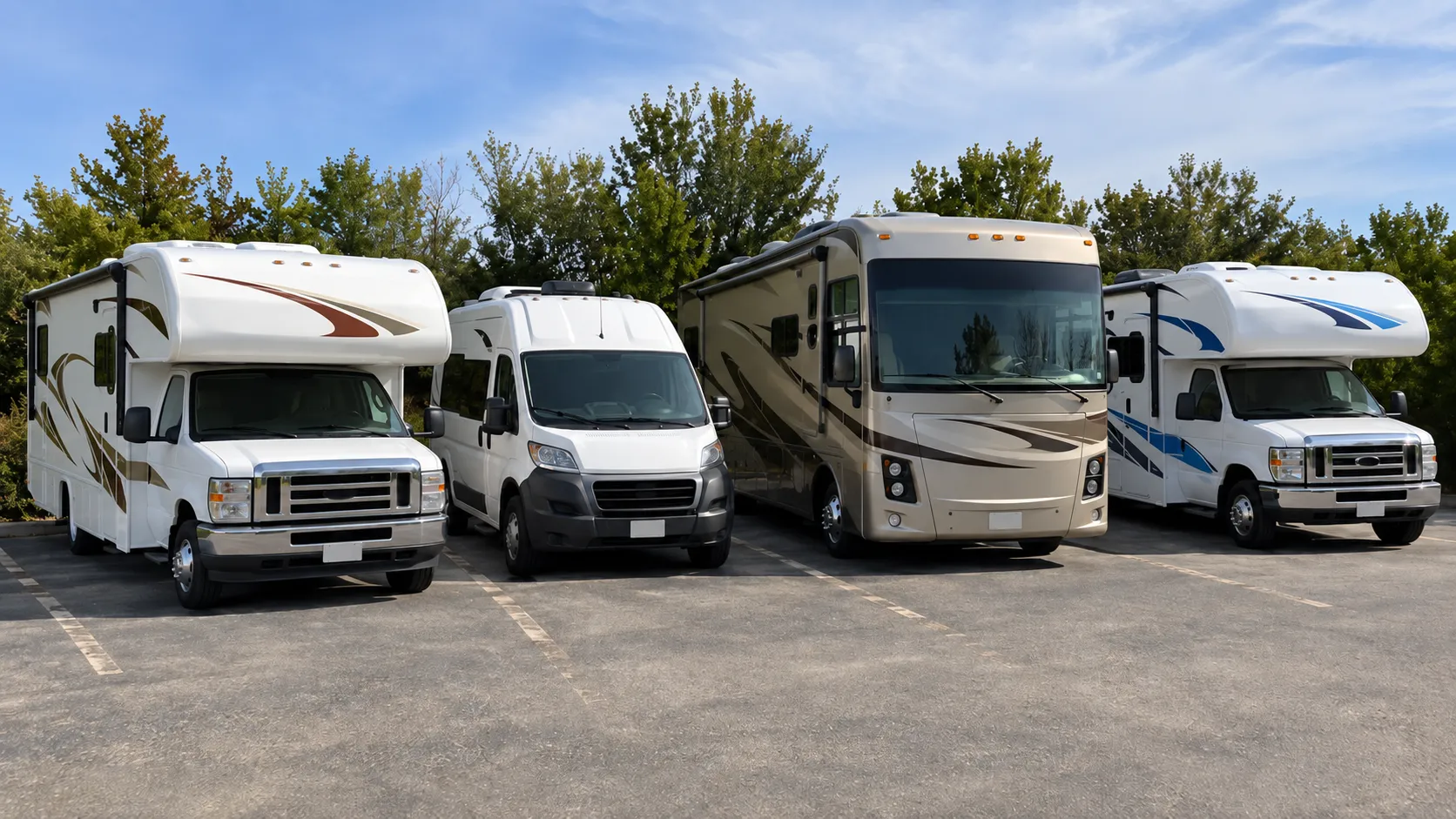
Here are typical ranges for each type. Sources give slightly different numbers, so treat them as a starting point. These ranges combine figures from Cruise America, RVshare, and CamperSmarts, and your own rig may land above or below them.
| RV type | Typical MPG | What to know |
|---|---|---|
| Class A | 6 to 10 | Biggest and thirstiest; diesel does better |
| Class B | 15 to 22 | Best MPG, but the least space |
| Class C | 10 to 15 | A middle ground for families |
| Towable | Your tow vehicle | Expect to lose 2 to 5 MPG while towing |
Gas or Diesel?
Diesel motorhomes often see a 10% to 15% efficiency improvement over comparable gas models, according to CamperSmarts. But diesel fuel can cost more per gallon, and diesel motorhomes cost more to buy, so compare your cost per mile as well as your MPG.
Speed Matters Most
Fuel economy drops sharply once you go past about 60 to 65 mph, according to RVshare, and CamperSmarts says most RVs run best between 55 and 65. The U.S. Department of Energy adds that aggressive driving can lower gas mileage by roughly 15% to 30% at highway speeds. On flat highways, cruise control helps you hold a steady speed.
Weight and Towing
The heavier your rig, the more fuel it burns, and that includes water, gear, and passengers. The Department of Energy says an extra 100 pounds can cut MPG by about 1%. Water alone weighs about 8.3 pounds per gallon, so travel with a nearly empty fresh tank when you can.
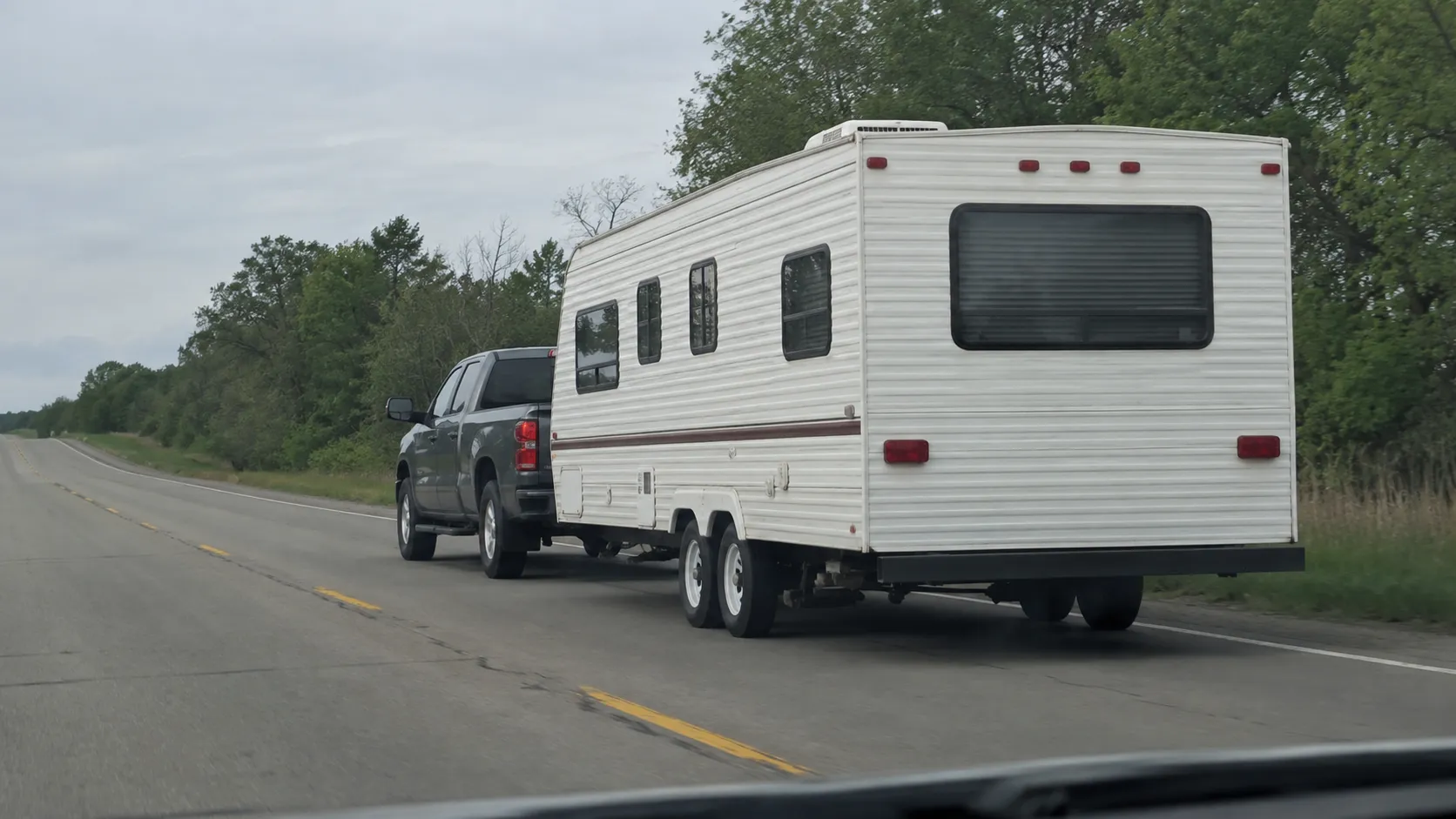
Towing costs even more. CamperSmarts says most trucks and SUVs lose 2 to 5 MPG when pulling a trailer, so a half-ton gas truck that gets 18 MPG empty might average 12 to 14 MPG with a travel trailer behind it. Budget for that drop before you compare trailers.
Wind and Hills
A strong headwind pushes hard against a tall, boxy RV, and long climbs make the engine work even harder. RVshare notes that a Class A can drop to about 4 MPG on steep or hilly terrain. Plan an extra fuel stop on days with big climbs.
Tires and Idling
Underinflated tires increase rolling resistance, so your engine works harder. The Department of Energy says keeping tires at the proper pressure improves gas mileage by 0.6% on average, and up to 3% in some cases. Our tire pressure guide and Tire Pressure Calculator show how to find the right number.
Idling burns fuel too. It can use a quarter to a half gallon an hour, depending on engine size and air conditioner use, so shut the engine off if you’ll be stopped for more than a minute. CamperSmarts puts a gasoline generator at roughly 0.5 to 1 gallon an hour under load.
Quick Checks Before You Leave
Run through these before a long drive. Each one protects your fuel budget, and none of them takes more than a minute, so do them while you load up.
- Speed: Can you keep to about 60 mph on this route?
- Weight: Are you carrying only the water and gear you need?
- Tires: Did you check the pressure while the tires were cold?
- Hills: Is there a mountain day where you should add a fuel stop?
- Stops: Do you know where your next fuel stop is?
How to Find Your Own MPG
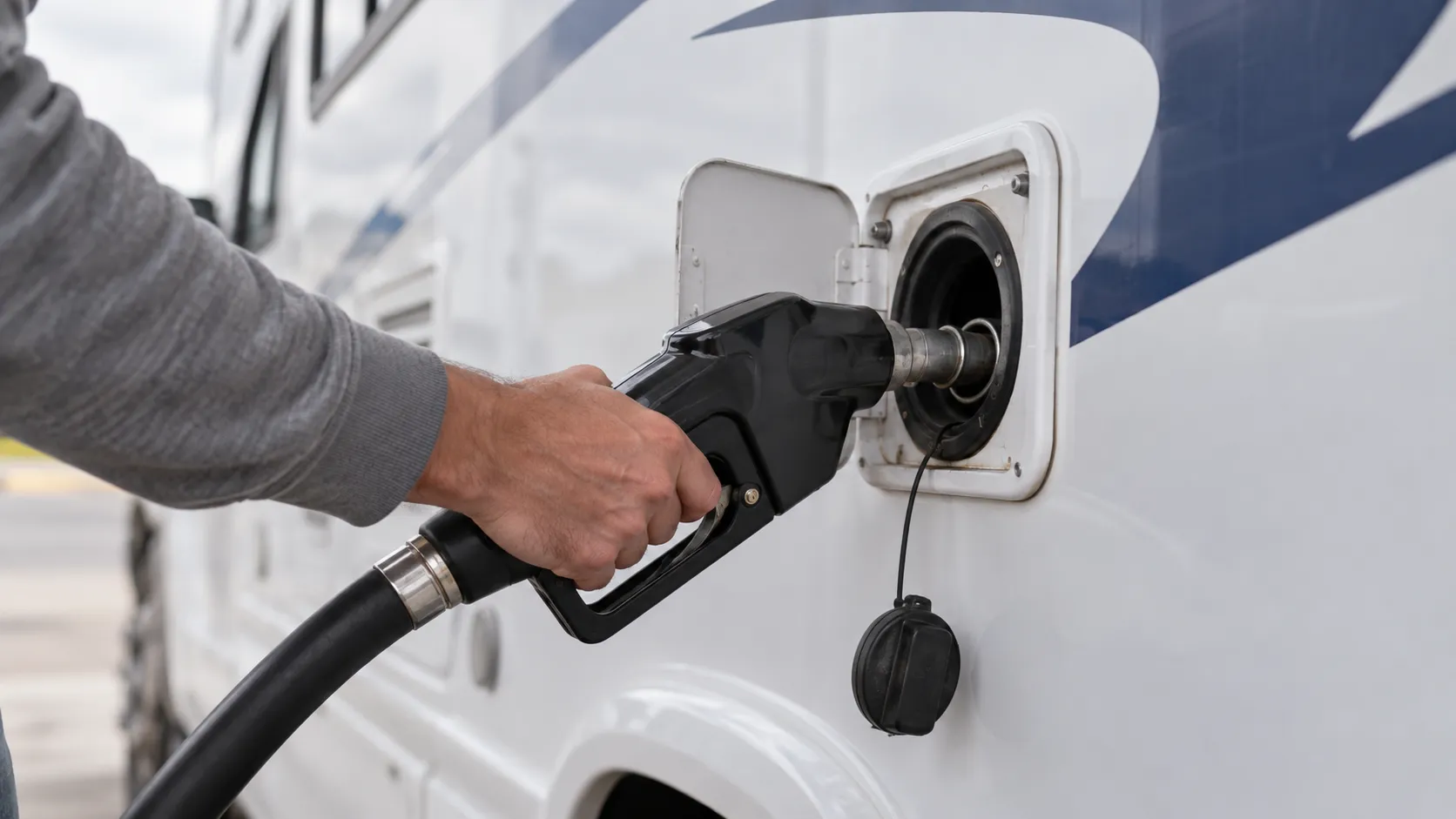
The most reliable way is the fill-up method. Fill the tank, reset the trip meter, and drive as you normally would. At the next fill-up, divide the miles you drove by the gallons you added.
Average Several Tanks
Repeat the method for three or four tanks and average the results, because one tank can be skewed by a hilly day or a headwind. A dash display is handy, but it can be off, so trust the pump and your own math more than the display.
Keep a Simple Log
Jot down each fill-up in your phone: the date, miles, gallons, and whether you were towing or crossing mountains. A few notes like that make your numbers easy to understand later.
Subscribe to
Our Newsletter
By joining, you agree to receive emails.
See our Privacy Policy.
How to Estimate Your Fuel Cost
The formula is simple: miles divided by MPG, times the price per gallon. For a 600-mile trip at 8 MPG, you need 75 gallons. At an example price of $3.50 per gallon, that costs $262.50.
Two more MPG makes a visible difference. At 10 MPG the same trip needs 60 gallons and costs $210, about $52 less. The price is only an example, so use today’s price at the pump and add a 10% to 15% buffer for hills and wind, as CamperSmarts suggests. To skip the math, use our Fuel Cost Calculator or the Trip Cost Calculator.
Know Your Range
Your range is your tank size times your MPG. A Class C with a 55-gallon tank at 10 MPG can go about 550 miles, and filling it at $3.50 per gallon costs $192.50. Don’t run it close to empty, because fuel stops that suit an RV are not always easy to find. Our trip planning guide explains how to choose them and plan your stops.
Your Next Step
Your RV’s MPG is a number you can measure in three or four fill-ups. Drive a little slower, keep your tires at the right pressure, and plan your budget with your own number. Our ownership costs guide shows how fuel fits into your yearly budget.