
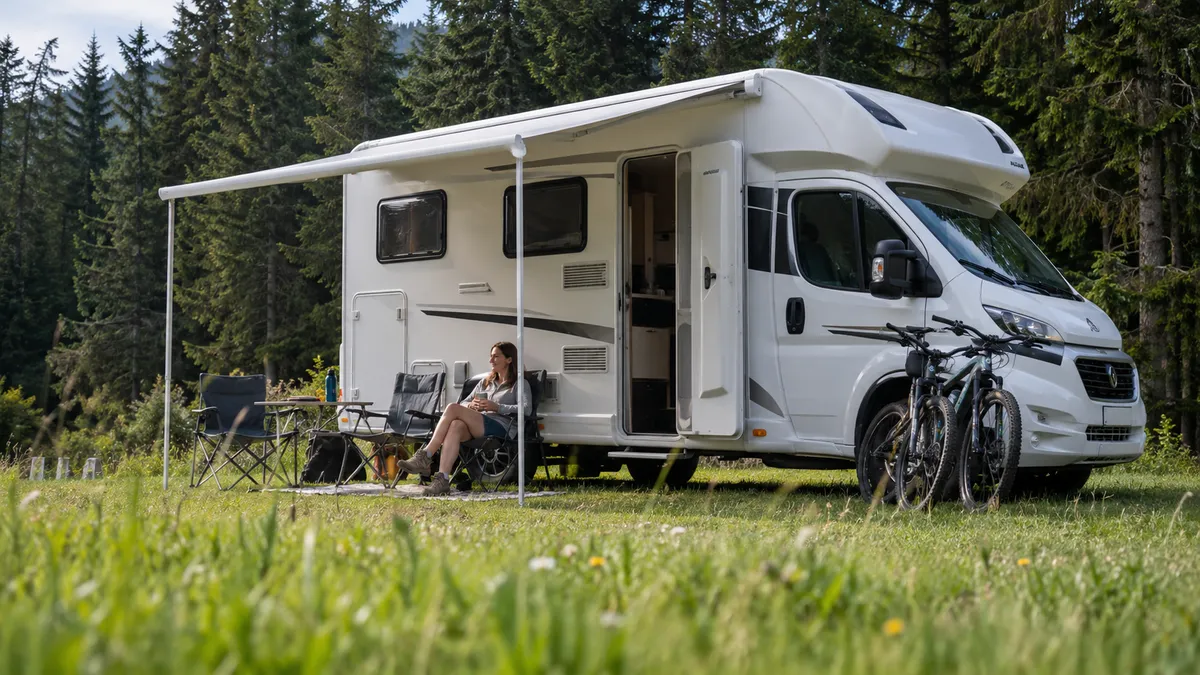
RV tips for beginners come down to a few habits: test your RV near home, keep driving days short, know your height, and protect your water and power at every campsite. These rules prevent most first-trip problems, and none of them need special skills. Read them once before you pack, and keep them handy for your first few trips.
Test Everything in Your Driveway
Spend your first night parked in your driveway. Run every slide, outlet, faucet, and appliance while the hardware store is ten minutes away, so a stuck slide or a dead outlet is only an annoyance. Fix every problem you find before you leave.
Follow the 2-2-2 Rule
The 2-2-2 rule is a pacing guide for new RVers: drive no more than 200 miles a day, stop every two hours, arrive by 2 PM, and stay at least two nights. It protects you from driver fatigue and gives you daylight to set up. EcoFlow describes longer 3-3-3 and 4-4-4 versions for experienced RVers, so move up only when your first trips feel easy.
Know Your Height and Your Route
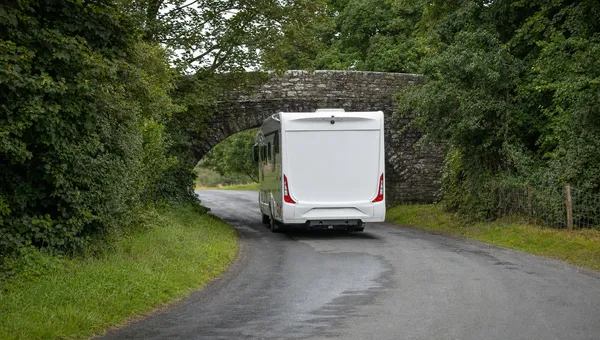
Low bridges are the hazard that ends trips fast. Two habits keep you out of trouble: know your exact height, and plan your route around it.
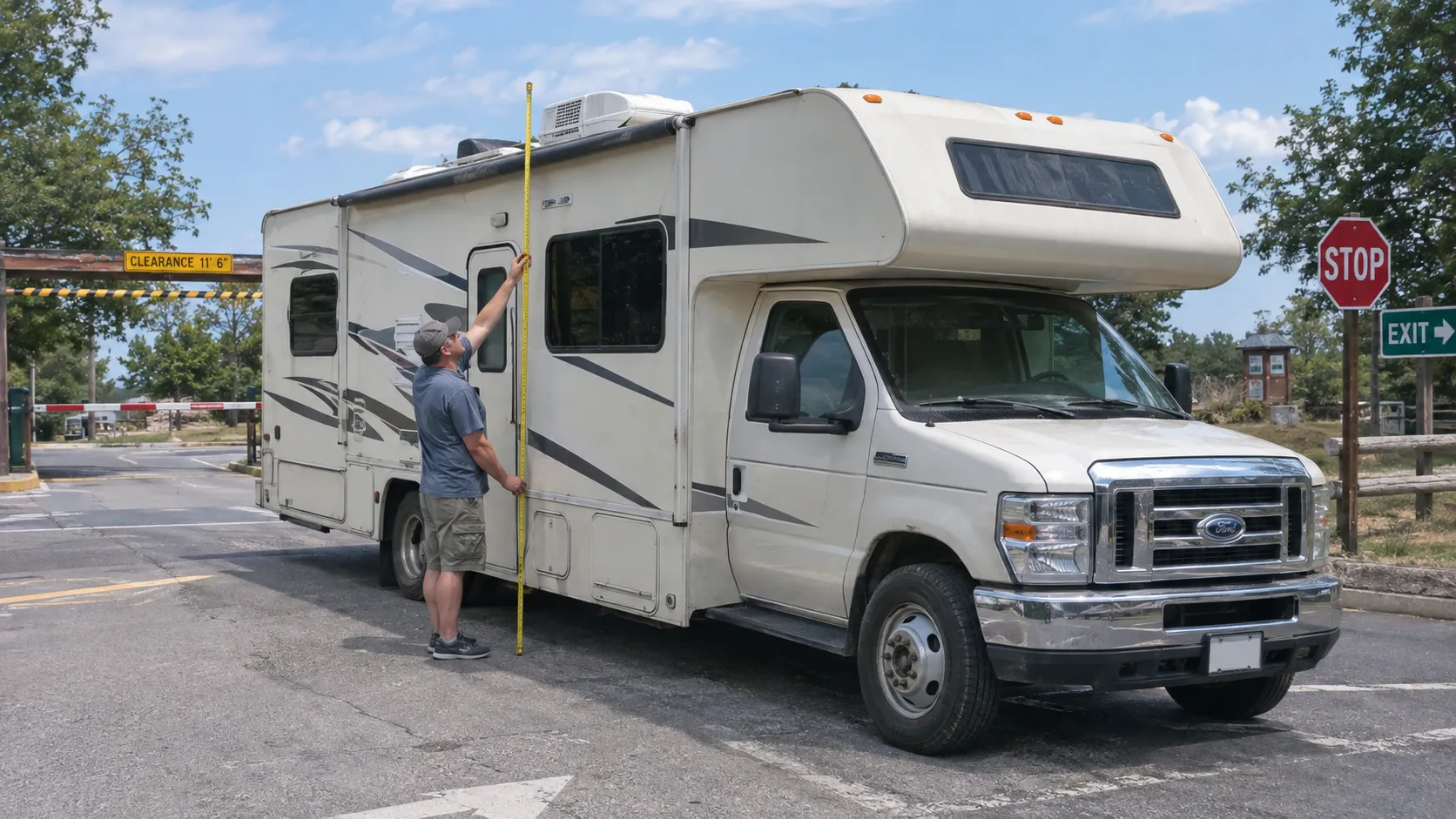
Measure to the Highest Point
Measure your RV from the ground to its tallest point, including the roof A/C, vents, and antennas, and put a note with that number on your dashboard. Our Height Clearance Calculator and guide to RV height clearance help you work out your travel height.
Use RV-Specific Navigation
Most standard map apps don’t know your RV’s height, so they can send you under a bridge you can’t clear. Use an RV-specific GPS app such as RV LIFE, where you enter your rig’s height, weight, and length, and still read the posted clearance signs.
Check Tire Pressure Before You Drive
Check your tire pressure before each trip, early in the morning while the tires are still cold. KOA says to find the cold pressure on the label inside the doorjamb or in your owner’s manual, and a tire can be well under pressure before it looks low. Not sure which number to use? Our tire pressure guide and Tire Pressure Calculator walk you through it.
Travel Light on Fresh Water
Water weighs about 8.3 pounds per gallon, so a full 40-gallon fresh tank adds more than 330 pounds to your RV. That weight cuts your fuel economy and eats into your payload. If your campground has water, travel with a mostly empty tank and fill up on arrival.
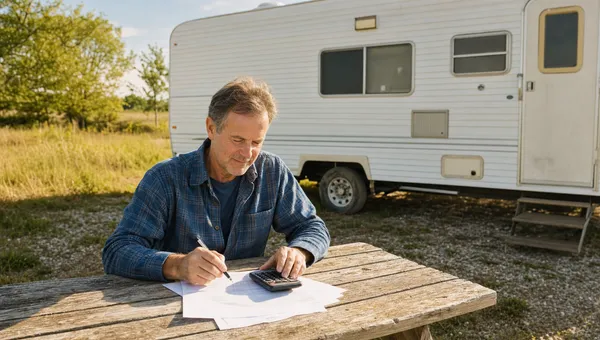
Fuel is one of your largest trip expenses, so know the number before you leave. Our Fuel Cost Calculator turns your distance, MPG, and gas price into a trip estimate.
Choose an Easy First Campsite
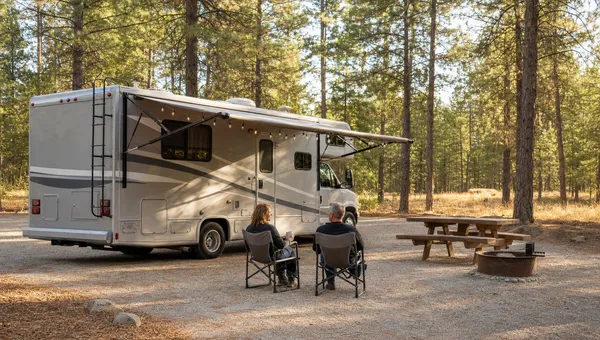
Ask for a pull-through site with hookups on your first trips. Pull-through sites let you drive in and out without backing up, and hookups mean you never ration power or water. Some campgrounds limit RV length, so check the maximum when you book, and arrive in daylight.
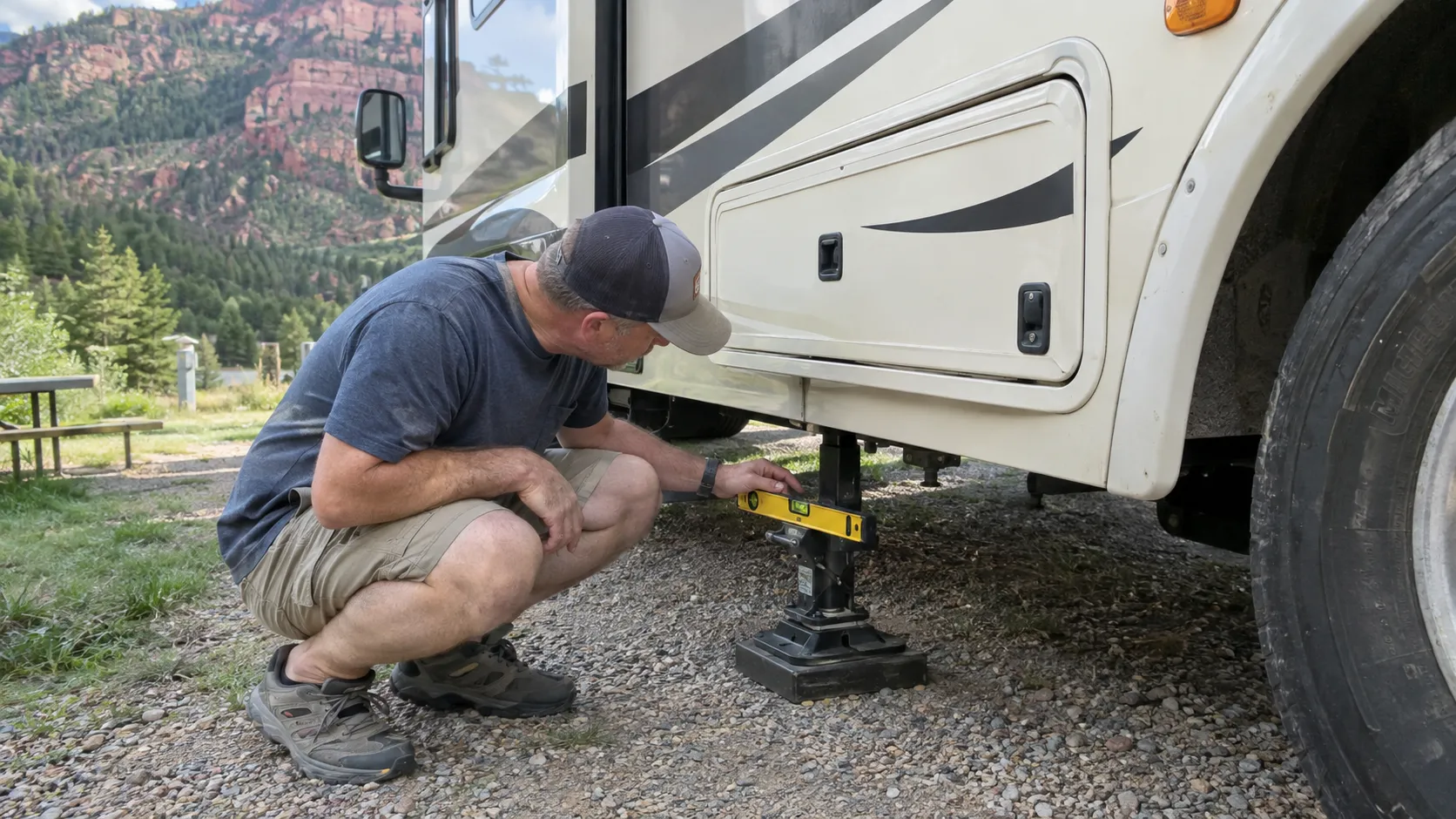
Level Before You Extend Slides
Level your RV from side to side and front to back before you extend the slides. A Keystone manual quoted by RV Travel says the RV must be level to avoid binding the slide rooms. Stabilizer jacks steady the RV but aren’t built to lift it, so use leveling blocks, and check your manual for the exact order for your model.
Protect Your Water Supply
Campground water pressure varies, and high pressure can damage your RV’s plumbing. Screw a pressure regulator onto the spigot before you attach the hose. Winnebago recommends one that limits pressure to 50 psi.
Use a drinking-water hose for your fresh water. Garden hoses aren’t made for drinking water, so look for a hose labeled drinking-water safe, usually white or blue. Flush it before each use and store it with both ends capped.
Protect Your Electrical System
Campground power can spike, sag, or arrive miswired, and any of those can damage your RV’s electronics. A basic surge protector blocks high-voltage spikes. An EMS, short for electrical management system, also cuts power when voltage is too low or the wiring is faulty, Camping World lists 108 to 132 volts AC as the acceptable range.
Buy a unit that matches your 30-amp or 50-amp plug, and plug it into the pedestal before your RV cord. If it shows a fault, ask the campground host for a different site.
Subscribe to
Our Newsletter
By joining, you agree to receive emails.
See our Privacy Policy.
Be a Good Campsite Neighbor
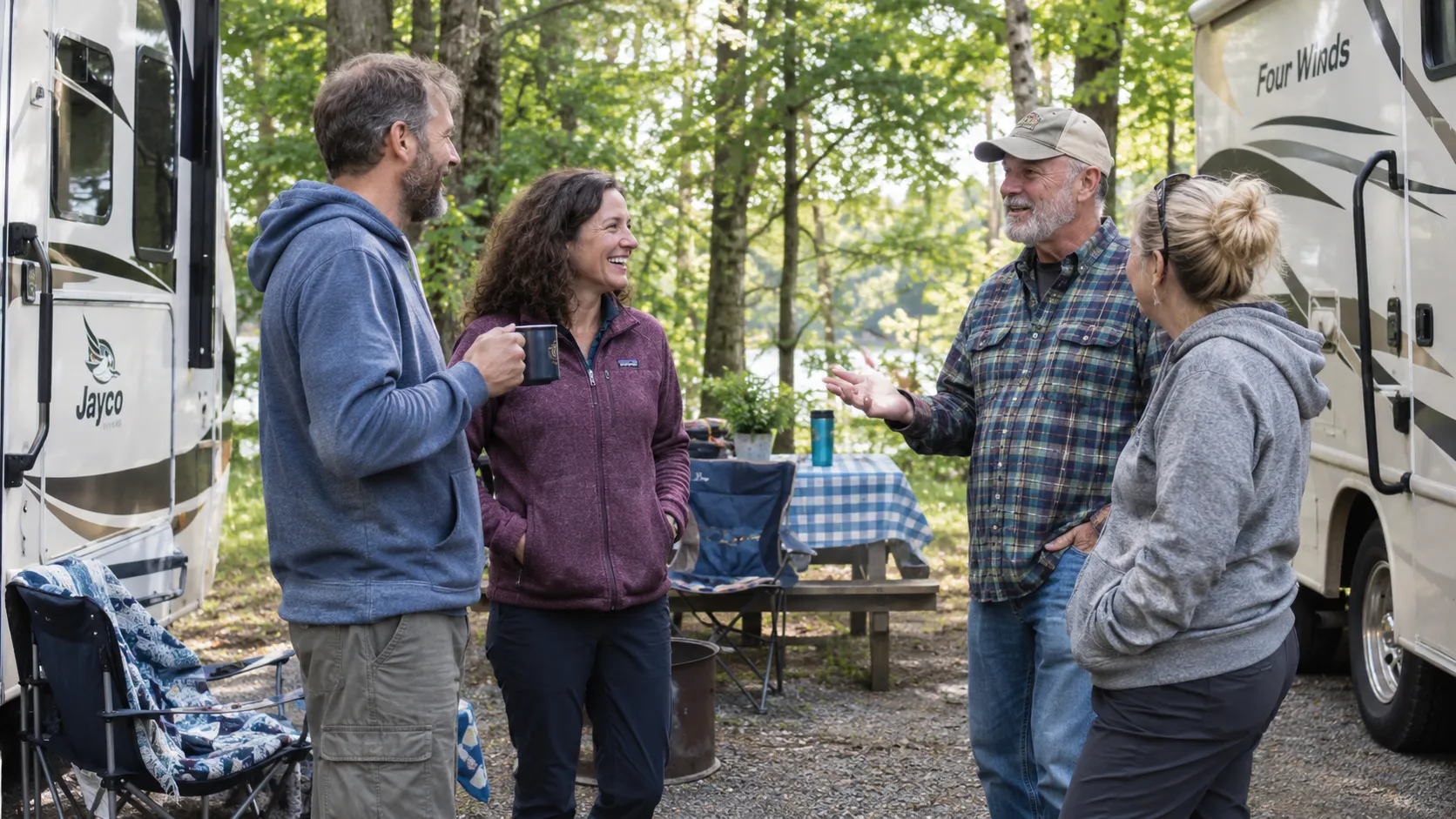
Treat every campsite as someone’s front yard. Stay on roads and paths instead of cutting through other sites to reach the bathroom, and keep to posted quiet hours. Camping World gives 10 p.m. to 6 a.m. as a common generator curfew, but times vary, so ask at check-in. Turn off outdoor lights when quiet hours start, too.
Dump Black Before Gray
Connect the sewer hose with both valves closed, then empty the black tank first. Open the gray tank next, so the soapy water rinses the hose. Keep the valves closed until each tank is most of the way full, because the liquid helps flush solids out, and never leave the black valve open on full hookups. Our tank guide covers the full routine.
Do a Double Walk-Around Before You Leave
Walk around your RV twice before you pull away, because one lap always misses something. Check these six things before the engine starts.
- Storage bays and doors are latched.
- Steps and slides are pulled in.
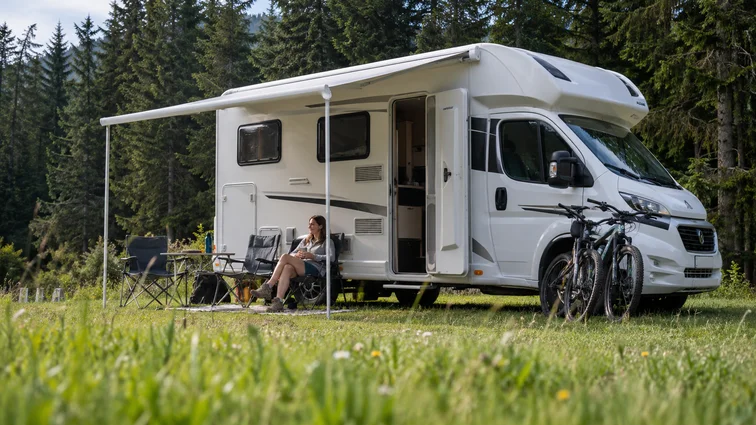
- The awning is rolled up and secured.
- Power cord, water hose, and sewer hose are unhooked and stowed.
- Leveling blocks and stabilizer jacks are raised and loaded.
- Hitch, safety chains, and trailer lights are connected if you tow.
Common First-Trip Mistakes
Overscheduling the first drive. A long first day leaves you tired and arriving after dark, so keep it short and stay close to home.
Hooking up in a hurry. Level first, then add the regulator and surge protector before you connect anything else to the campground.
Driving with a full water tank. The extra weight costs you fuel and payload, so fill up after you arrive instead of at home, and only carry what you need.
Skipping the practice night. Problems are easier to fix in your driveway than at a campground two hours from the nearest store.
Trusting a standard GPS. An app that doesn’t know your height can send you toward a bridge you can’t clear, so use an RV-specific app.
Your Next Step
You don’t need to remember every rule on day one. Pick a short first trip, run the driveway test, and add one new habit each time you camp. Our beginner’s guide covers the bigger picture, and our first-night guide covers your first evening at camp.