
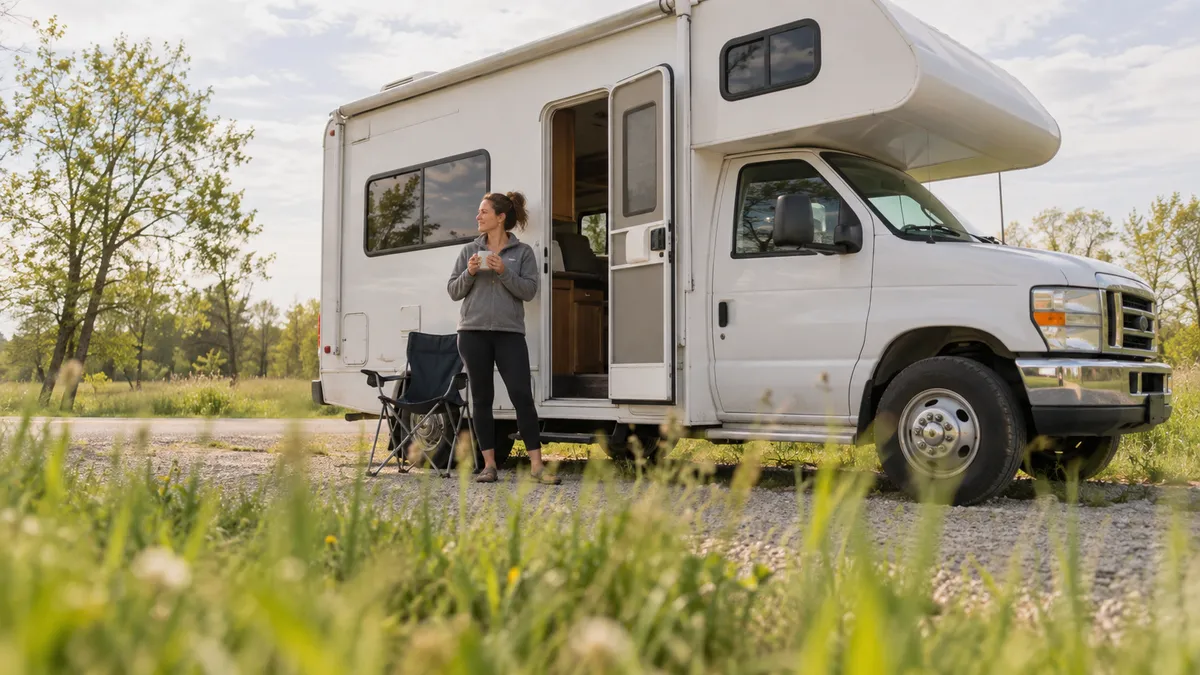
Planning an RV road trip comes down to a few decisions made in the right order: how many days you have, how far you will drive each day, and where you will sleep each night. This guide walks you through each one, from the calendar to the campground booking, with the numbers and checks that keep a first trip calm.
Count Your Travel Days First
Start with the calendar, not the map. Packing and unpacking take time at both ends, so a week off gives you fewer travel days than you expect.
Then decide what kind of trip you want, because it shapes everything else. A national park week needs reservations months ahead, while a beach weekend or a visit to family needs far less planning. For a first trip, choose a destination within a day’s drive of home, and consider spring or fall, when weather and crowds are often easier to handle.
Make Sure Your RV Fits the Plan
Many campgrounds set length limits, and bigger rigs need sites and parking lots with more room. Know your rig’s length and height before you choose where to go, because you will use both numbers again when you pick a route and a campsite. Our height clearance guide shows how to measure yours accurately.
Keep Your Driving Days Short
For your first trips, plan about 200 miles a day. Camping World recommends the 2-2-2 rule: no more than 200 miles, a stop every two hours, and arrival by 2 PM. Our first-trip rules cover it too, and EcoFlow suggests it for new RVers, with longer versions for experienced ones once they feel confident behind the wheel.
| Rule | Daily drive | Arrive and stay |
|---|---|---|
| 2-2-2 | Up to 200 miles | By 2 PM, 2 nights |
| 3-3-3 | Up to 300 miles | By 3 PM, 3 nights |
| 4-4-4 | Up to 400 miles | By 4 PM, 4 nights |
Take Breaks and Start Short
Stop at least every two hours, even if you feel fine. Tiredness builds slowly in an RV, because you are making small steering corrections the whole time. Make the first day the shortest one, since you will be excited, and a short drive leaves energy for setup.
Check Your Route for RV Problems
A car GPS doesn’t know how tall or heavy you are. Use an RV-specific navigation app with your RV’s height, weight, and length, and still watch the posted signs. Look for low bridges, steep grades, and tunnels, and skip back-road shortcuts.
Propane surprises many first-timers. RV Travel lists tunnels in Maryland, Massachusetts, New Jersey, New York, Texas, and Virginia that restrict or ban it, and some require the tank valve to be closed. Check the rules on your route, and trust the agency that runs the tunnel over any app, because rules can change.
Plan Fuel Stops and Parking
Choose fuel stops with wide entrances, and fill up before the tank gets low. At attractions, use the satellite view on a map to check RV parking, or call ahead.
Book Your Campsites Early
Popular campgrounds fill fast, and the best state and national park sites often book months ahead. Recreation.gov says most campsites open six months before your arrival date, so check the Seasons and Fees tab for the exact release time. Heading to a national park? Our national park tips cover size limits and booking.
If your first choice is full, Recreation.gov suggests staying Sunday through Thursday instead of on weekends and setting an Availability Alert for cancellations. Book every night of your first trip before you leave, because arriving without a reservation on a summer weekend is a gamble you don’t need to take.
Questions to Ask Before You Book
Check these before you click “book,” so nothing surprises you at the gate. Each answer is usually on the campground’s listing or one phone call away.
- Is the site long enough for your RV and tow vehicle?
- Does it have the power, water, and sewer connections you need?
- What time can you arrive, and is there an after-hours option?
- Is it a pull-through or a back-in site?
- What happens if your plans change?
Plan Your Budget
Three costs make up most of your trip: fuel, campsite fees, and food. Fuel is the one that surprises people, so enter your route’s miles and your RV’s MPG into our Fuel Cost Calculator to get a number early. Our mileage guide shows typical MPG numbers.
Campsite fees depend on the campground type, the season, and the hookups, so check each site’s price. Our Trip Cost Calculator adds everything together for your whole trip. Then add a cushion for surprises like a repair or an extra night, and see our ownership costs guide for the full yearly picture.
Get Your RV Ready
Do a shakedown night in your driveway first, then run through a pre-drive check on the morning you leave. Look at your tires, steps, slides, latches, and cords. Pack leveling blocks, wheel chocks, a surge protector, a pressure regulator, and hoses, and our setup guide walks you through using them when you arrive.
Write Down Each Day
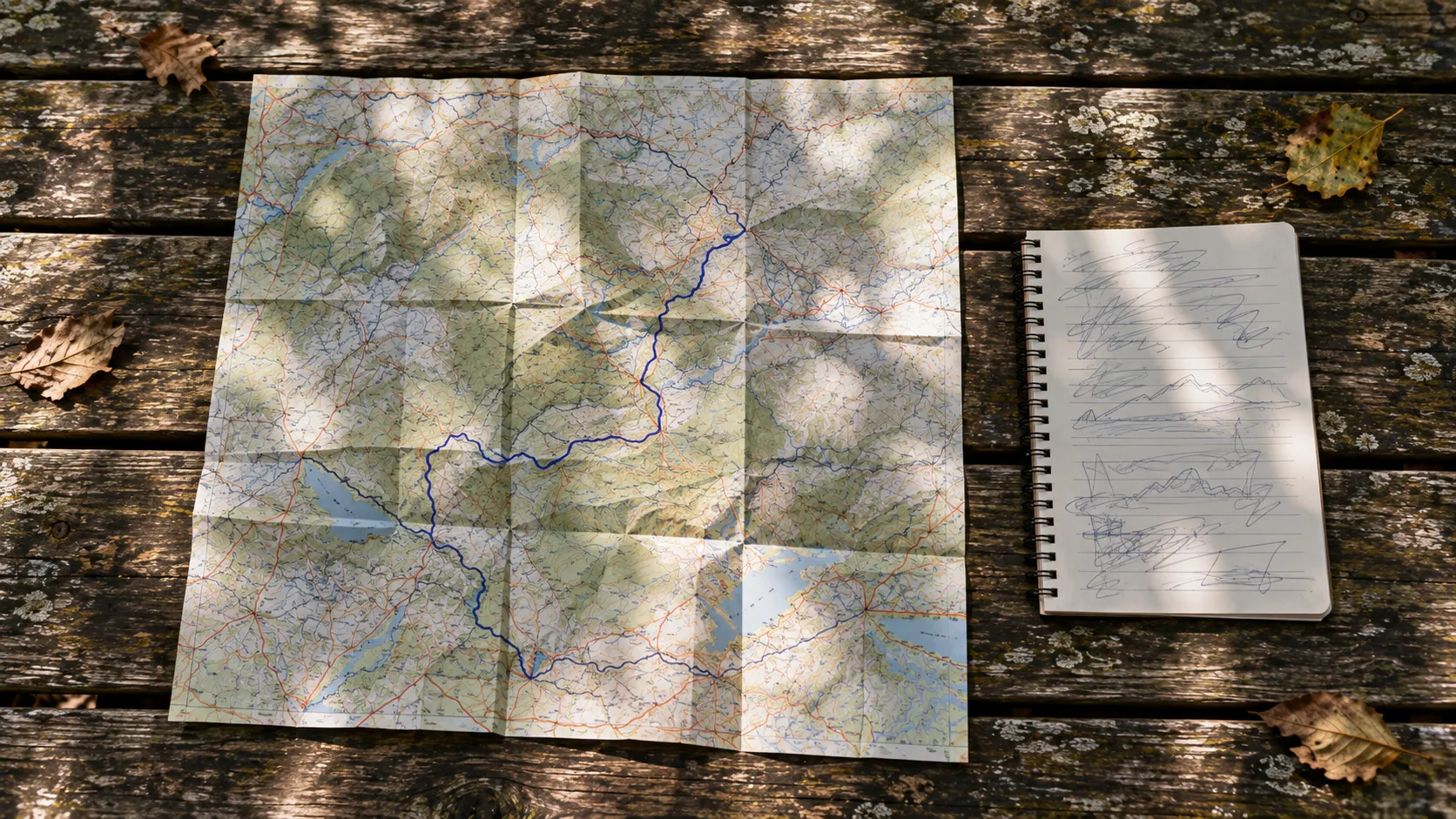
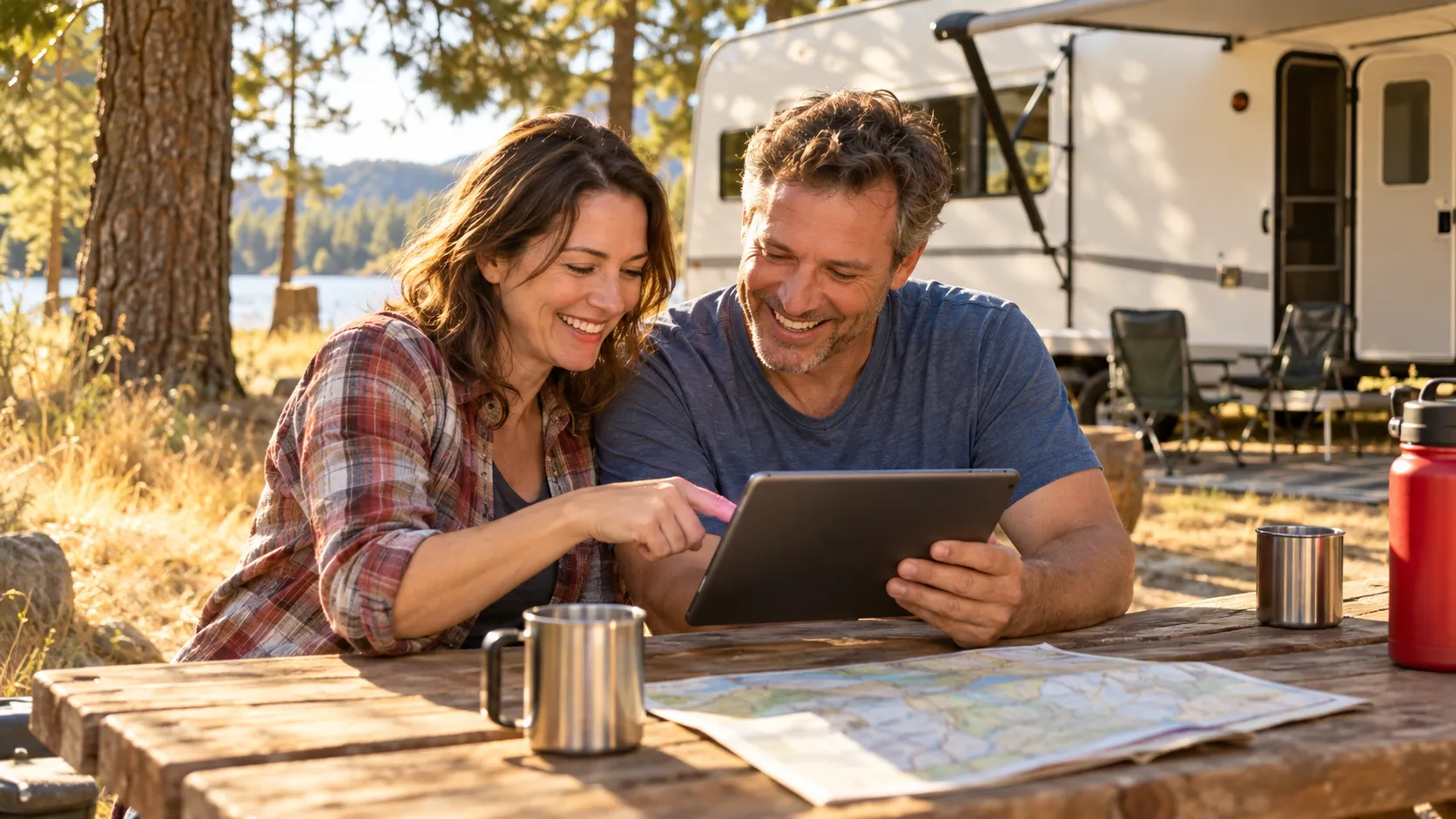
Make a simple one-page plan for every driving day. Note where you start, where you stop, the campground’s address and phone number, its check-in time, and one or two fuel stops. Keep a copy on paper and one on your phone, along with your registration and insurance papers, and download offline maps in case you lose signal.
Subscribe to
Our Newsletter
By joining, you agree to receive emails.
See our Privacy Policy.
Build In Some Flexibility
Leave one open day in your plan, so a delay or a detour doesn’t wreck the rest of the trip. Keep a backup campground in mind, and share your route with someone you trust. Out of daylight? Our overnight parking guide shows where to stop. Check the forecast each morning, and change your plans rather than push through high wind.
Common Trip Planning Mistakes
Driving too far. Long days lead to tired mistakes, so keep your first days to about 200 miles and stop every two hours to stretch and reset.
Booking late. Popular sites fill months early, and arriving without a reservation on a summer weekend is a gamble that can leave you with nowhere to sleep.
Trusting a car GPS. Use an RV app with your height, weight, and length, and still watch the posted signs for low clearances.
Arriving in the dark. Check-in times matter, and setup is much harder when you can’t see the ground or the hookups, so aim to arrive with daylight to spare.
Ignoring the forecast. Wind and storms matter more in a tall RV, so move your plans instead of pushing through, and wait out high wind at a rest area.
Your Next Step
Your first road trip doesn’t need to be perfect or far. It needs a realistic plan, a reserved campsite each night, and a little room to adjust. Start with one short trip, and each one after it will be easier to plan, because you will know what to change next time.