
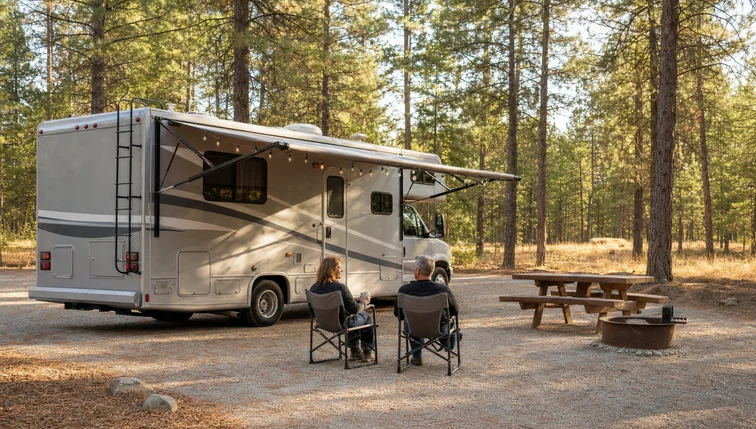
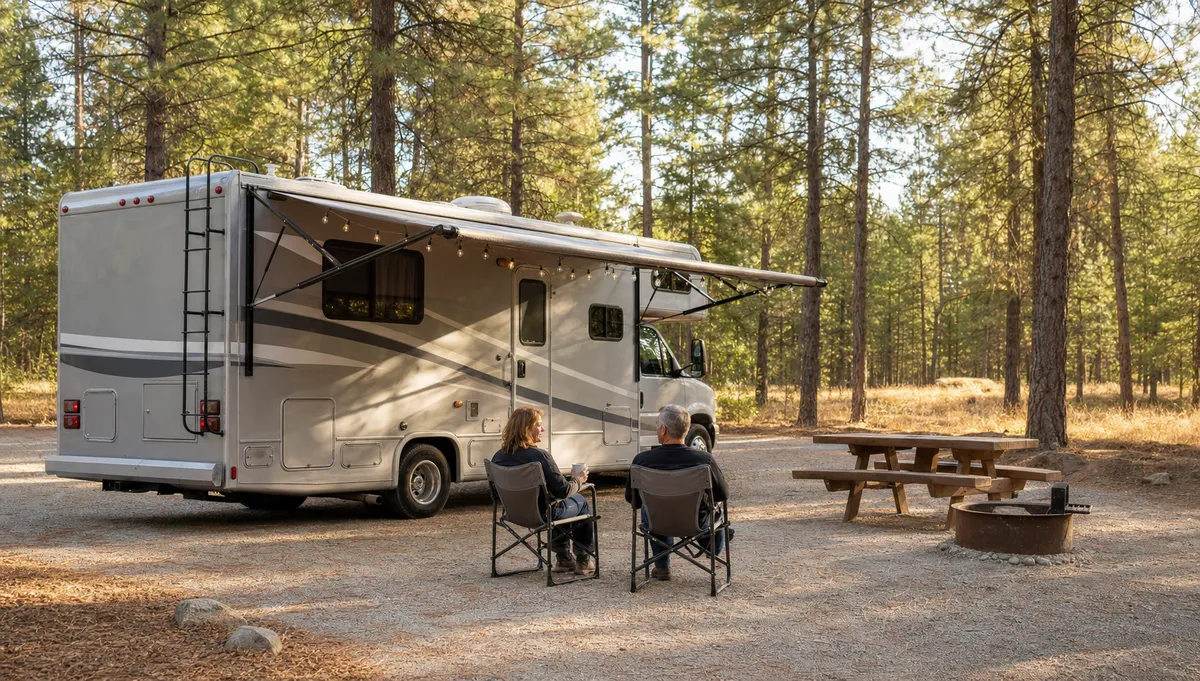
First time RV camping comes with a few unknowns: how check-in works, when the quiet rules start, and what to do once the sun goes down. Most of it follows a simple routine that campgrounds repeat every day. This guide walks through your first night in order, from the reservation to checkout morning, with the times, rules, and safety checks that matter most.
Your Stay at a Glance
Campgrounds run on a predictable schedule, and knowing it removes most of the guesswork. The times below are typical, according to Jeff Setter, but every park sets its own, so confirm yours on your reservation.
| Moment | Typical time | What to do |
|---|---|---|
| Check-in | 1 pm to 4 pm | Go to the office first |
| Quiet hours | Start around 10 pm | Generators off, voices low |
| Checkout | 10 am to noon | Finish packing before the deadline |
Confirm Your Reservation First
Read your confirmation the week before you go. Check the dates, the site size, the hookups, and the check-in and checkout times, and call the campground right away if anything looks off. Booking a pull-through site close to home is the easiest start, and our first-trip rules explain why it makes everything easier.
Early arrival is worth asking about, but it can cost money. At the Las Cruces KOA, for example, check-in is at 1 pm, and the early arrival fee is $25 before 11 am and $5 after. Policies differ everywhere, so ask before you leave home.
Check In at the Office
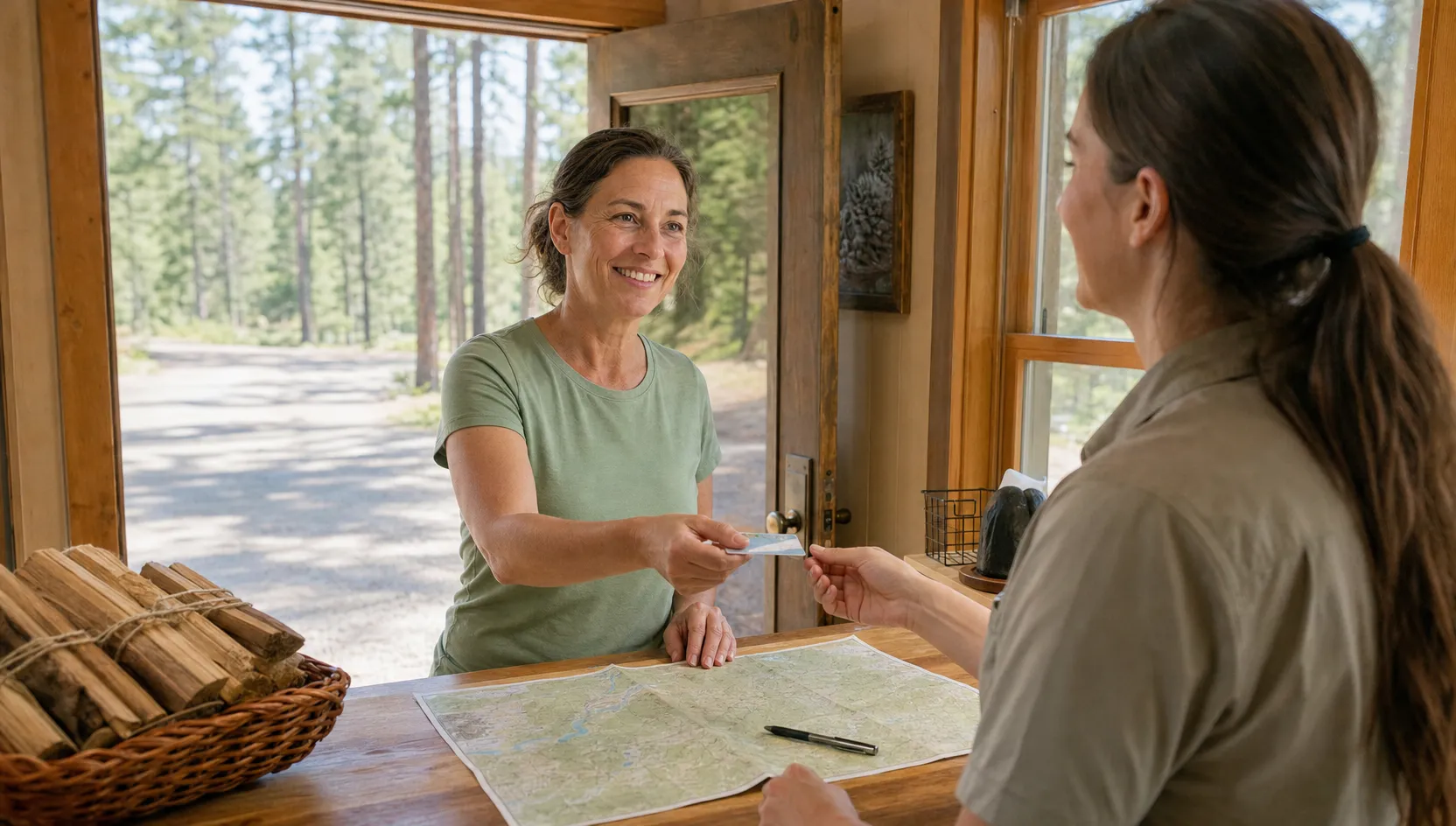
Stop at the office before you drive to your site, even if you have a confirmation number. Staff hand over your site number and a map, and they explain the local rules. Ask where the dump station is, where to put your trash, and whether campfires are allowed today. At the Las Cruces KOA, the fire status is posted daily at the front desk.
If You Arrive After Hours
Call ahead if you expect to arrive after the office closes. Jeff Setter notes that some campgrounds keep a waiting area for late arrivals, while others give you an entry code and let you check in the next morning. Ask which one applies to you, and get your site number and directions before you hang up, so you can find the spot in the dark.
Then drive in slowly with your low beams on, and keep the noise and lights down while you set up. Running very late? Our overnight parking guide covers where you can stop for the night and try again in the morning, which beats arriving at a dark gate.
Set Up While It’s Still Light
Daylight shows you the ground, the hookups, and any low branches. Level the RV, chock the wheels, and connect your hookups, and our campsite setup guide walks you through each step. Save the awning, chairs, and decorations for last, once the essentials are done.
Know the Quiet Hours
Quiet hours often start around 10 pm. At the Las Cruces KOA they run from 10 pm to 7 am. Ask whether your campground also sets separate generator hours, because generators and slamming bay doors carry farther than you expect after dark.
Good manners follow the same rule. Walk around other campers’ sites instead of cutting through them, keep your dog on a leash, and point your lights at your own site. Packing your gear the night before also keeps your early departure quiet.
Campfire Basics
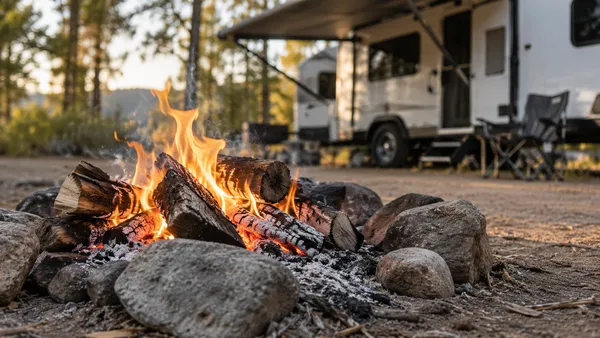
Check whether fires are allowed before you buy any wood, because campgrounds can ban them on dry days. If they are, buy firewood close to where you burn it. Don’t Move Firewood recommends staying within 10 miles when you can and within 50 miles in some areas, since hauling wood spreads tree-killing insects.
Never leave a fire unattended, and keep tents, low branches, and dry brush at least 15 feet away. To put it out, Smokey Bear says to drown the fire, stir the embers, and drown it again. If you can’t hold the back of your hand over the ashes, it isn’t out.
Subscribe to
Our Newsletter
By joining, you agree to receive emails.
See our Privacy Policy.
Your First Night in the RV
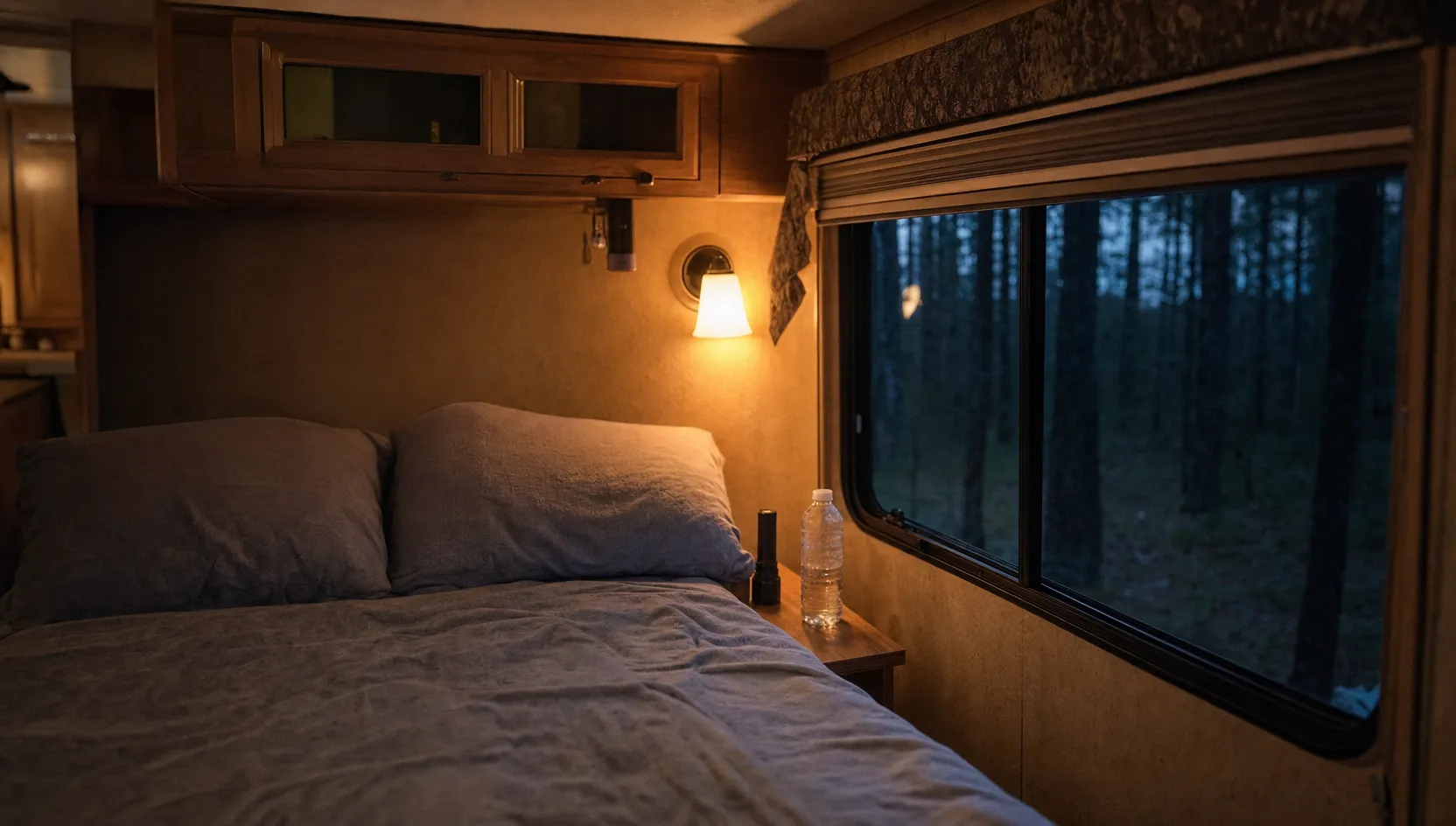
Your first night usually feels odd, with a new bed, new sounds, and every creak seeming loud. That is normal. Make the bed before dark, turn on a small light, and keep your keys, phone, and a flashlight within reach so nothing sends you searching in the dark.
A Quick Safety Check Before Bed
Spend two minutes on safety before you sleep. Smoke, carbon monoxide, and propane alarms only help if they work, and Camping World gives clear timelines for testing and replacing them. Run through this list on your first night.
- Press the smoke alarm test button, which should be done monthly.
- Test the carbon monoxide and propane alarms, and confirm they have power.
- Check the date on each detector, because CO and propane units last about 4 years.
- Look at the fire extinguisher gauge, and replace it if the needle is in the red.
- Make sure everyone knows where the exits and the extinguisher are.
- Keep the stove and heater clear of curtains and bedding.
Mornings and Checkout
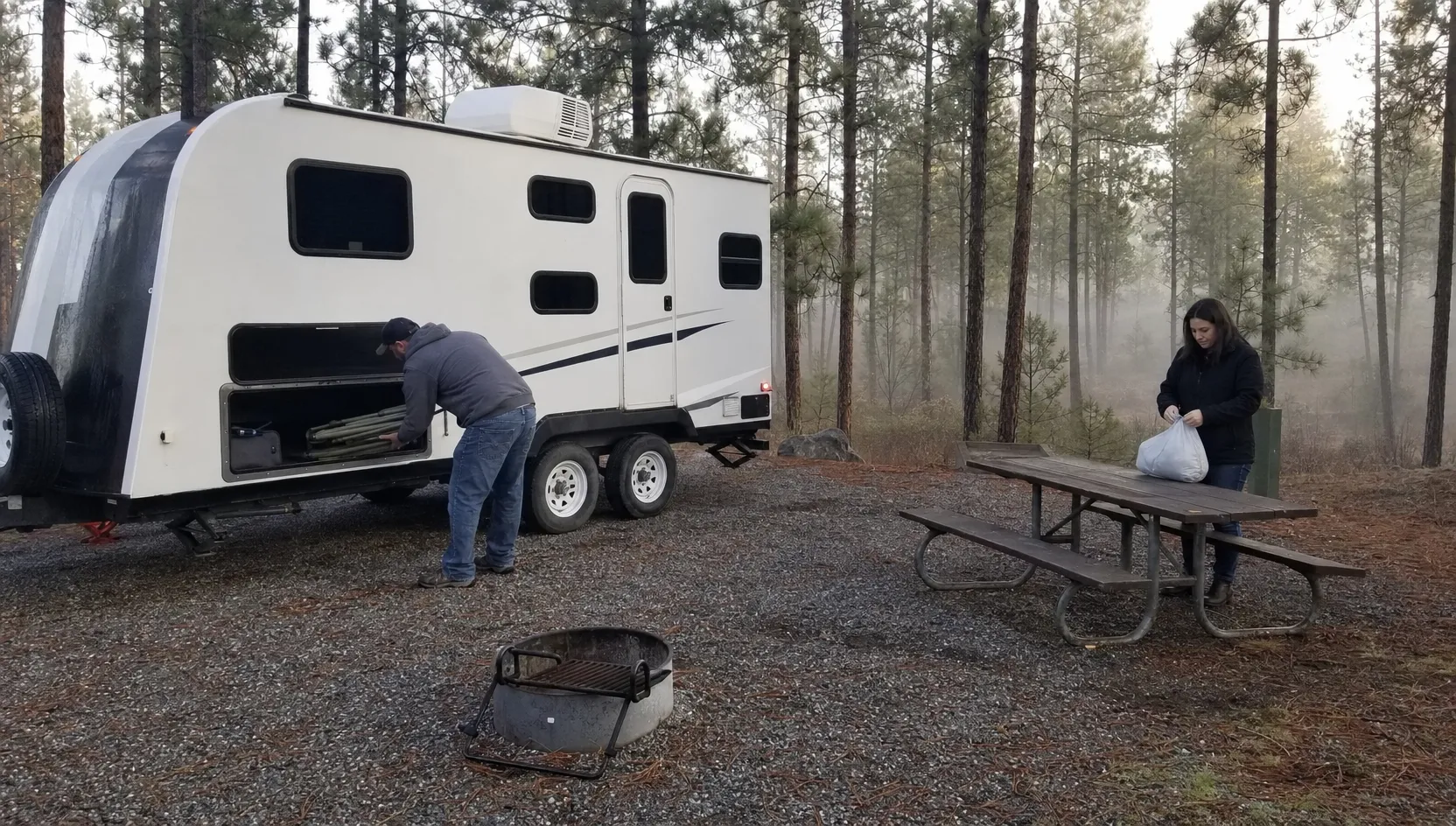
Checkout is usually strict, and overstaying can mean extra fees, so start early. Pull in the awning, bring in the chairs, disconnect the hookups, and empty your tanks before you go, as our guide to emptying RV tanks shows. Then walk the site once more for stakes, hoses, and anything left on the picnic table.
Mistakes First-Timers Make
Arriving late without calling. If the office closes before you arrive, you may wait at the gate or lose your site. A short call earlier in the day usually solves it.
Setting up in the dark. You miss low branches, soft ground, and hookup problems that daylight would show you. Aim to arrive with at least an hour of light left.
Ignoring quiet hours. Music, generators, and loud voices carry across a campground at night. Neighbors remember, and so do the camp hosts.
Skipping the fire check. Fire rules change with the weather, and a ban can start overnight. Ask at the office every day before you light anything.
Rushing checkout. Packing in a hurry is how chairs, hoses, and stakes get left behind. Start the night before and give yourself extra time.
Your Next Step
Pick a campground close to home, book two nights, and run through this routine once. By the second morning, it will feel natural. When you’re ready for the bigger picture, our beginner’s guide covers choosing an RV, costs, hookups, and more.