
RV national park trips come down to three things: whether your rig fits, whether you can get a campsite, and what the campground does not have. Get those right, and the rest is the fun part. This guide walks through each one, plus the road limits, wildlife rules, and fees that surprise first-timers, so you can book with confidence.
Check Your RV Length First
Length is the number one thing that decides where you can camp. J.D. Power puts the typical national park limit at about 27 feet, with some parks allowing Class A motorhomes up to 40 feet and others capping length at 20.
Measure the whole rig from front to back, including the hitch, ladder, spare tire, and bike rack. If you tow, J.D. Power says to measure the combined length of your tow vehicle and trailer, because back-in sites with tight turns apply to the whole rig.
Will Your RV Fit?
The table shows roughly how many national park campgrounds can take each length, based on J.D. Power’s figures. Treat it as a rough guide, because every campground has its own sites and some have only a few big ones.
| RV length | Parks that fit it | What it means |
|---|---|---|
| Up to 19 ft | About 98% | Fits almost anywhere |
| Under 25 ft | Over 90% | Fits most parks |
| 29 to 32 ft | About 80% | Check each campground |
| Up to 35 ft | Just over 70% | Fewer, older campgrounds |
| Over 37 ft | About half | Book the longest sites first |
A park that allows your length may still have only a few sites that big. J.D. Power points to Yosemite Valley, which has twelve 40-foot sites, so check the campground page and book those long sites as soon as the window opens.
Book Your Campsite Early
Recreation.gov says most campsites can be booked six months before your arrival date, and popular summer dates go fast. Mark your calendar as soon as your dates are firm, and check the exact window for your park.
Windows differ by park. Yosemite, for example, opens most of its main campgrounds five months ahead, on the 15th of the month, and has no first-come, first-served camping from late May through October, so plan to reserve.
Have a Backup Plan Outside the Park
If the in-park campgrounds are full or too small, look just outside the gate. National forests, private RV parks, and gateway towns often have campgrounds, and J.D. Power suggests campgrounds outside federal park jurisdiction for rigs over 40 feet. Keep your dates flexible, and book a backup before you cancel anything.
Expect Few or No Hookups
Many national park campgrounds have no hookups at all. Yosemite says no campsite there has hookups of any kind, and it lists only a few dump stations, one of them open all year.
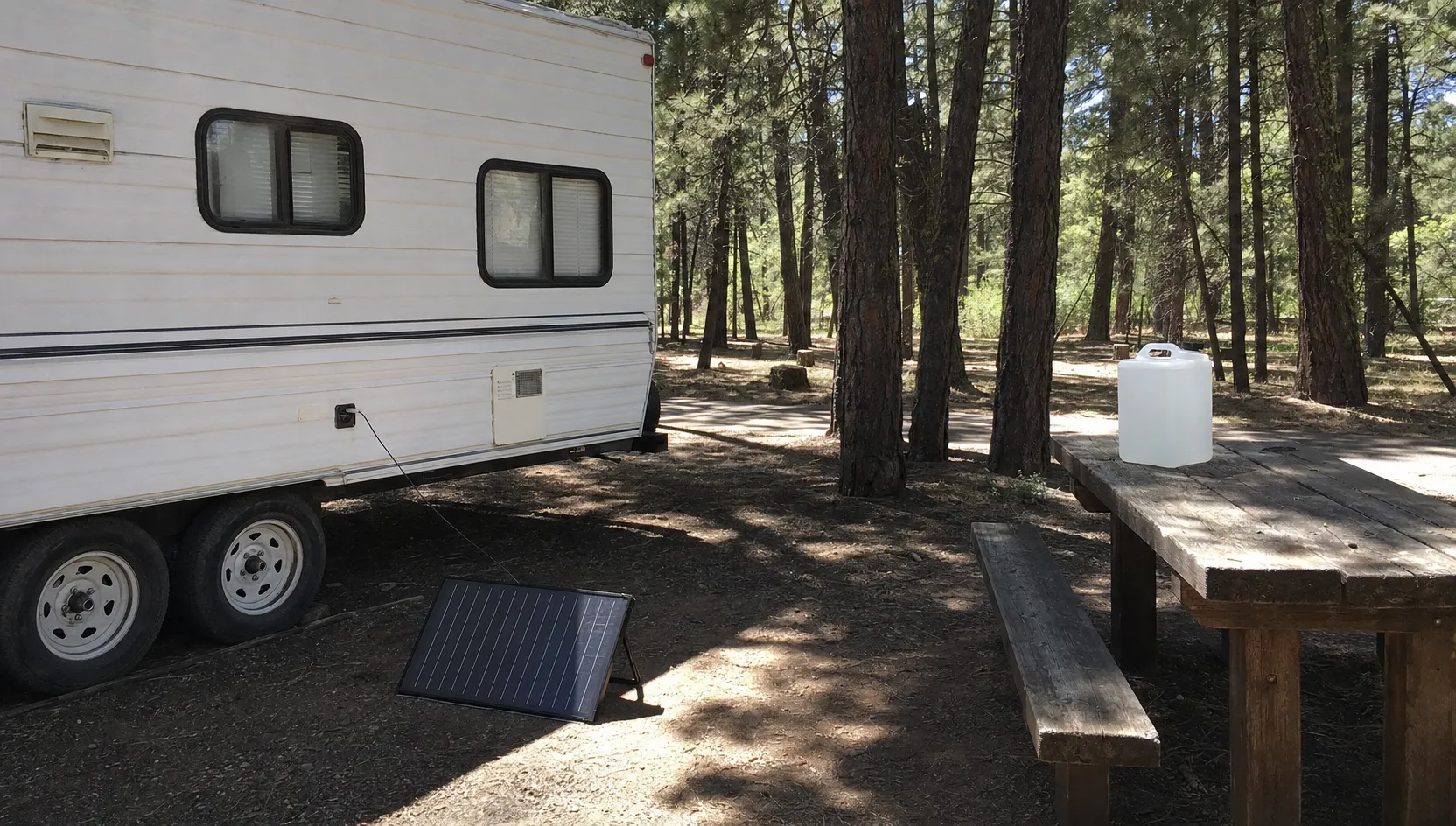
That means you need a plan for water and power before you arrive. Our boondocking guide and solar calculator cover both. Generators are limited too. Yosemite’s rules allow them only from 7 to 9 am, noon to 2 pm, and 5 to 7 pm.
Check Road Limits Before You Book
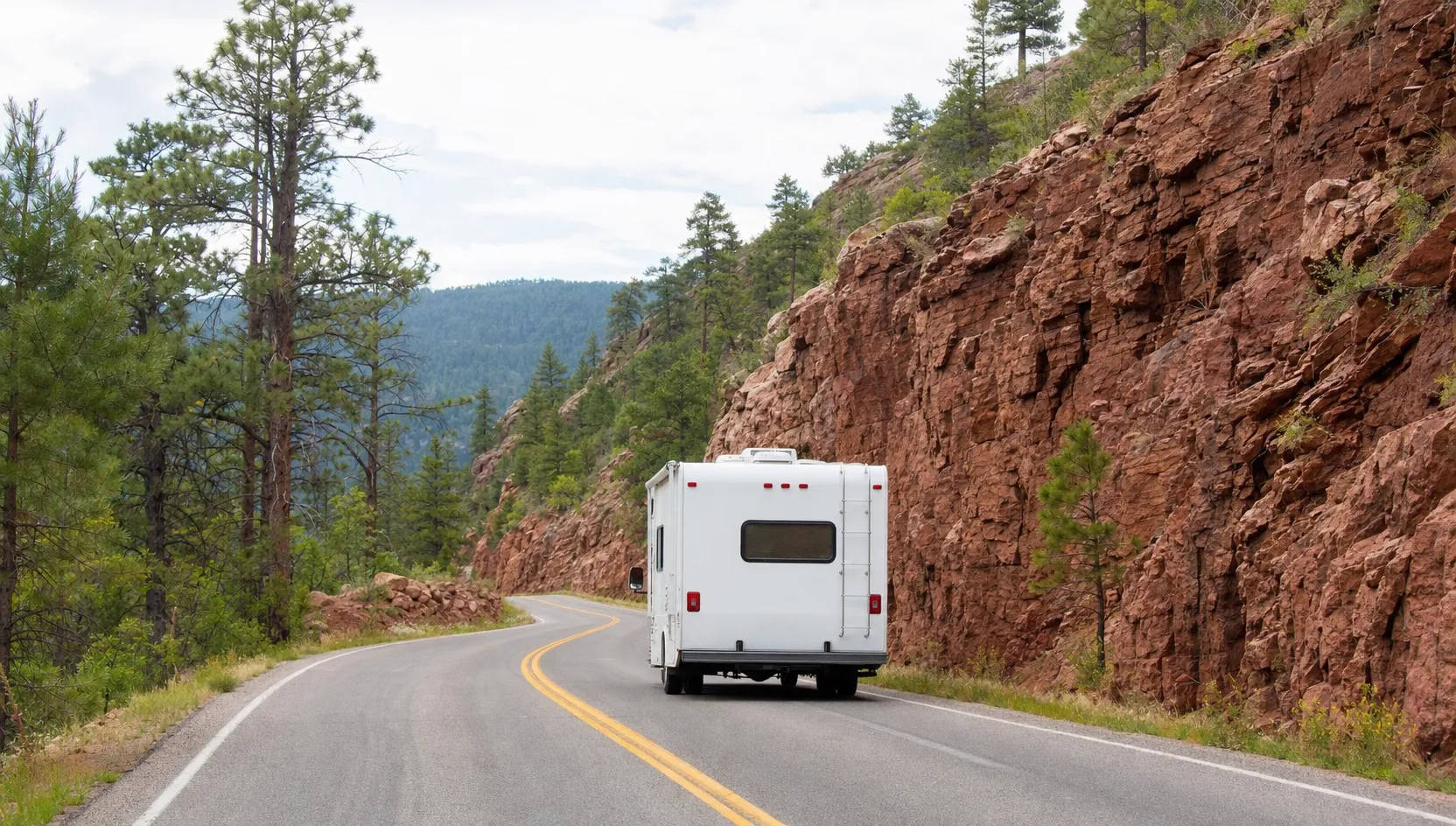
Some park roads are tighter than the campground. Zion, for example, limits vehicles on the Zion-Mount Carmel Highway to 11 feet 4 inches tall, 7 feet 10 inches wide, and 35 feet 9 inches long, or 50 feet combined with a trailer, according to the National Park Service. Vehicles over the limits are turned around at the entrances.
Look up your park’s road page before you book, because rules change. If you are unsure about your height, our clearance guide shows how to measure it.
Protect Your Food From Wildlife
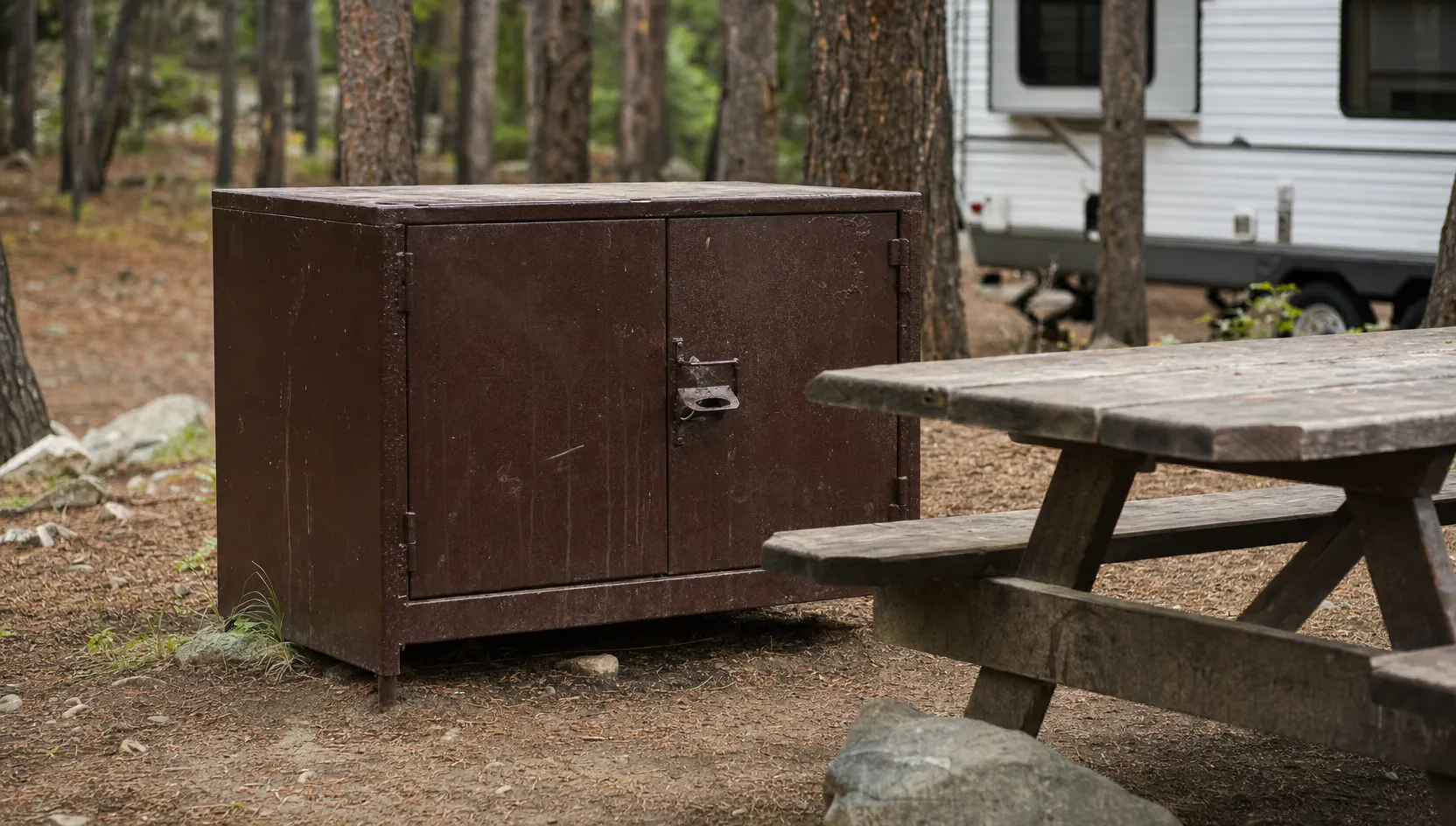
Bears, raccoons, and squirrels all know what a cooler means. The National Park Service counts anything with a scent as food, including trash, ice chests, toiletries, and sunscreen, and it asks you to keep it within arm’s reach or locked away. Some parks require food lockers, so check the rules for your campground.
Subscribe to
Our Newsletter
By joining, you agree to receive emails.
See our Privacy Policy.
Know the Stay and Quiet Rules
Most parks cap how long you can stay. Yosemite limits camping to 14 nights from May 1 to September 15, and its quiet hours run from 10 pm to 6 am. Read the campground rules on the park’s website before you go, because they also list pet, fire, and parking rules.
Pay Once for the Entry Fee
The park entrance fee is separate from your campsite fee. If you plan to visit several parks, the annual pass often pays for itself. The National Park Service lists it at $80 for US residents and says it covers entrance and standard day-use fees, while camping fees vary.
Your Park Trip Timeline
Six months out. Pick your park and dates, then check the length limit and the booking window so you can reserve on the first day.
One month out. Plan your power, water, and food storage, and check the park roads for size limits so nothing surprises you on arrival.
One week out. Check the park alerts for closures, fire bans, and construction, and download your maps before you lose signal.
Arrival day. Arrive early, because check-in lines fill up and you want daylight to set up your site, level your rig, and settle in before dark.
Check Before You Book
Run through these before you click reserve. Each question protects your trip, and every one takes only about a minute to check, so do it before the booking window opens.
- Did you measure your whole rig, hitch and bike rack included?
- Does the campsite listing say it fits your length?
- Did you check the park roads and tunnels for size limits?
- Do you know how you will run lights and the fridge with no hookups?
- Do you know where the nearest dump station is?
- Do you have a plan for storing food away from wildlife?
Your Next Step
Cell service is spotty in many parks, so download your maps and campground details before you leave home. National parks are worth the extra planning. Measure your rig, book early, and prepare for no hookups, and your first park trip will feel easy. Planning the whole route? Our road trip planning guide helps with distance, fuel stops, and budget.