
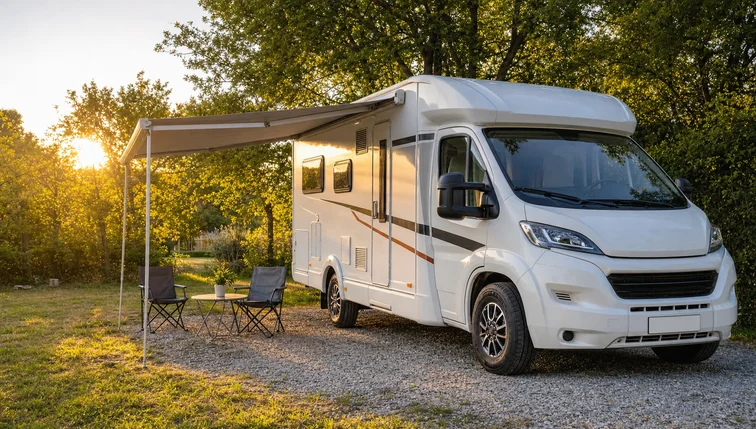
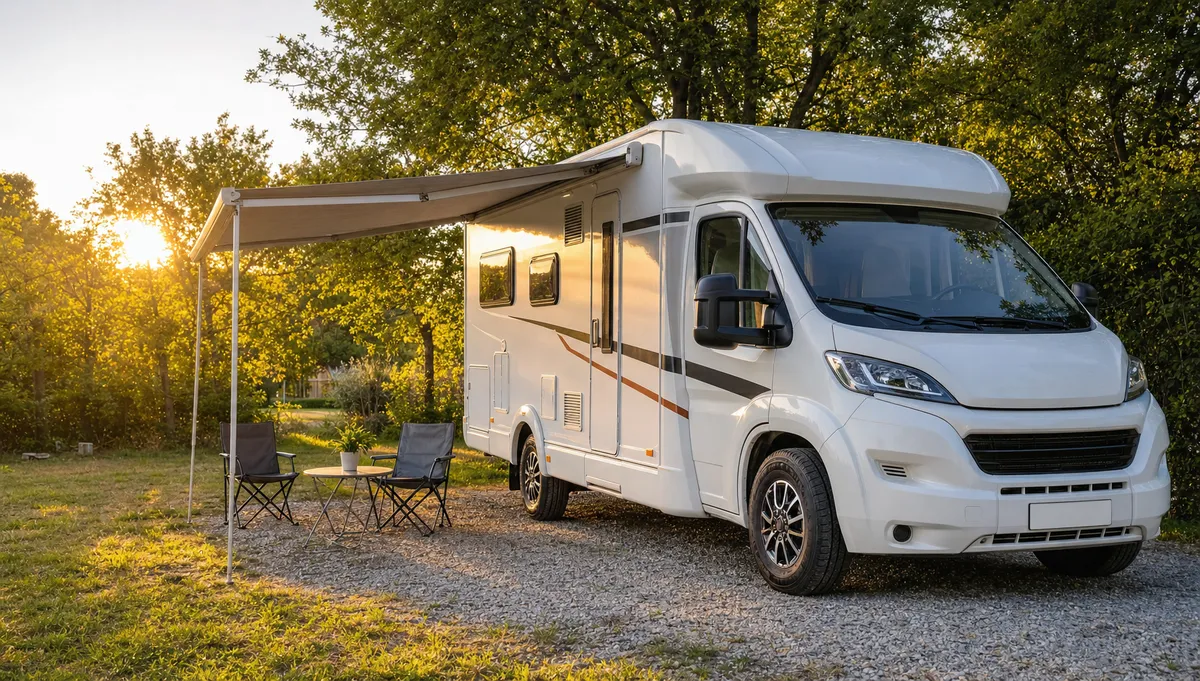
Full-time RV living means your RV is your home address, not a vacation ride, and that changes the questions you need to answer. What does a month cost? Where can you park for weeks? How do you get mail, insurance, and internet without a house? Most of it comes down to a budget, a home state, and a few phone calls. This guide walks through each one so you can test the idea before you sell anything.
Try It Before You Commit
Rent an RV for two to four weeks before you sell the house or end a lease. A trial month shows you how little space you have, how often the tanks need emptying, and whether you still enjoy your travel partner on a rainy day. Track every dollar you spend during the trial, because that number beats any estimate you read online.
Full-Time RV Living Costs
Budgets vary a lot, so plan with a range instead of one number. RVshare writer Chelsea Gonzales says most full-time RVers spend $3,000 to $6,000 a month, and her own monthly list for a paid-off older rig runs lower. Added up, the low and high ends of that list come to about $1,775 and $4,275 a month, as the table shows.
| Expense | Low | High |
|---|---|---|
| Campgrounds | $0 | $1,000 |
| Fuel | $200 | $800 |
| RV insurance | $100 | $100 |
| Vehicle insurance | $100 | $100 |
| Maintenance and repairs | $100 | $400 |
| Food and groceries | $400 | $800 |
| Internet and cell service | $250 | $250 |
| Health insurance | $125 | $125 |
| Fun money | $500 | $700 |
What Moves Your Budget
Her list leaves out three big swings. An RV loan can add $400 to $1,200 a month, RV or vehicle insurance can reach $300 or more, and health insurance can pass $1,000. Fuel is the other lever, and our Fuel Cost Calculator shows what one travel day costs. For depreciation and yearly expenses, our ownership costs guide goes deeper.
Campsites Are the Big Bill
Nightly rates add up fast. One Camping World couple budgeted $1,350 a month in 2021 for stays that averaged $45 a night. Camping World’s 2024 guide to RV park costs cites a campground average of about $29 a night from J.D. Power, so your bill depends on where you stay.
Monthly rates cut that bill sharply. The same guide says some parks charge as little as $350 to $500 a month, while others charge $1,500 or more. A Good Sam membership also takes 10 percent off nightly rates at its parks, which helps while you look for a monthly spot.
How Monthly Rates Work
Parks price monthly stays in one of two ways. RJourney says 26 of its 36 parks with monthly sites charge one flat rate all year, and the rest set separate summer and winter rates. If you plan to stay three months or more, ask about extended-stay offers before you book.
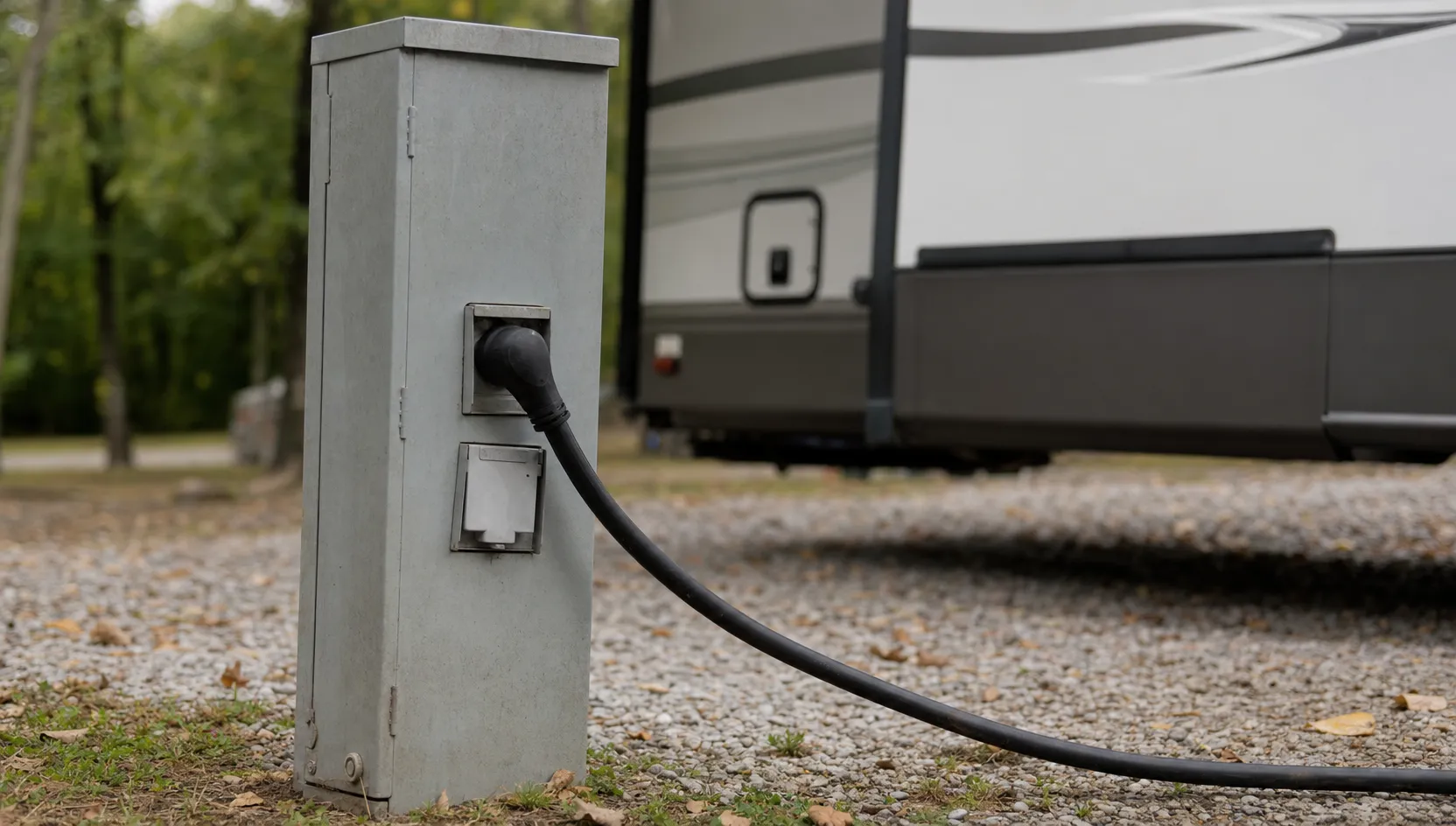
Electricity needs its own question, because some parks meter power for monthly guests, as Camping World notes. Ask what a typical summer and winter month costs.
Ways to Camp for Less
State parks, national forest campgrounds, and county parks often run $25 to $50 a night, according to RVshare, while many private parks charge $50 to $100 or more. Travel slowly too, since nightly rates usually cost more than monthly ones.
Memberships can cut the bill further. A Thousand Trails membership asks only annual dues to camp at its parks, and Boondockers Welcome connects you with private land that is free or very cheap. Visit tourist areas in the off season for lower rates.
Stay Limits and Park Rules
Cheap stays come with rules, and full-timers run into them sooner than weekend campers. Two matter most: how long you can stay, and whether the park accepts your rig.
Public Land Limits
The Forest Service says dispersed camping is usually limited to 14 days, and some forests set tighter limits, so ask the nearest ranger district. The Bureau of Land Management also allows 14 days in a 28-day period. Our boondocking guide covers water and power for these stays, so you can plan your next move early.
The 10-Year Rule
Some RV parks refuse rigs older than 10 years. Cruise America says that in all but the most exclusive resorts, the rule works more like a guideline, and photos of a well-kept older RV often get a yes. Ask before you book, and keep your rig clean and in good repair.
Choose Your Rig
Pick a rig for the way you will live in it. If you plan to sit for weeks in monthly parks, a roomy towable can work well. If you move every few days, a motorhome saves setup time but burns more fuel. Our guide to RV types compares each one.
Full-timers carry more belongings than weekend campers, so check the weight limits on your rig’s label. A towable also needs a tow vehicle that can handle the extra load.
Downsize Before You Go
Your RV holds a fraction of what a house does, so sort your belongings into keep, store, sell, and donate before moving day. Keep what you use every week, and test the rest during your trial month with only what fits in the rig. A storage unit adds a monthly bill, so price one before you decide to keep everything.
Common Money Mistakes
Pricing every night. Nightly stays added up to $1,350 a month in the Camping World budget above, so ask for the monthly rate as soon as you plan to stay a week.
Ignoring power bills. Some parks meter electricity for monthly guests, so ask what a typical summer and winter month costs before you pay a deposit.
Skipping the repair fund. The RVshare list sets aside $100 to $400 a month for maintenance and repairs. A full-time RV gets used every day, so put the same money away every month.
Counting only the sticker. An RV loan can add $400 to $1,200 a month, according to the same RVshare writer, so work out the payment before you shop.
Moving too fast. Fuel runs $200 to $800 a month, and nightly rates cost more than monthly ones, so staying longer in each place trims both bills.
Home State and Mail
You still need a legal home state, even if you never stay in one place. Escapees describes domicile as the state you claim as your permanent home, and you can have only one at a time. It affects your license, registration, voting, banking, and insurance.
Choose Your State
South Dakota, Texas, and Florida are the usual picks, and none of them charges state income tax. Escapees says many RVers can establish domicile in South Dakota after as little as one night in the state, while Texas requires annual vehicle inspections. Domicile also depends on intent, so check each state’s current rules first.
Set Up Mail Forwarding
A mail forwarding service gives you a street address in your home state and sends your mail wherever you go. Escapees lists it as one step in building your claim, next to a license, registration, and voting. Escapees sells its own service, so compare a few providers.
Subscribe to
Our Newsletter
By joining, you agree to receive emails.
See our Privacy Policy.
Insurance and Health Cover
Tell your RV insurer that you live in the rig. Progressive describes full-timer coverage as optional and typically meant for people who live in their RV more than six months a year. It adds protection such as personal liability and medical payments while the RV sits parked. Ask your agent which of these your current policy already has.
Health insurance is the part people overlook most, according to Escapees. Many HMO plans cover only emergencies outside your home state, so look for a plan with a network where you plan to travel, and check it before you choose a home state.
Staying Online
Remote work and video calls need steady internet. RVtravel’s June 2026 report on Starlink’s RV plans lists $55 a month for 100 GB, $80 for 300 GB, and $175 for unlimited data. Plans and prices change often, so check the current numbers before you sign up, and keep your phone hotspot as a backup for slow days.

Before You Sell the House
Run through this list before you list the house or end the lease. Each item takes a phone call or an afternoon, and together they cover most of the surprises.
- Rent an RV for a month and track every dollar.
- Ask three parks for monthly rates and metered power rules.
- Pick your domicile state and a mail forwarding service.
- Tell your RV insurer that you plan to live in the rig.
- Check that your health plan works where you travel.
- Price an internet plan, plus a backup hotspot.
Your Next Step
Start with the one-month trial, because it answers more questions than any article can. When you are ready for the basics, our beginner’s guide covers the rest, from choosing a rig to your first trip and your first month on the road.