

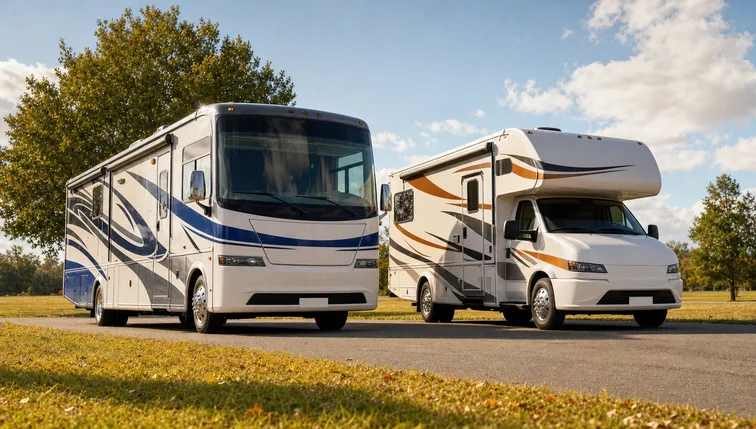
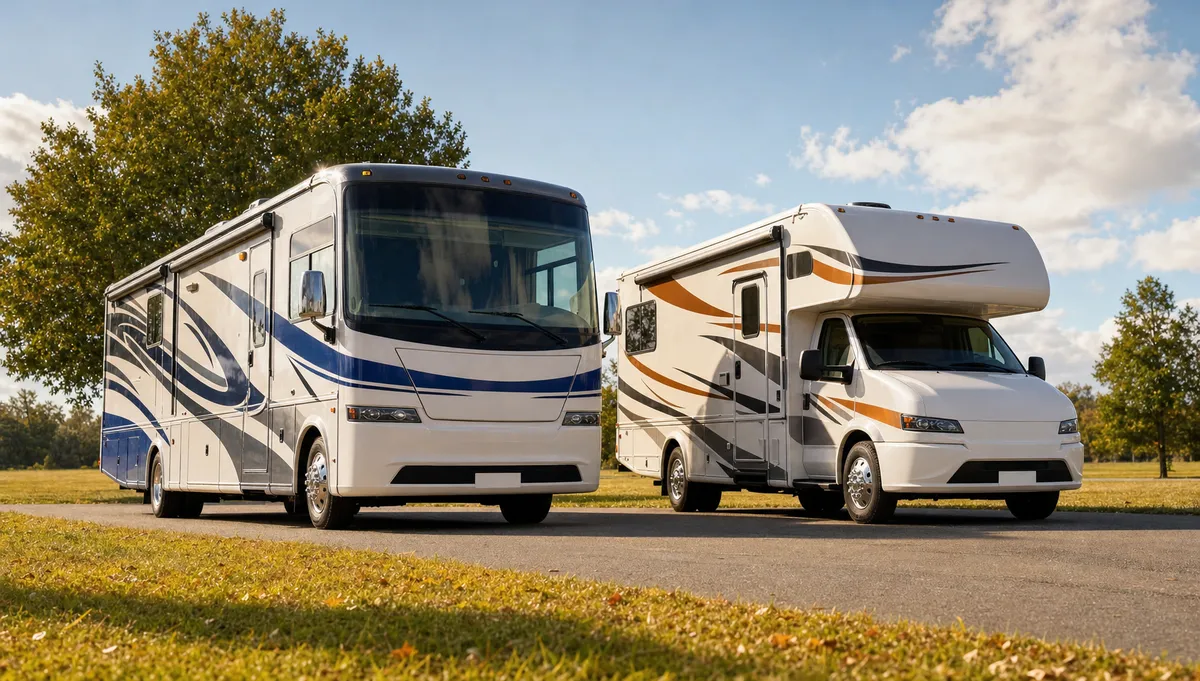
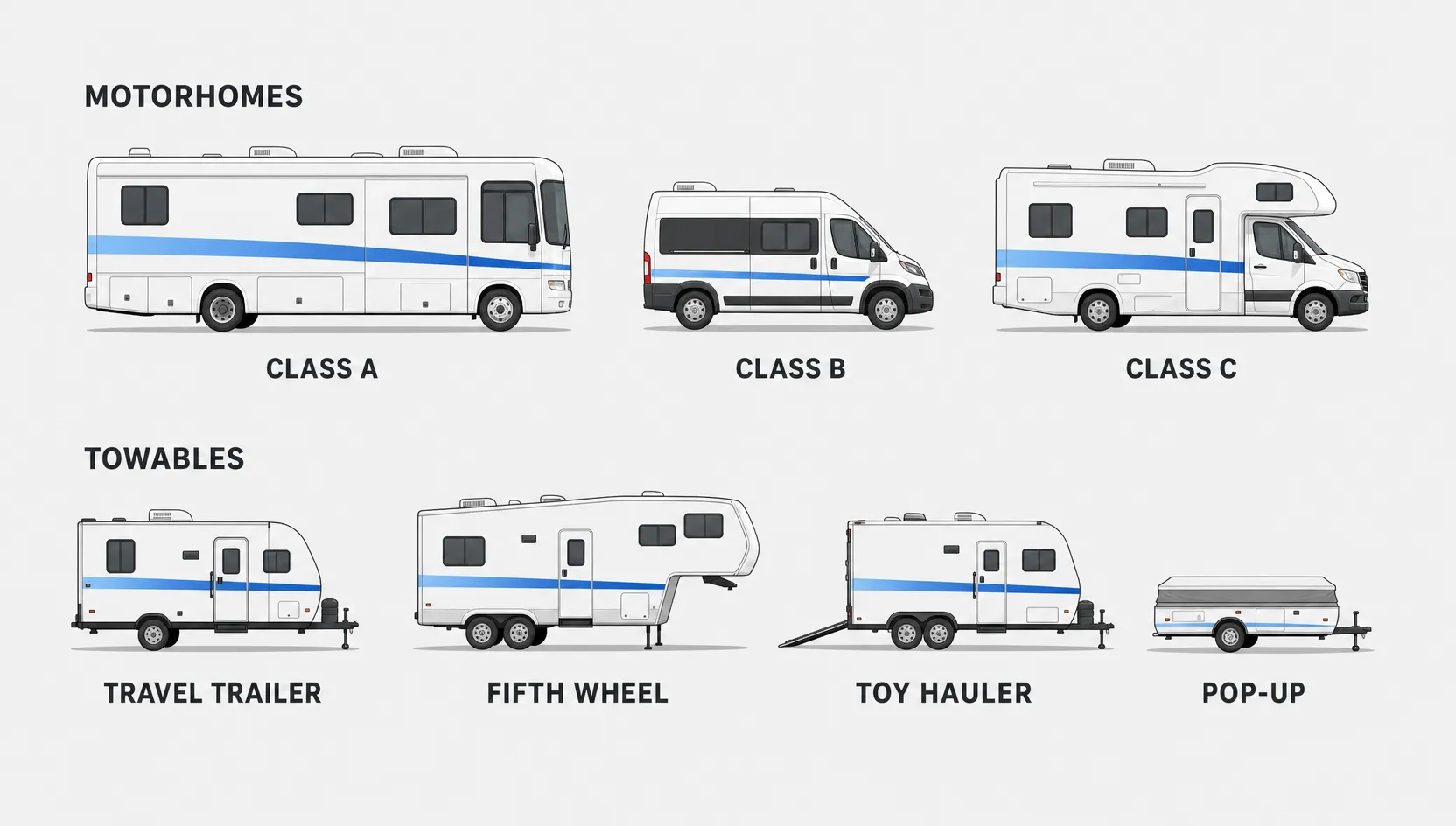
RV classes sound confusing until you know the trick: only motorhomes have a class, and Class A, B, and C describe the size and body of the vehicle. Everything else, from a travel trailer to a fifth wheel, is a towable type. This guide explains every type in plain English, so you can match one to your group, budget, and vehicle.
Motorhomes vs Towables
Every RV is either a motorhome or a towable. A motorhome has its own engine, so you drive it and live in it. A towable is a trailer that you pull with a car, SUV, or truck, so your vehicle has to handle the full weight of the trailer.
That split matters more than any class. Motorhomes cost more and need engine care, but you can stop anywhere and walk to the kitchen. Towables cost less and let you unhook at camp and drive your tow vehicle around town. According to RV Blogger, a travel trailer isn’t a class at all, because only motorhomes get Class A, B, or C.
Class A Motorhomes
A Class A motorhome is the bus-style giant, with a flat front windshield, a full kitchen and bath, and the most storage of any RV. Most run 30 to 45 feet, according to Camping World, which makes them great for long trips and full-time living but hard to park.
Class A rigs come with a gas or a diesel engine. Gas models cost less and are cheaper to repair, while diesel models have more torque for towing and mountain grades and tend to last longer. Both are thirsty at roughly 6 to 10 miles per gallon, so check our gas mileage numbers before you commit to a rig this size.
Class B Motorhomes
Class B motorhomes are camper vans, built on a van chassis and usually under 25 feet. They drive like a large van, fit most parking spaces, and get the best mileage of any motorhome, at roughly 15 to 22 miles per gallon. Inside, you get a compact kitchen and a bed, sometimes a tiny bathroom, and little storage.
Class C Motorhomes
Class C motorhomes are the middle size, and you can spot one by the bed that sits over the driver’s cab. They’re built on a truck or van chassis, run about 22 to 32 feet, and sleep four to eight people, according to Outdoorsy. They drive like a box truck and still give a family enough room, which is why many first-time owners and renters start here.
Super C Motorhomes
A Super C is a Class C built on a heavy-duty truck chassis with a strong diesel engine. It tows more weight and handles rough roads better than a standard Class C, but it costs more, uses more fuel, and is a big rig to learn on.
Class B+ Motorhomes
A Class B+ sits between a camper van and a Class C. It’s wider than a standard Class B, and some models add a small bed over the cab. Brands use “Class B+” and “small Class C” in different ways, so compare length, weight, and floor plan instead of trusting the label.
Do You Need a Special License?
Most motorhomes drive fine on a regular license. Camping World notes that some states require a special license above 26,000 pounds, which the largest Class A and Super C rigs can pass. Check your RV’s weight rating and your state’s DMV rules first.
Towable RVs
Towables are the budget side of RVing, and you can leave one parked at camp while you explore. The catch is that your vehicle must tow the loaded trailer safely, so start with its towing rating and try our Towing Capacity Calculator before you shop.
Travel Trailers
Travel trailers hitch to a ball on the rear bumper of your tow vehicle and come in the widest range of sizes, from tiny campers to long family rigs. They usually cost less than motorhomes and have no engine to maintain. Longer ones can sway if the setup isn’t right, so always match the trailer to your vehicle and hitch.
Fifth Wheels
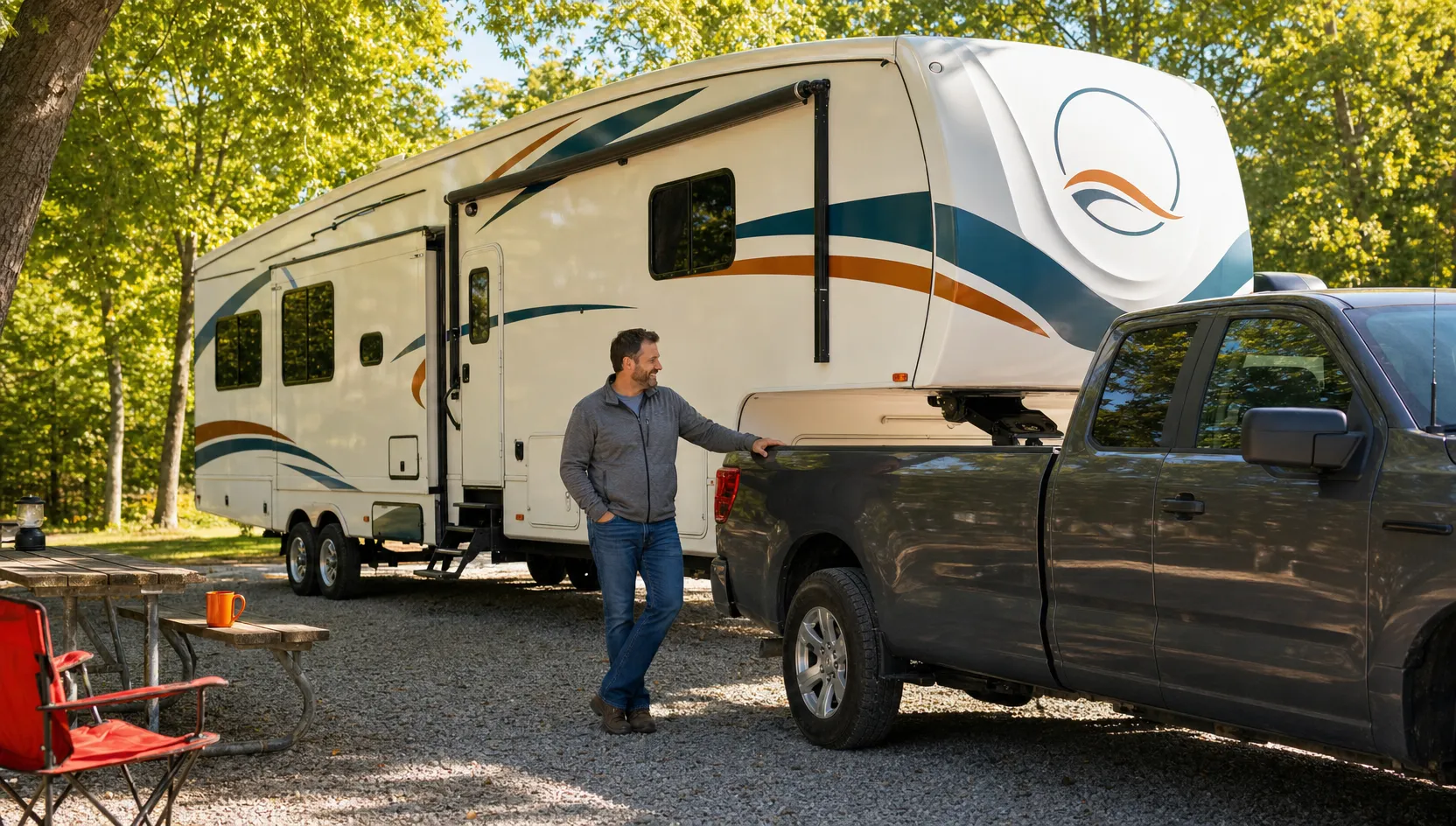
A fifth wheel connects to a hitch mounted in the bed of a pickup truck, which gives a steadier ride than a bumper-pull trailer. They’re the largest towables, with the most living space, so full-timers love them. You need a heavy-duty truck, and you should check its towing capacity and payload before you buy.
Toy Haulers
A toy hauler is a travel trailer or fifth wheel with a rear garage for motorcycles, ATVs, or gear. At camp, many garages double as extra sleeping or lounge space. The trade-off is less living room than a standard trailer of the same length.
Pop-Ups and Truck Campers
Pop-up campers fold down for towing, so they’re light and cheap, but setup takes more work and wet weather is harder on them. Truck campers slide into a pickup bed and reach remote sites easily, though the inside is tight and your truck’s payload sets the limit.
Types of RVs Compared
Prices vary by brand, size, and features, but ranges show the big picture of what each type costs. Harvest Hosts lists these typical new prices (March 2026), and the fuel figures come from our gas mileage guide.
| RV type | Typical new price | Fuel or tow vehicle |
|---|---|---|
| Class A | $100,000 to $500,000+ | 6 to 10 MPG |
| Class B | $80,000 to $165,000 | 15 to 22 MPG |
| Class C | $85,000 to $155,000 | 10 to 15 MPG |
| Fifth wheel | $40,000 to $80,000 | Heavy-duty truck |
| Travel trailer | $10,000 to $60,000 | Any vehicle rated to tow it |
Choosing Your First RV
For most first-timers, the choice comes down to two paths. If you want to drive it and skip the hitch, a Class C is the easiest place to start. If you want to spend less and already own a capable tow vehicle, a travel trailer is the simplest. Class B suits couples who want easy parking, while Class A and fifth wheels fit long trips and full-time living.
Group size helps too. Outdoorsy suggests a Class B for one or two people, a Class C for three to five, and a Class A or a large Class C for six or more. Trip length matters as well: short weekends suit small rigs, and long stays reward the extra space.
Check Before You Choose
Run through this list before you fall for a floor plan. It takes about ten minutes and prevents some of the most expensive first-time mistakes.
- Count how many people will sleep in it on a typical trip.
- Check your vehicle’s towing capacity if you’re eyeing a trailer.
- Know the full height and length, because both limit roads and campsites.
- Estimate fuel for the trips you plan to take.
- Decide where you’ll store it between trips.
- Look up your state’s license rules for heavy rigs.

Subscribe to
Our Newsletter
By joining, you agree to receive emails.
See our Privacy Policy.
Rent Before You Buy
Renting the type you like for a weekend tells you more than any brochure. You learn how it drives, whether everyone can sleep in it, and how much setup you want to do at camp. Once you have a favorite, our ownership costs guide shows what it costs to keep it each year.
Common Choosing Mistakes
Buying too big. A longer RV means fewer campsites, harder parking, and more stress on your first trips. Start smaller than you think you need, because you can always move up later.
Ignoring tow limits. Trailer weight has to stay under what your vehicle can pull. Check the towing capacity before you fall for a floor plan.
Forgetting fuel. A Class A burns far more fuel than a Class B or a small trailer, and that adds up over a full season of trips.
Trusting the label. Names like Class B+ and small Class C overlap, so compare lengths, weights, and floor plans instead of the name alone.
Skipping a test drive. A driveway never shows how big an RV feels on the road. Drive one first, and read our tips for driving an RV before you go.
Your Next Step
Pick the two types that match your group and your vehicle, then rent one for a weekend and decide from there. When you’re ready for the full picture on costs, hookups, and your first trip, read our beginner’s guide.