
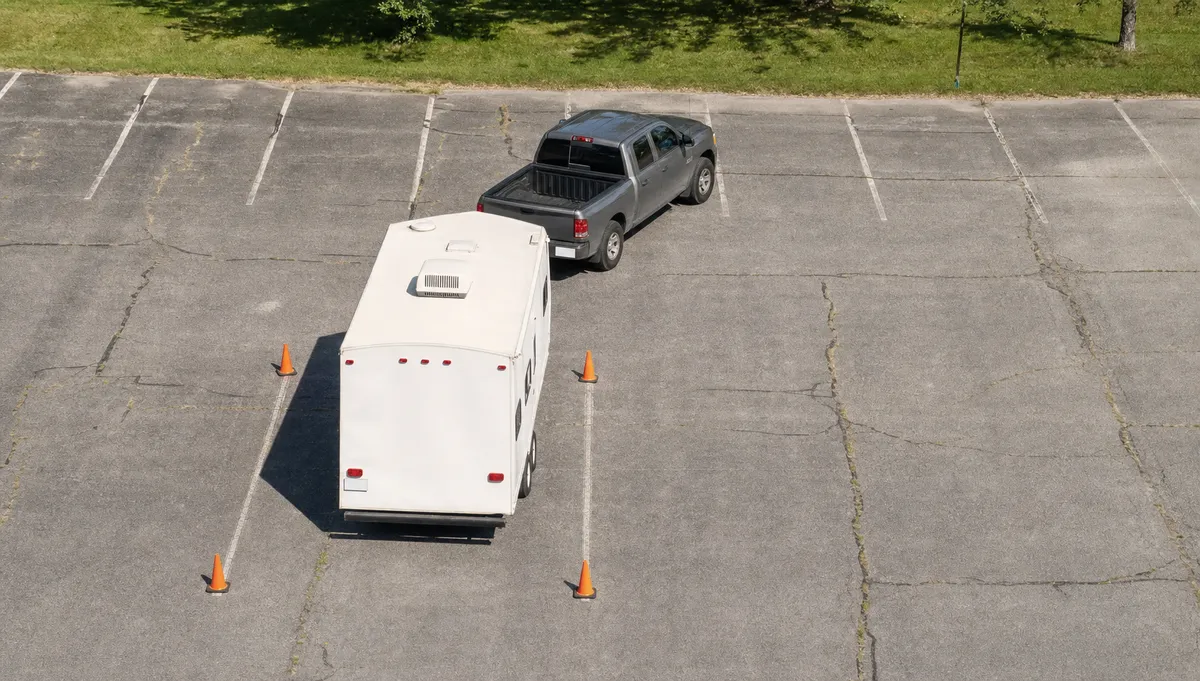
Backing up a trailer feels backward because the wheel seems to do the opposite of what you expect. Every new RVer goes through it, and the fix is simple: one hand position, small steering moves, and the habit of stopping to start over. This guide covers the steering trick, a practice plan, spotter signals, and backing in alone. A few rounds in an empty lot beat a stressful first night at a campsite.
Why Steering Feels Backward
When you reverse with a trailer, the back of your tow vehicle swings the way you turn the wheel. That pushes the front of the trailer sideways, and the trailer pivots on the hitch ball, so its back end moves the opposite way. Your brain expects the vehicle to do the turning, and now the trailer does it, a moment later.
Use the Six O’Clock Grip
Put one hand at the bottom of the wheel, at six o’clock, and move it toward the side where you want the back of the trailer to go. Hand left, trailer left. Hand right, trailer right. Camping World teaches a two-hand version, with your hands at eight and four o’clock instead of ten and two. Either grip skips the mental flip.
Make Small Steering Moves
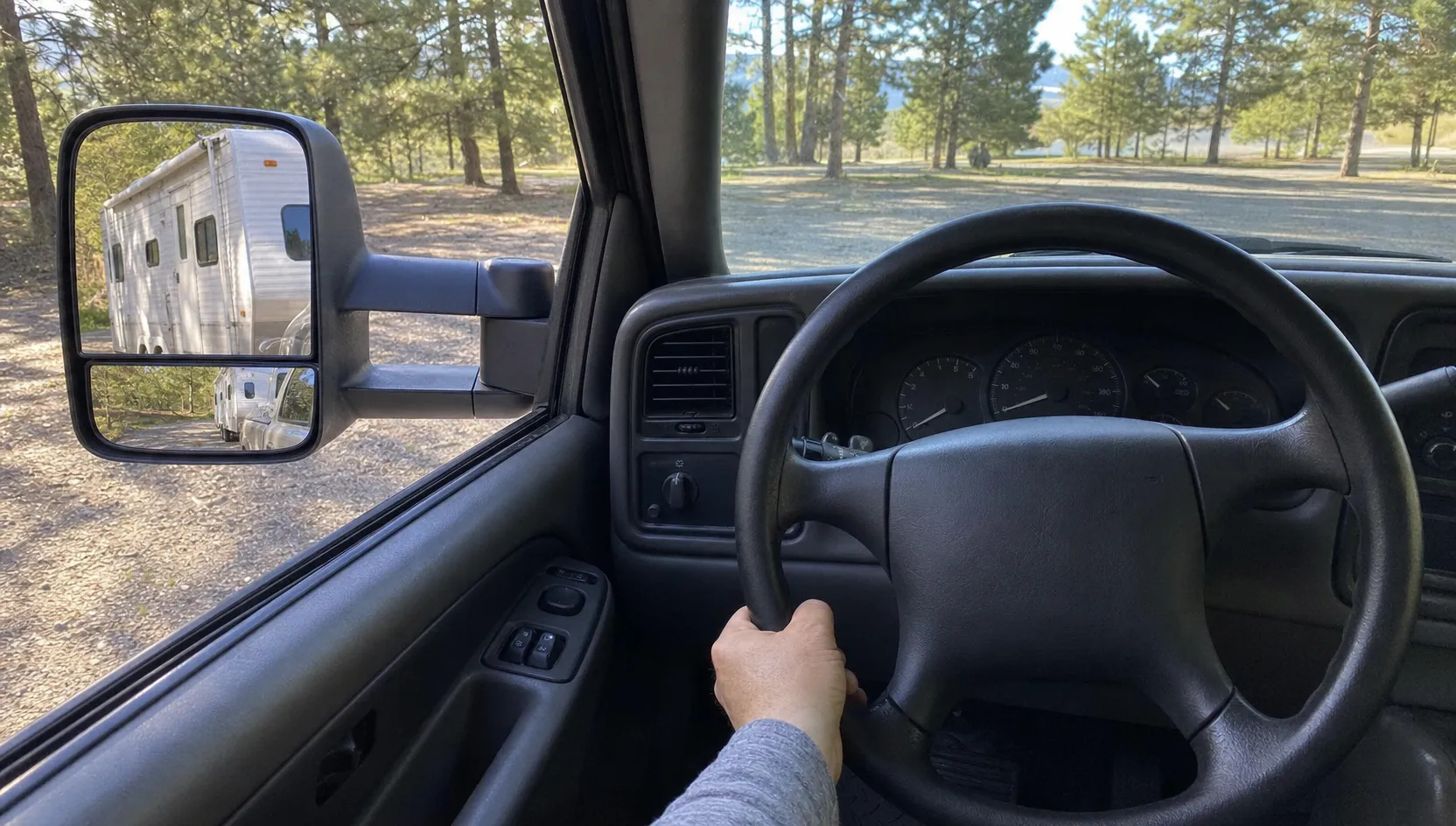
A trailer answers your steering a moment late, so big turns pile up before you see the result. Move your hand a few inches, wait, and check your mirror. If the trailer drifts, nudge your hand toward the side you want the back to go, then wait again.
Back up at an idle crawl, with your foot off the gas. Slow movement gives you time to spot a drift while it is still small.
Stop, Straighten, Start Again
Escapees builds its trailer-backing method on two rules: start with the tow vehicle and trailer in a straight line, and when you drift off course, stop, pull forward until you are straight, and start again. A straight rig needs fewer corrections than a bent one. Pulling forward costs you a minute, while forcing a bad angle can cost you a fender.
Avoid the Jackknife
As you back up, the tow vehicle and trailer bend into a V, and more steering makes it tighter. etrailer warns that turning too sharply can bring the back of your tow vehicle into the front of the trailer. If the V closes up, stop and pull forward to open it.
Check Your Hitch Bars
A sway control bar can limit how far your rig turns, and Jayco says it may damage the hitch or frame in tight turns, so it comes off before you back in. Camping World’s backing guide also tells you to disconnect weight distribution bars in tight spots. Your hitch manual has the final say on both, so read it before your first trip.
Practice in an Empty Lot
An empty lot is the cheapest place to make mistakes, and early Sunday morning is usually quiet. Bring a helper and trade places, so you both learn the driver and spotter jobs. Our driving guide covers the basic lot practice, and these drills add backing to it.
Build a Fake Campsite
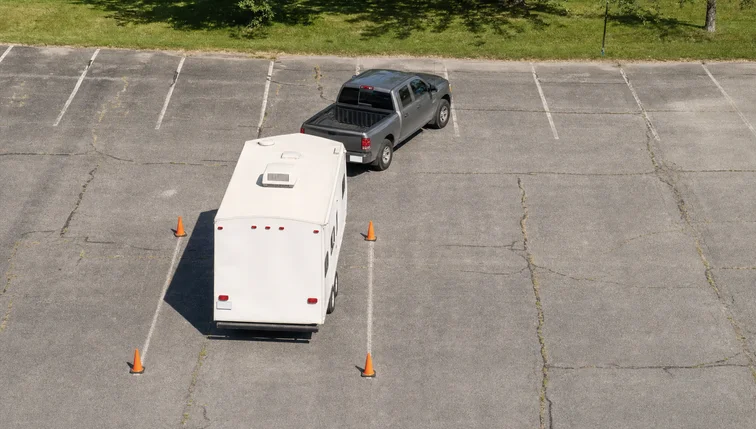
Mark a space with cones, boxes, or water jugs, a little wider than your trailer and a bit longer. A good shortcut is to treat two or four empty parking spaces as the site, and to add a cone where a fire ring or picnic table would sit.
Run Three Drills
First, back in a straight line for a few trailer lengths, with both sides of the trailer in your mirrors. Second, back toward a cone on each side. Third, back into your marked site, and pull forward to start over when the angle goes wrong.
Walk the Site First
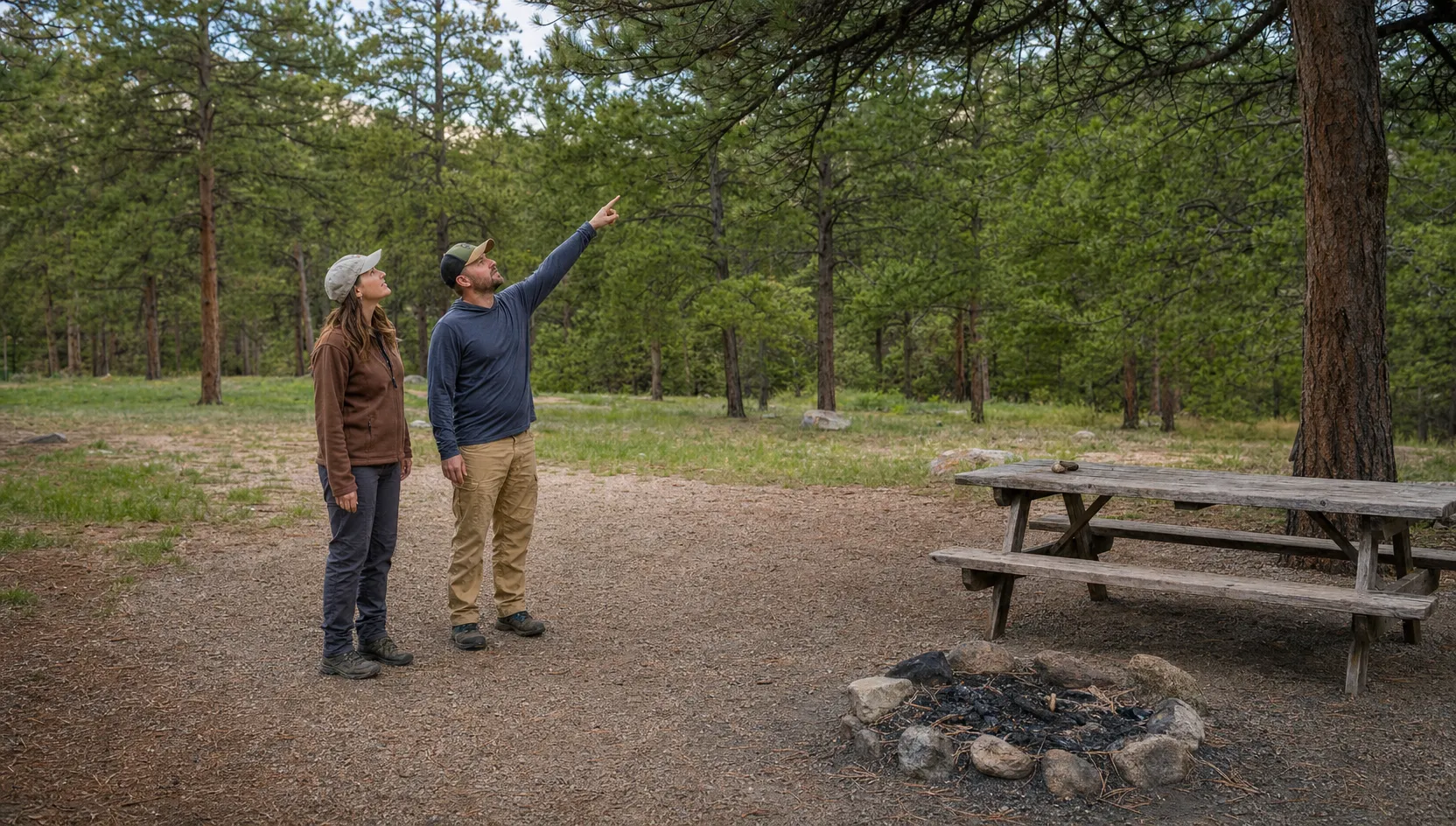
Before you pull in, park somewhere safe and walk the site on foot. Look for low branches, rocks, soft ground, fire rings, picnic tables, and posts. If you are unsure how tall your rig is, our RV height guide shows how to measure it.
Notice where your door, slides, and awning will open, and which side faces the hookups. You may need to shift the trailer a few feet to fit them, and it is far easier to plan that now than to re-park once the trailer is already in.
Aim for the Driver’s Side
Whenever you can, set up the turn so the site is on the driver’s side. You see the trailer in your mirror and over your left shoulder, the best view of the corner. On your first trips, a pull-through site skips backing entirely, as our first-trip rules explain.
Pull forward past the site entrance first, so you have room to straighten the rig, especially at narrow sites. If the site is on the passenger side, expect more pull-forwards and use a spotter, because that side is your blind side.

Subscribe to
Our Newsletter
By joining, you agree to receive emails.
See our Privacy Policy.
Check Before You Back In
Take one minute before you shift into reverse. This short list catches most backing problems, and it works the same at a campground or a quiet side street.
- Walk the site and note every obstacle.
- Agree on stop, left, right, and straight-back signals.
- Test your radios, or agree on a phone call.
- Remove the sway control bar, and any spring bars your manual says to.
- Set your tow mirrors so you can see the trailer tires.
- Roll down your window and turn off the music.
Work With a Spotter
A spotter sees what your mirrors miss, including the corner of the trailer you cannot see. Agree on signals or spoken cues before you move, and keep them simple. The spotter stands where you can see them in your driver’s side mirror, and you stop when they disappear.
Use Clear Spotter Signals
Stop. Raise both hands or cross your arms in an X, and hold it. Give a warning like “almost there” first when you can, because a sudden stop call leaves the driver no time to react.
Left or right. Point toward the side where the back of the trailer should go. In spoken cues, say “driver’s side” and “passenger’s side,” so both of you mean the same thing.
Straight back. Hold both arms parallel and move them toward you to say keep coming. Keep the motion steady and in rhythm with the speed of the trailer.
Distance left. Hold your hands apart to show the gap, and bring them closer as the trailer nears the object. Closing them slowly tells the driver that a stop is coming.
Slow down. Hold your palms down and press gently toward the ground. Asking for slow early prevents the sudden stop that startles drivers.
Use Two-Way Radios
Hand signals fail after dark, and shouting across a campground makes everyone tense. Inexpensive two-way radios fix both, and the spotter can talk while you keep both hands on the wheel. Ask your spotter to call distances in feet, such as “five feet left,” so you know exactly how much room is left and when to stop.
Back In Without a Spotter
If you travel alone, a rear camera is the biggest upgrade you can add, but keep using your mirrors too. Many newer towables are prewired for a camera, so check your owner’s manual before you buy. If a neighbor offers to spot, say yes, and agree on signals first.
No camera? Get out and look. Check the rear every few feet at first, and any time you are unsure what is behind you. A marker helps too: place a cone where the trailer’s rear bumper should stop, and watch the cone instead of guessing the distance in your mirror.
Fix Common Backing Problems
Every driver ends up with a bad angle sooner or later. This table lists the five most common problems with a quick fix for each, so you always know your next move.
| What you see | What to do |
|---|---|
| The trailer swings the wrong way | Move your hand toward the side you want the back to go |
| The V between truck and trailer is closing | Stop, pull forward to straighten, and start again |
| The trailer is lined up but off to one side | Pull forward a few feet, re-aim, and back in again |
| You lose sight of your spotter | Stop right away and get out to look |
| You cannot tell what is behind you | Set the brake, get out, and walk back to check |
Your Next Step
Backing up gets easier once you stop fighting the wheel. Spend an hour with cones this weekend, use the six o’clock grip, and treat every pull-forward as part of the method. Once you are in the site, our campsite setup guide covers leveling and hookups.