
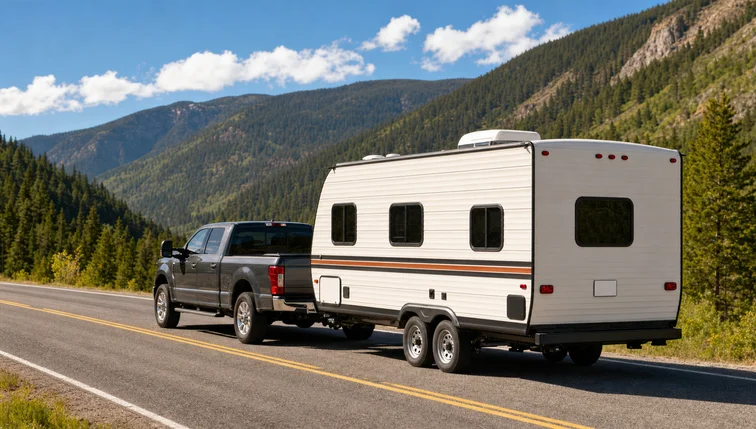
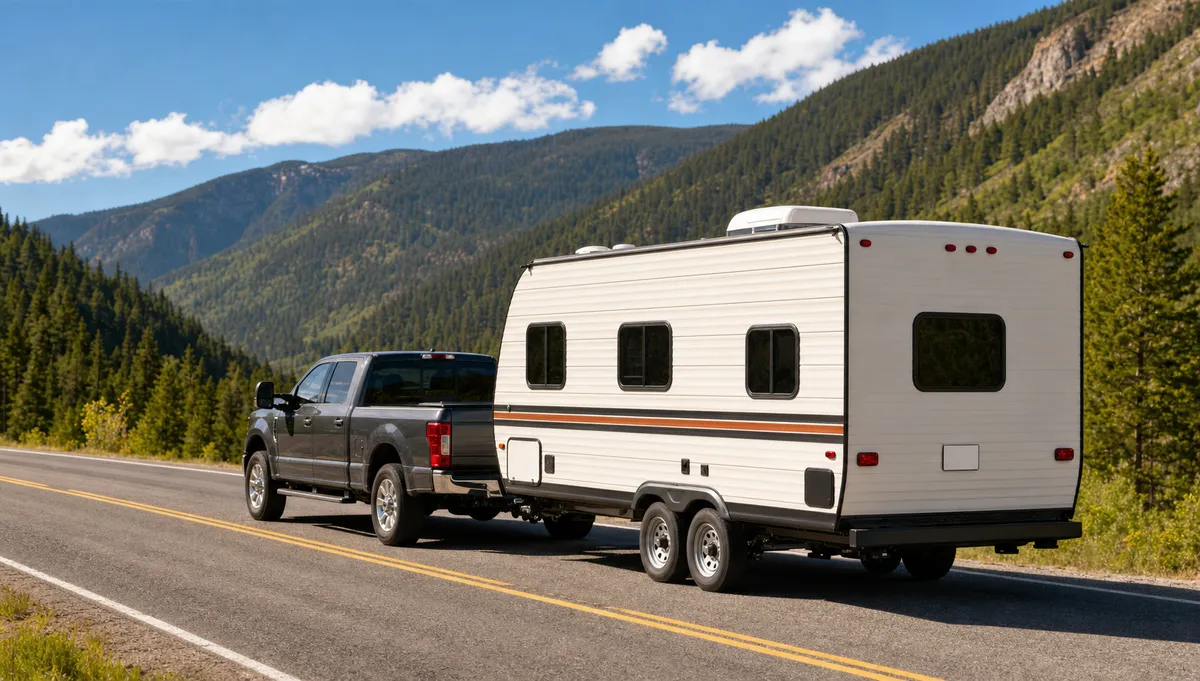
Trailer sway is the side-to-side swinging of a trailer behind your tow vehicle. It scares everyone the first time, but most sway has a cause you can fix. This guide gives you the first ten seconds, then the causes, the fixes, and the habits that keep it from starting.
What to Do First
If the trailer starts to swing, stay calm and do less, not more. Roadtrippers, Nationwide, and an Airstream support page give the same core steps. The main point is to slow down without grabbing the tow vehicle’s brakes. Do not speed up to escape the swing, and do not slam the brakes either, because the Airstream page warns that both can make it worse.
- Lift your foot off the accelerator and let the speed drop gradually.
- Hold the wheel firmly and keep it pointed straight ahead.
- Do not counter-steer, because quick corrections can add to the sway.
- Skip the tow vehicle’s brakes unless something is in your path.
- With a brake controller, apply the trailer brakes slowly using the manual lever.
- When the swinging stops, pull over somewhere safe and check the rig.
Why Sway Starts
A trailer pivots on your hitch ball. A gust, a passing truck, or a sudden steering move gives it a push. A stable setup swings once and settles, while a weak one keeps swinging and can grow worse with each swing.
Lippert names improper weight distribution in the trailer as the number-one cause and adds that longer trailers are more prone to it. Wind, passing vehicles, and quick lane changes are the triggers.
Nationwide adds that a hitch set behind the tow vehicle’s rear axle acts as a pivot, so side forces can steer the vehicle in ways you do not expect. That is one more reason to fix the setup, not just the driving.
Spot Early Warning Signs
Sway does not always start with a big swing. Roadtrippers notes that even a small amount wears you out, because it forces constant steering corrections. If your hands are busy keeping the trailer in line, something is already off.
Treat that tired, twitchy feeling as a warning. Slow down, pull over at the next safe spot, and check the load, the tires, and the hitch before the next gust or passing truck turns it into a full swing, and write down what you find.
Match the Cause
Match what you felt to the likely cause. This table is our summary of the sources, so treat it as a starting point and check your own rig.
| What you notice | Likely cause | First fix |
|---|---|---|
| Swings after gusts | Too little tongue weight | Shift gear forward |
| Loose, wandering ride | Low tire pressure | Check tires cold |
| Starts at higher speeds | Driving too fast | Slow down in wind |
| Swings on lane change | Sudden steering | Steer in small moves |
| Still sways when loaded | No sway control | Add sway control |
Load It Right
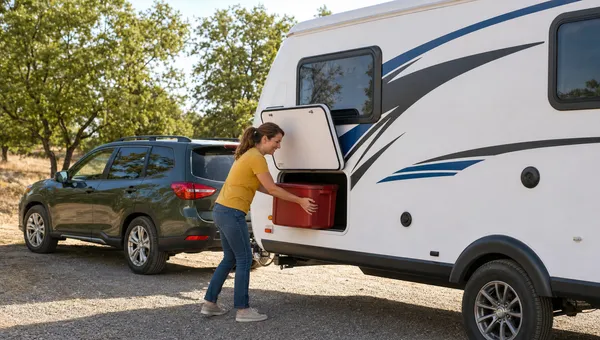
Loading is the cause you control. Lippert and Nationwide both give a 60/40 rule: put about 60 percent of the cargo weight ahead of the trailer axle and 40 percent behind it. Both also point to a tongue weight of 10 to 15 percent of the loaded trailer weight. Lippert explains that too little tongue weight lets the trailer pivot more easily behind you.
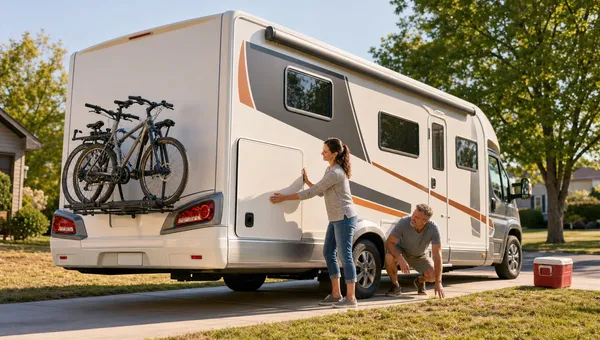
Keep heavy items low and ahead of the axles. Bikes, generators, and spare tires on the rear bumper pull the tongue up, which takes pressure off the hitch. Weigh it loaded, with water, propane, and gear on board, because the empty number hides the problem. Our tongue weight guide shows how to measure it before you head out.
Check Tires and Hitch
Nationwide lists proper tire inflation among its sway prevention tips, and a soft tire makes a trailer feel loose and wandering. Check every tire cold before you leave, and keep a gauge in the truck, using our tire pressure guide for the right numbers.
Then confirm the hitch is secured to the trailer, with the coupler latched and pinned. A loose connection turns a small push into a big swing.
Weight Distribution or Sway Control
These are two separate jobs. A weight distribution hitch moves part of the tongue weight onto the tow vehicle’s front axle, so it rides level and steers well. Sway control resists side-to-side movement. Many hitches combine both, so read the specs before you buy, and see our hitch guide for the first job.
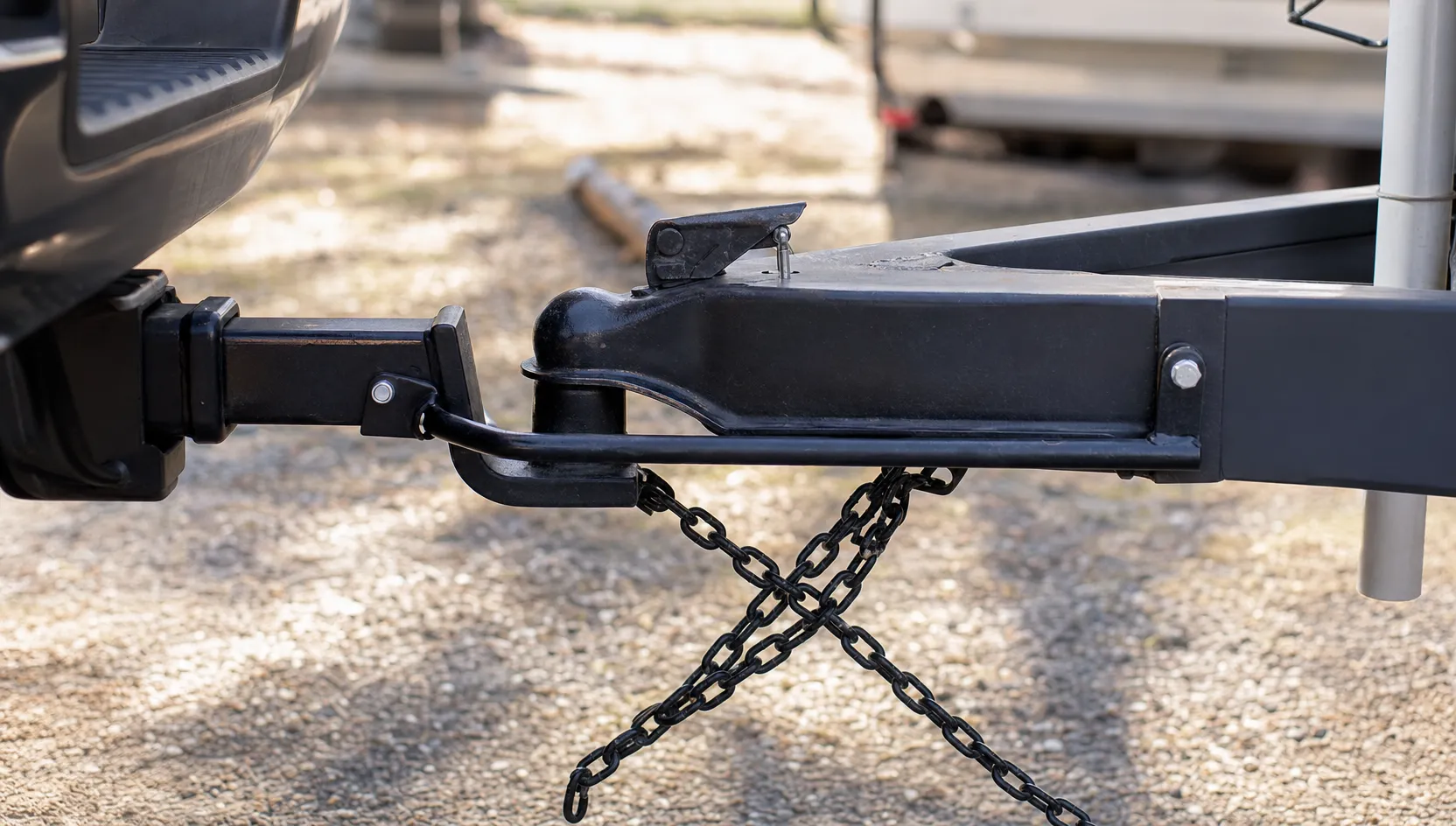
Roadtrippers lists three kinds of sway control: friction bars, dual-cam systems, and electronic units that pulse the trailer brakes. Friction bars add drag, so take them off when you back up or drive on slick roads, because they limit how far you can turn. A sway device helps a good setup, but it does not fix a trailer that is loaded badly.
Practice With Your Brake Controller
If your trailer has electric brakes, the controller in your cab has a manual lever or slider. The Airstream support page tells owners to practice with it before an emergency, so find the lever now and learn how it feels under your hand.
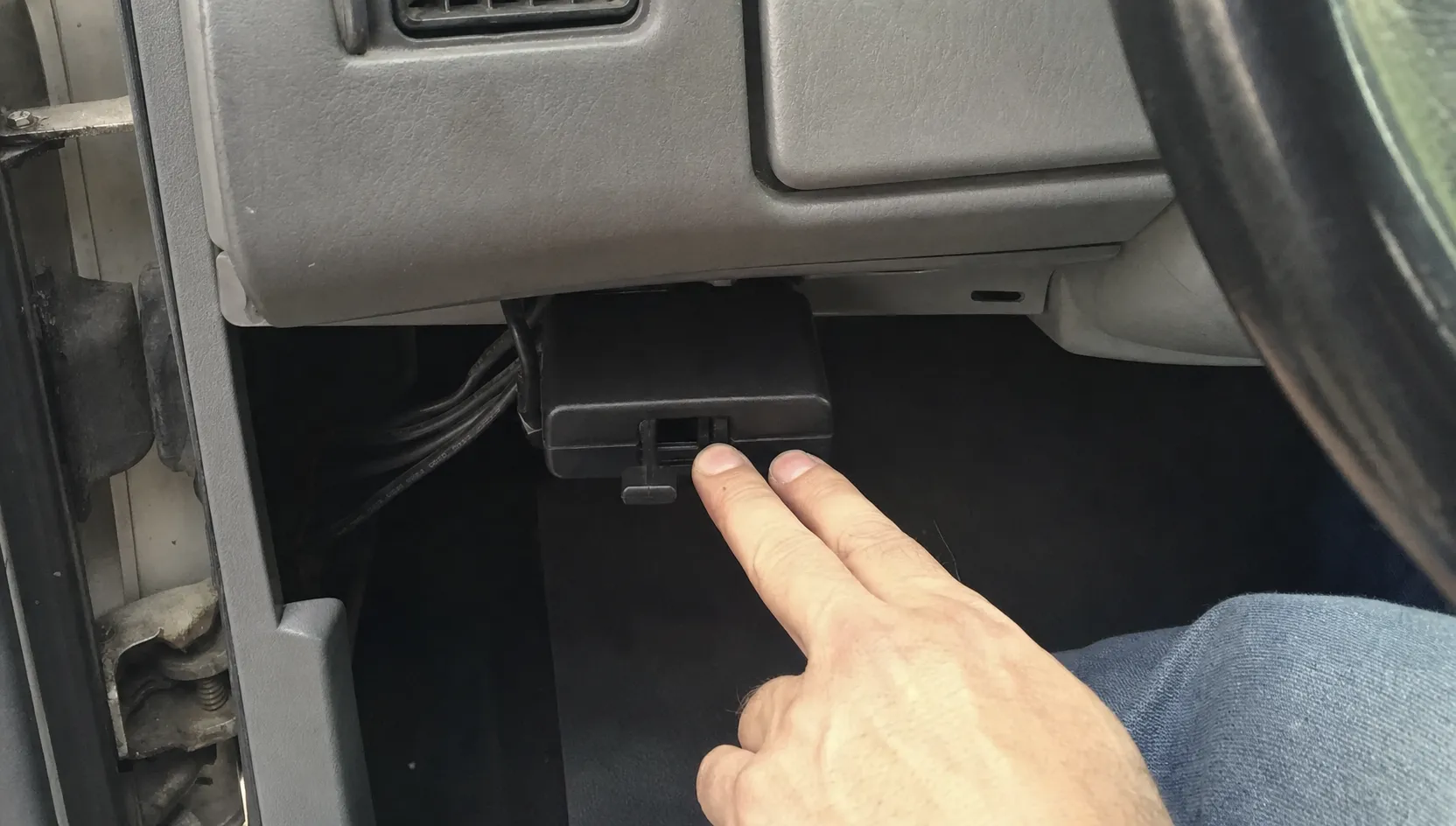
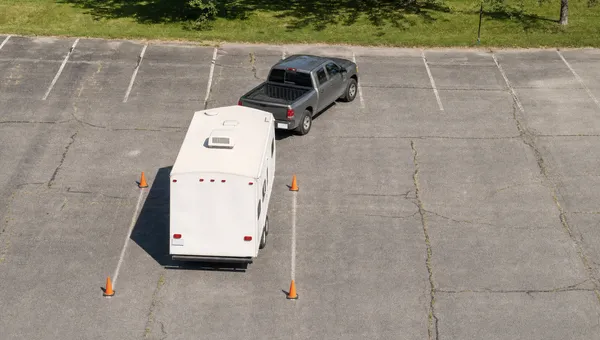
Roadtrippers says to apply it very slowly during sway. Use an empty lot to learn how little you need, and add a few of the drills in our backing guide while you are there.
No controller or manual lever? Then lifting off the gas and holding the wheel steady are your main tools, which is one more reason to get the load and tires right.

Subscribe to
Our Newsletter
By joining, you agree to receive emails.
See our Privacy Policy.
Drive to Prevent Sway
Slow down in wind. Tall, wide trailers catch gusts like a sail. Nationwide says a safe speed drops as the wind rises, so lower your speed before the gust arrives rather than after.
Steer in small moves. Quick corrections can start a swing or add to one. Plan lane changes early, and steer smoothly so the trailer follows your path without a snap.
Ease off for big trucks. When a large truck passes you, lift off the gas and grip the wheel, as Nationwide advises. The rush of air pushes the trailer sideways, and a steady hand lets it settle.
Take wider turns. Nationwide suggests wider turns at corners. They give the trailer room and cut down on sharp steering inputs that can set off a swing.
Stay off the soft shoulder. Nationwide warns against driving onto a soft shoulder when passing. A wheel dropping off the pavement edge can kick the trailer sideways.
After the Scare
Pull over once the trailer settles, and check where the heavy items sit, the tire pressures, the hitch, and the coupler. The Airstream page also says to look for signs of mechanical failure, so give the hitch parts and the trailer frame a close look.
Drive at a reduced speed until you find the cause. If you cannot find one, weigh the rig before the next trip instead of hoping it was a one-time gust.
When to Get Help
If sway keeps coming back after you fix the load and the tires, stop guessing and weigh the rig at a public scale. Compare your numbers with the ratings on your tow vehicle and trailer, or run them through our towing capacity calculator.
Roadtrippers also advises a weight distribution hitch when the trailer weighs at least half as much as the tow vehicle, or when the rear sags once hitched. A trailer that is too heavy for its tow vehicle is a setup problem, not a loading problem. A hitch dealer or an RV technician can look at the whole rig, and that visit costs far less than a crash.
Your Next Step
This week, load your trailer with the 60/40 rule, check the tire pressures cold, and find the manual lever on your brake controller. Practice a gentle brake squeeze in an empty lot so it feels normal before you ever need it.