
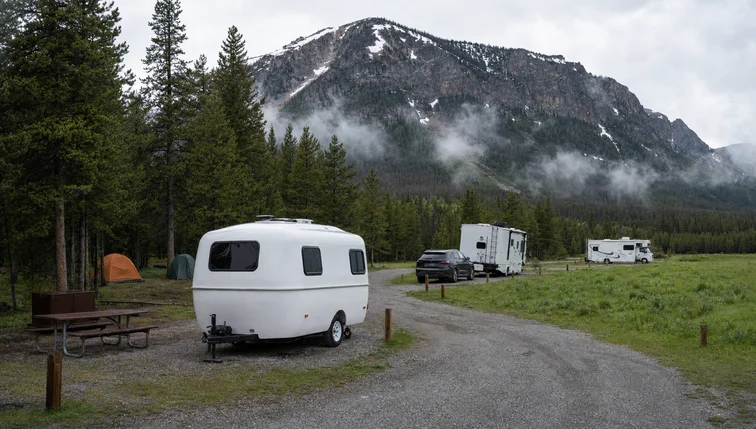
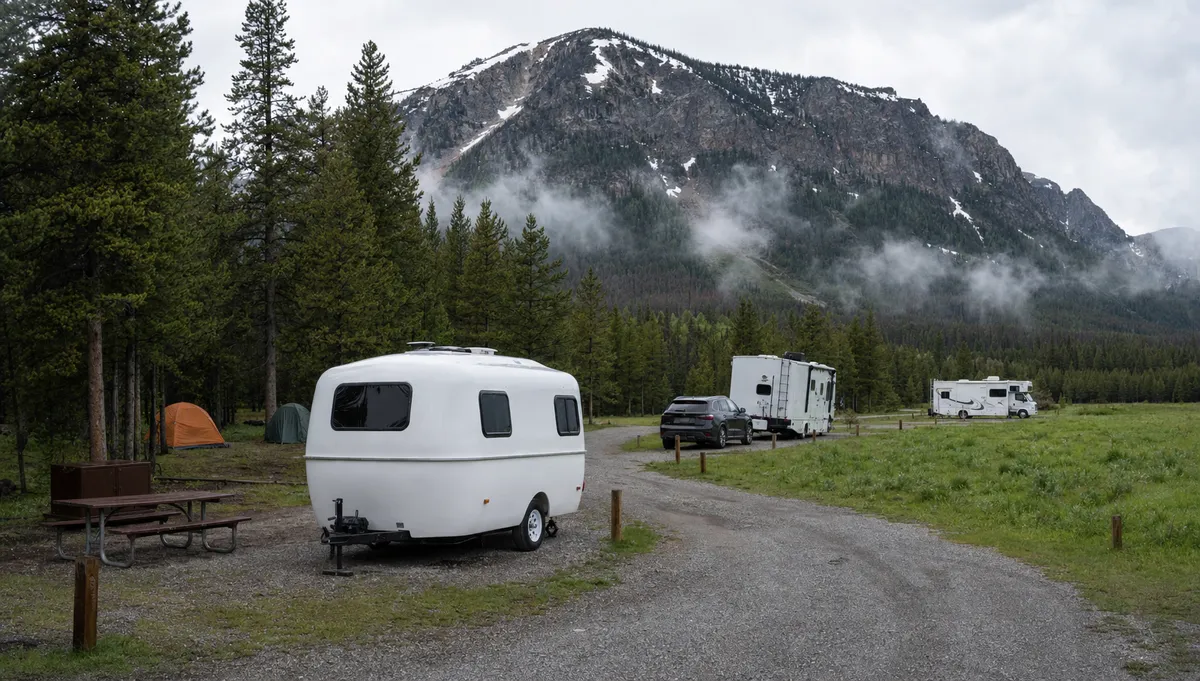
Yellowstone RV camping works best when you pick your campground by length first. Only one of the park’s 11 campgrounds has hookups, and most of the others cap rigs somewhere between 25 and 60 feet. The park’s own pages disagree on some of those limits, and from 2027 every reservation moves to Recreation.gov. Here’s what to check before you book.
Yellowstone Campgrounds at a Glance
The National Park Service (NPS) campground page, last updated November 3, 2026, lists 11 campgrounds with more than 2,000 sites. The table covers the five biggest ones, using the NPS length figures, and the sections below cover the rest.
| Campground | Hookups | NPS length limit |
|---|---|---|
| Fishing Bridge RV Park | Full | 95 ft |
| Grant Village | None | 50 ft |
| Bridge Bay | None | 60 ft |
| Madison | None | 60 ft |
| Canyon | None | 40 ft |
Nightly fees run from $38 plus tax at Bridge Bay and Madison to $45 at Canyon and Grant Village, and $94 at Fishing Bridge RV Park. Our campground prices guide shows how that compares with other public land. The 60-foot figure for Bridge Bay and Madison is one the park’s other pages contradict, as the length section below explains.
Only Fishing Bridge Has Hookups
Fishing Bridge RV Park is the only campground in the park with water, sewer, and 50 amp electric hookups, according to the NPS. It takes hard-sided vehicles only, so tents and tent trailers are out. Yellowstone National Park Lodges, which runs it, says that’s because the campground sits in bear habitat.
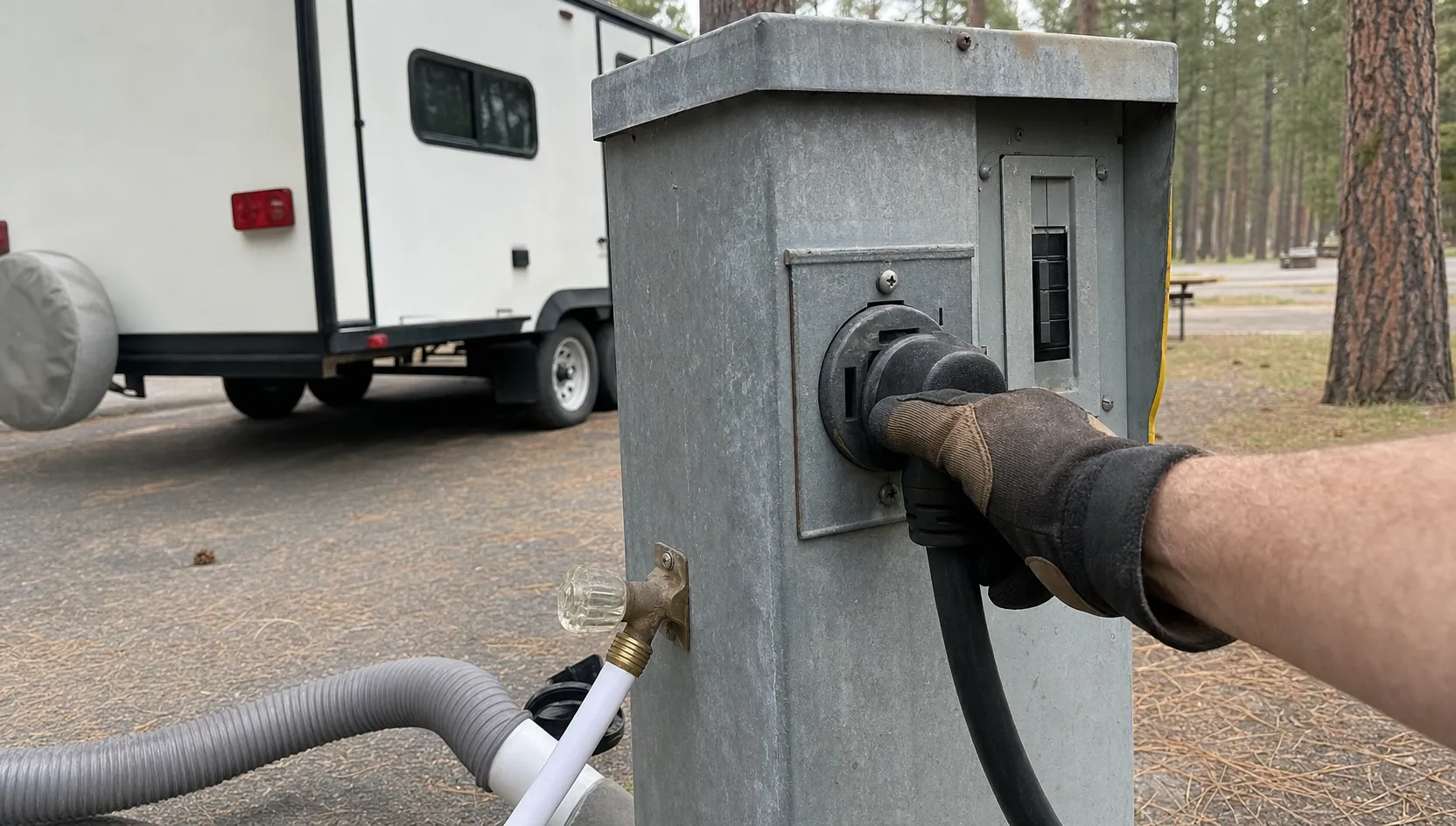
It has 310 sites and takes combined rig lengths up to 95 feet, but only when a right-size site is open. The upper loop has 172 renovated paved sites from 40 to 95 feet, while the lower loops hold 30 and 35 foot back-ins. That loop description comes from a lodges page more than a year old, so confirm it on the Recreation.gov site page when you book.
Fishing Bridge also has no length-of-stay limit, which is rare in the park. The NPS lists the 2027 season as May 14 to October 16.
Length Limits Don’t Agree
Yellowstone’s pages give different numbers for the same campgrounds. The NPS table shows 60 feet for Bridge Bay, but Yellowstone National Park Lodges, which operates it, lists a maximum RV length of 40 feet. An older NPS page for Madison, last updated in April 2025, says total vehicle length can’t exceed 30 feet.
The lodges’ camping page lists site sizes instead of one cap. Madison offers sites for 20, 30, and 40 feet combined, which means your rig plus any tow or towed vehicle. It also says sites that fit 40 feet or more are limited, and the Grant Village page says RVs up to 50 feet fit in its pull-through and back-in sites.
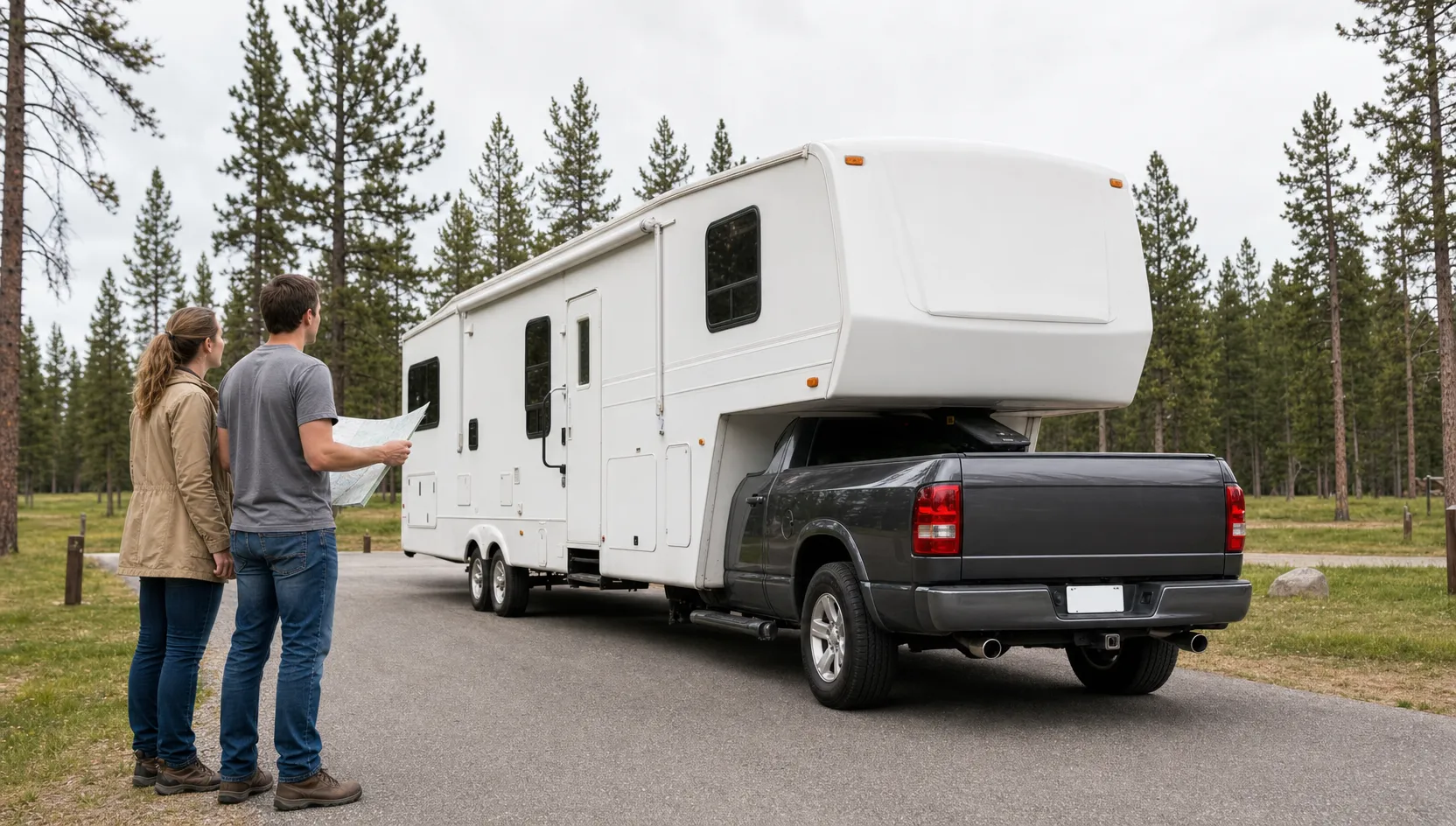
Treat the NPS table as a ceiling and the site page on Recreation.gov as the answer. Measure your rig from bumper to bumper, including the hitch, and book a site listed for that length or longer. If your rig is long, start with Fishing Bridge, where the 40 to 95 foot sites are, and call the park if the site page is unclear.
2027 Booking Moves To Recreation.gov
Starting with the 2027 summer season, the NPS says all campground reservations go through Recreation.gov. Yellowstone National Park Lodges says 2027 reservations for Bridge Bay, Canyon, Grant Village, Madison, and Fishing Bridge open there on December 8, 2026.
The NPS says reservations open on a rolling basis about six months before your stay date, so book each night of your trip as soon as it appears. An older lodges policy page still describes a 13-month window with releases on the 5th of each month, so trust the Recreation.gov listing over that page whenever the two differ.
Opening dates also differ between pages. Bridge Bay starts May 7 on the NPS table and May 21 on the lodges’ page, and Grant Village ends September 25 or 26 depending on which one you read. Plan around the later start and earlier end.
Stay Limits and Camp Rules
Yellowstone caps how long you can camp, and a few rules catch RVers who are used to private parks. They apply to every campground the lodges run, and the NPS enforces the rest. According to the lodges’ camping page, check these before you pay:
- Stays are limited to 14 nights from July 1 to Labor Day and 30 nights otherwise, with 44 nights total per summer across all park campgrounds.
- Generators run from 8 am to 8 pm at RV sites only, and must stay under 60 decibels at 50 feet.
- Quiet hours run from 10 pm to 6 am.
- Check-in is at 1 pm and check-out is at 11 am.
- The NPS bans car camping and overnight parking in pullouts, parking areas, and picnic grounds.
- Delivery or pick-up of out-of-park RV rentals is prohibited.
Dump stations are free and open to all park visitors, whether or not you have a campground reservation. Bridge Bay’s dump station may close in early and late season because of freezing temperatures, so plan to empty your waste tanks elsewhere if you arrive in May.
Interagency Access and Senior Pass holders get 50 percent off at the lodges-run campgrounds with promo code PASS and a pass shown at check-in. Annual Passes don’t qualify for that discount, so check which pass you carry before you count on the savings.
Bears and Food Storage
Bear rules shape how you camp here. Yellowstone National Park Lodges says food storage rules are strictly enforced at Bridge Bay, and it asks Fishing Bridge campers to be especially careful because of the bear habitat. Bridge Bay also closes several loops to reservations early in the season because of possible bear activity.
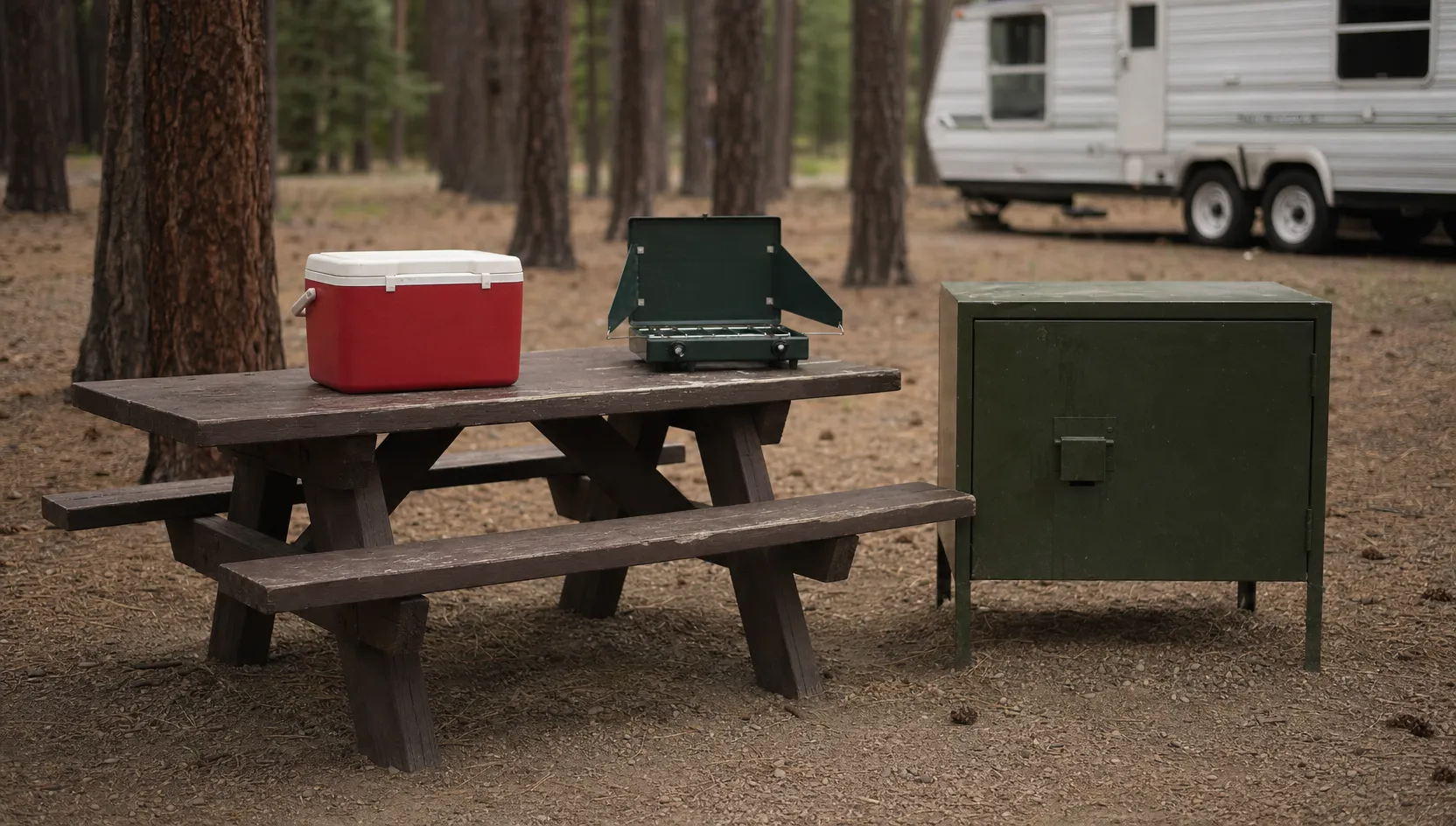
The NPS lists seasonal food storage lockers at Madison. Ask about lockers at check-in and follow the rules posted at your site.
Subscribe to
Our Newsletter
By joining, you agree to receive emails.
See our Privacy Policy.
Smaller Campgrounds and Mammoth
The smaller campgrounds suit short rigs. Per the NPS table, Lewis Lake allows 25 feet, Indian Creek 35 feet, and Slough Creek and Tower Fall 30 feet each. All four cost $20 a night with no hookups, and Indian Creek’s 2027 dates are still to be determined. Pebble Creek is closed until further notice for flood recovery after the 2022 floods.
The NPS adds notes on two of them. At Slough Creek it says to assess sites first, and its campground page says 14 sites take RVs up to 30 feet. Tower Fall’s note flags a hairpin curve, so scout it before you commit a long rig. Slough Creek sits at the end of a two-mile dirt road, and the NPS promotes its quiet, unobstructed night sky for stargazing.
Mammoth is the only campground open year-round, with 82 sites at $25 a night and no hookups. The NPS table shows a 30-foot limit from mid-October to April and 45 feet from May to mid-October, so winter visitors need a shorter rig than summer ones.
Its reservation wording is inconsistent, with one line saying first-come, first-served from October 15 to April 1 and a footnote saying reservations run April 15 to October 15. Confirm the season on Recreation.gov before you drive up.
Camping Outside the Park
When the park campgrounds are full, the gateway towns and the national forest are your overflow, and both sit within a short drive of the gates. You can’t camp anywhere in the park outside a designated campground, so your options are a base outside the gates.
West Yellowstone RV Parks
West Yellowstone, Montana, sits at the park’s west entrance and has full-hookup RV parks. Grizzly RV Park says on its website that it’s three blocks from the entrance, with pull-through sites offering full hookups and 20, 30, and 50 amp power. It also says 2027 reservations are open, so you can lock in a backup before the park opens its own window.
Read the cancellation terms before you pay. That park’s refund drops from 90 percent to 50 percent to nothing as your arrival date gets closer, so a flexible plan matters.
Gardiner and National Forest Camping
The Custer Gallatin National Forest limits dispersed camping to 16 days in one area. After that you must move at least five miles and can’t return for seven days, so it suits a short stay and not a base camp. Around West Yellowstone, the Forest Service says dispersed camping is very limited and not recommended for large trailers and RVs.
Near Gardiner, Eagle Creek Campground has 20 sites on gravel roads, and the Forest Service says its unpaved sites take RVs up to 48 feet. For picking a safe overnight spot, our boondocking basics guide covers what to look for.
Mistakes To Avoid
Trusting one length number. Bridge Bay and Madison show 60 feet on one page and 40 or 30 on others. Check your exact site page on Recreation.gov before you book, and measure your rig first.
Expecting hookups. Only Fishing Bridge has them, so at the other campgrounds you’re dry camping. Charge your batteries, fill your fresh tank, and remember generators run only from 8 am to 8 pm.
Using the old booking rules. Pages written before the switch describe the lodges’ own reservation system and a 13-month window. For 2027, Recreation.gov opens on December 8, 2026, on a rolling six-month window.
Camping in a pullout. The NPS bans overnight parking anywhere outside a designated campground, including pullouts, parking areas, and picnic grounds. If you can’t get a site, plan a stay outside the park.
Leaving food out. Yellowstone is bear habitat, and food storage rules are strictly enforced. Keep everything put away and use the lockers where they’re offered.
Overlooking stay limits. The 14-night summer cap counts nights across every park campground, so a long July trip split between two campgrounds still adds up against the same limit.
Your Next Step
Start with your rig’s length, then pick the campground. Fishing Bridge fits hookups and very long rigs, and the dry campgrounds fit shorter ones. Set a reminder for December 8, 2026, and recheck the NPS page the week you leave, because dates and limits shift. For more on planning around crowds and sites, see our national park tips.